
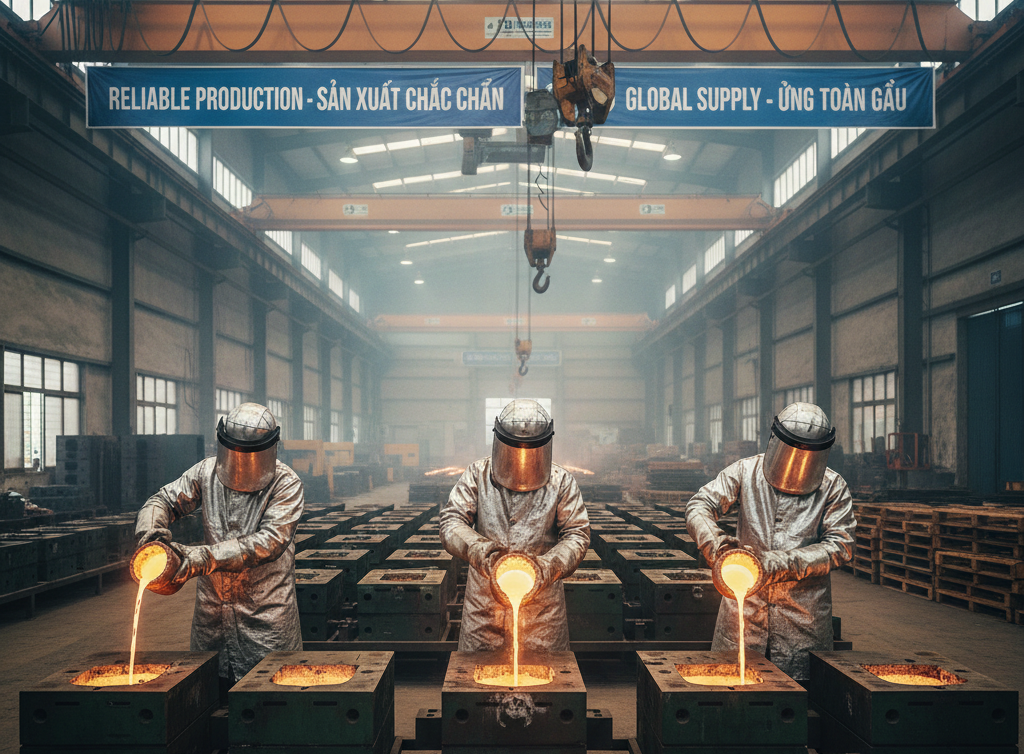
Reducing Supply-Chain Risk with Sand Casting in Vietnam
Global supply chains are under pressure from geopolitical shifts, rising freight costs, and changing customer expectations. For manufacturers seeking resilient, cost-effective production outside traditional hubs, sand casting Vietnam offers a compelling combination of capacity, flexibility, and proximity to key Asian markets. When deployed strategically, Vietnam-based sand casting can reduce lead-time risk, diversify supplier exposure, and maintain consistent quality for critical components.
Why supply-chain risk is rising (and what it costs you)
Over the last decade, manufacturers have learned the hard way that lean, single-source strategies are fragile. Common sources of disruption include:
- Geopolitical and trade volatility: Tariffs, trade restrictions, and diplomatic tensions can suddenly raise costs or close routes
- Logistics shocks: Port congestion, container shortages, and airline capacity limits increase transit times and variability
- Concentration risk: Relying on a small number of suppliers or a single country for critical parts magnifies the impact of any local disruption
- Quality and compliance gaps: Inconsistent standards across suppliers cause rework, delays, and warranty exposure
- Labor and capacity fluctuations: Sudden labor disputes or pandemic-related shutdowns can halt production for weeks
Mitigating these risks requires both strategic rebalancing (diversifying where you source) and tactical process controls (how you qualify, monitor, and manage suppliers).
How sand casting in Vietnam reduces risk
1. Geographical diversification and proximity to major markets
Shifting a portion of sand casting capacity to Vietnam reduces reliance on any single country or supplier. Vietnam’s location provides faster access to Asian supply hubs (China, Japan, Korea), and competitive transit options to Europe and North America compared with purely overseas alternatives. This lowers the transit time risk and enables faster response to demand spikes.
2. Competitive and stable production costs
Vietnam’s labor and operating costs remain attractive compared with many developed markets. For cost-sensitive cast components (brackets, housings, pump bodies, engine components) these savings help protect margins during inflationary periods and can be reinvested into quality controls or inventory buffers.
3. Expanding industrial capacity and skilled labor
Over the past decade, Vietnam’s metalworking and foundry sectors have matured, producing a growing pool of skilled technicians experienced with sand casting, machining, and finishing. This improves the likelihood of consistent part quality and reduces the technical ramp-up time for new programs.
4. Supplier ecosystem and tooling flexibility
Vietnam hosts many small-to-medium foundries that can handle low- to mid-volume runs and rapid tooling changes. This is ideal for products with iterative design cycles or modest batch sizes. Working with multiple vetted foundries in-country enables quick ramp-up if demand shifts or one supplier faces a disruption.
5. Stronger control through local oversight
Shorter distances and relatively affordable travel mean more frequent in-person audits, qualification visits, and joint problem-solving sessions. Localized oversight reduces the intelligence gap and accelerates corrective actions when issues arise.
6. Compliance and certification capability
Many Vietnamese foundries now pursue international certifications (ISO, IATF, etc.) and export-ready processes. Partnering with certified suppliers reduces regulatory risk and helps ensure parts meet safety and performance specifications for regulated markets.
Practical strategies for leveraging sand casting with minimal risk
Supplier selection & dual-sourcing
Qualify at least two suppliers for critical castings, one in Vietnam and another in a different region. Dual-sourcing reduces single-point failure and creates natural competition that helps maintain cost and quality.
Robust qualification and inspection plans
Define clear incoming inspection criteria (dimensional, metallurgical, and non-destructive testing where appropriate). Use first-article inspections, statistical process control, and agreed corrective action timelines.
Tooling strategy and design-for-manufacture
Design castings with manufacturability in mind: avoid overly complex cores or sections that create hot spots. When tooling is required, consider splitting tooling investments across suppliers or using modular tooling to reduce time-to-switch.
Lead-time and inventory optimization
Balance just-in-time ambitions with strategic buffers for high-risk SKUs. Leverage shorter regional lead times from Vietnam to reduce costly emergency air shipments while maintaining lower on-hand inventory.
Technology and data integration
Use digital order tracking, cloud-based quality records, and inline process sensors where possible. Real-time visibility into production status and QC data enables faster decisions and earlier problem detection.
Local representation and continuous improvement
Maintain a local point of contact (either internal or through a trusted partner) to manage day-to-day supplier relations, expedite issues, and drive continuous improvement projects.
Conclusion
Adding Vietnam sand casting to a global sourcing strategy can significantly reduce supply-chain risk by diversifying geographic exposure, lowering cost volatility, and enabling faster, more flexible production near Asia-Pacific markets. With rigorous supplier qualification, strong inspection programs, and the right tooling and logistics strategy, manufacturers can capture the resilience benefits without sacrificing quality or predictability. If you’re evaluating options to strengthen your casting supply chain, consider Vietnam as a strategic, pragmatic choice.