
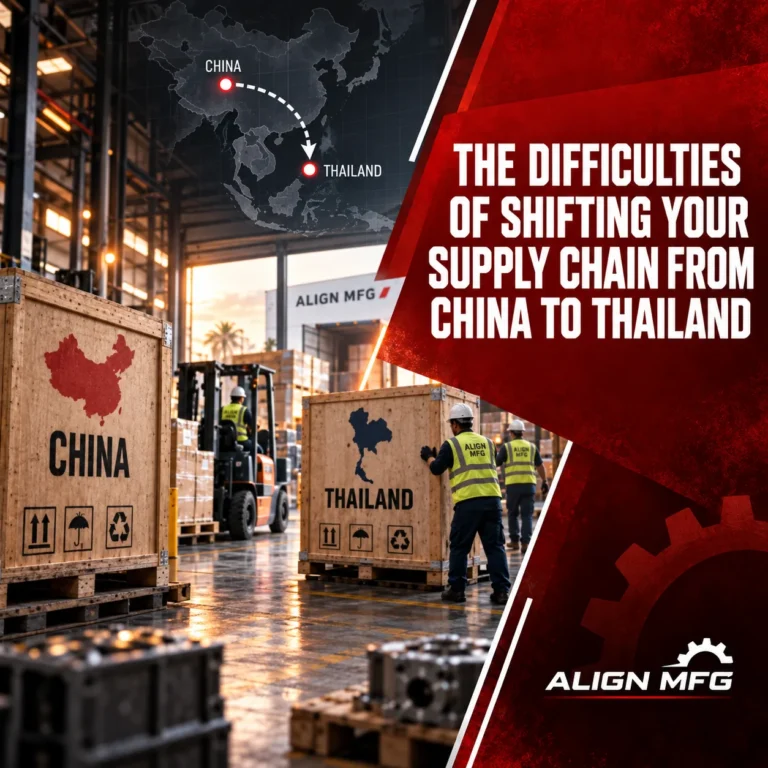
Every week we talk to sourcing managers who have been told to “get out of China” by their board, their customers, or a tariff bill that landed harder than expected. Most of them have already sat through the webinars promising that Thailand and Vietnam are drop-in replacements. They are not. After years of moving forged,…
In March 2025, the US implemented sweeping tariffs on imports from China, Canada, and Mexico, escalating trade tensions and reshaping global supply chains. The US imposed a cumulative 45% tariff on Chinese goods (25% from Section 301 tariffs, plus 10% in February 2025, and another 10% in March 2025). Additionally, 25% tariffs on Canadian and…
Tariff Proposals: Trump aims to impose broad tariffs to address trade imbalances and boost U.S. manufacturing. Proposes creating a new agency, the “External Revenue Service,” to collect tariffs directly from foreign importers. Impact on Trade and Economy: Short-Term Costs: Tariffs would increase prices for U.S. consumers, affecting essential goods like apparel, appliances, and toys. Organizations…

Supply chain landscape is evolving rapidly, fueled by shifting geopolitics, emerging technologies, and changing consumer demands. Terms like friend-shoring, near-shoring, and re-shoring are gaining traction as businesses seek to adapt. But what do these buzzwords mean, and how do they impact global supply chain strategies? In this article, we’ll explore these key concepts, compare their…
The complex interplay of economic, demographic, and geopolitical factors necessitates a strategic approach for manufacturers currently reliant on China. The economic stability, favorable demographic trends, and business-friendly environments of Southeast Asia and South Asia, particularly in Thailand, Vietnam, and India, offer compelling alternatives. These locations provide significant advantages, including robust growth potential, competitive labor costs,…
As companies increasingly seek alternatives to China for their manufacturing operations due to escalating costs and geopolitical uncertainties, the importance of partnering with a knowledgeable and reliable manufacturing facilitator becomes paramount. Such partnerships are essential for navigating the complex landscape of global production shifts, ensuring not only a smooth transition but also the long-term success…
In light of the escalating trade tensions and economic uncertainties between the US and China, adapting manufacturing locations to more stable regions like Southeast and South Asia has become essential for maintaining competitive advantage. This article explores essential strategies that businesses can employ to ensure an efficient transition away from traditional bases like China to…
In this video, Casey Ross and Benjamin Unruh from Align Manufacturing and Alex Chiu from Maesot Heavy Industries discuss why manufacturers must urgently consider moving their operations out of China. They explore the impact of geopolitical tensions, rising tariffs, and the key strategies for ensuring a smooth transition to Southeast and South Asia. Casey: Hi…
Southeast Asia and South Asia offer simple regulatory frameworks and higher growth potential, making them attractive alternatives to China for contract manufacturing operations. Key players in these regions include Thailand, Vietnam, and India, each presenting unique advantages. Thailand Thailand is expected to see steady economic growth moving forward, with a projected GDP increase of 3.9%…
Southeast Asia and South Asia have become increasingly attractive options for OEMs seeking stability and resiliency. This trend, which began in earnest during the pandemic, continues to accelerate as OEMs from a variety of sectors have come to appreciate the simple value proposition that other Asian countries can offer. Yet, there is more than just…