
What is Ductile Iron? Properties, Strengths, and Industrial Uses
Ductile iron, also known as nodular iron or spheroidal graphite iron, is a type of cast iron known for its high strength, toughness, and durability. It combines the castability and cost advantages of traditional cast iron with mechanical properties closer to steel, making it a popular material across many industries.
This article explains what ductile iron is, its key properties and strengths, and where it is commonly used.
What Is Ductile Iron?
Ductile iron is a cast iron alloy in which the graphite forms as small, rounded nodules rather than flakes. This structure is achieved by adding small amounts of magnesium or cerium to molten iron during production.
In traditional gray cast iron, graphite appears as sharp flakes that create weak points and make the material brittle. In ductile iron, the spherical graphite nodules reduce stress concentration and allow the metal to bend or deform without cracking. This microstructure gives ductile iron its defining characteristic: high ductility combined with excellent strength.
Composition and Production
Ductile iron is primarily made from pig iron, along with several alloying elements such as carbon (3.0% to 4.0%), silicon (2.0% to 3.0%), and small amounts of manganese, phosphorus, and sulfur. The production process involves:
- Melting of Iron: Raw materials are melted in a furnace.
- Inoculation: Magnesium is added to the molten iron to promote the formation of spheroidal graphite.
- Casting: The molten iron is poured into molds to create the desired shapes.
- Cooling: The cast components are cooled slowly to develop the properties of ductile iron.
Key Properties of Ductile Iron
1. High Strength and Toughness
Ductile iron has much higher tensile and yield strength than gray cast iron. Depending on the grade, its tensile strength typically ranges from about 400 to over 900 MPa. It can also absorb significant impact energy, making it resistant to shock and fatigue.
2. Excellent Ductility
As the name suggests, ductile iron can stretch and deform before breaking. Elongation values commonly range from 2% to over 18%, depending on grade and heat treatment. This ductility helps components withstand dynamic loads and sudden stresses.
3. Good Wear and Fatigue Resistance
The nodular graphite structure improves fatigue life and wear resistance. Ductile iron performs well in applications involving repeated loading, vibration, or friction.
4. Good Machinability
Despite its strength, ductile iron is relatively easy to machine compared to steel. The graphite nodules act as chip breakers and provide a degree of self-lubrication, reducing tool wear and machining time.
5. Corrosion Resistance
Ductile iron offers moderate corrosion resistance, especially when combined with protective coatings, linings, or alloying elements. For applications like pipelines, additional surface treatments are often used to extend service life.
6. Castability and Design Flexibility
Like other cast irons, ductile iron can be cast into complex shapes with high dimensional accuracy. This allows designers to create integrated parts that would be difficult or costly to manufacture from steel.
Strengths of Ductile Iron
The strengths of ductile iron are primarily attributed to its unique microstructure and alloying elements:
- Impact Resistance – Ductile iron’s structure provides excellent impact resistance, allowing it to absorb energy from sudden shocks without fracturing.
- Thermal Conductivity – It has good thermal conductivity, making it effective for heat transfer applications.
- Low Shrinkage – Ductile iron exhibits minimal shrinkage during the solidification process compared to other casting materials, reducing defects in the final product.
- Versatile Mechanical Properties – By adjusting the composition and production process, manufacturers can tailor the mechanical properties of ductile iron to fit specific application requirements.
Common Grades of Ductile Iron
Ductile iron grades are typically classified based on tensile strength, yield strength, and elongation. Examples include:
- Ferritic ductile iron: High ductility and good impact resistance
- Pearlitic ductile iron: Higher strength and wear resistance
- Ferritic-pearlitic ductile iron: Balanced properties for general use
- Austempered ductile iron (ADI): Very high strength-to-weight ratio and excellent fatigue resistance
Each grade is selected based on performance requirements and operating conditions.
Industrial Uses of Ductile Iron
Ductile iron’s unique properties make it ideal for a variety of industrial applications. Some of the most common uses include:
Automotive Components
Ductile iron is widely used in automotive parts such as crankshafts, engine blocks, and gears. Its strength-to-weight ratio makes it ideal for critical components that require both durability and reduced weight.
Pipelines and Fittings
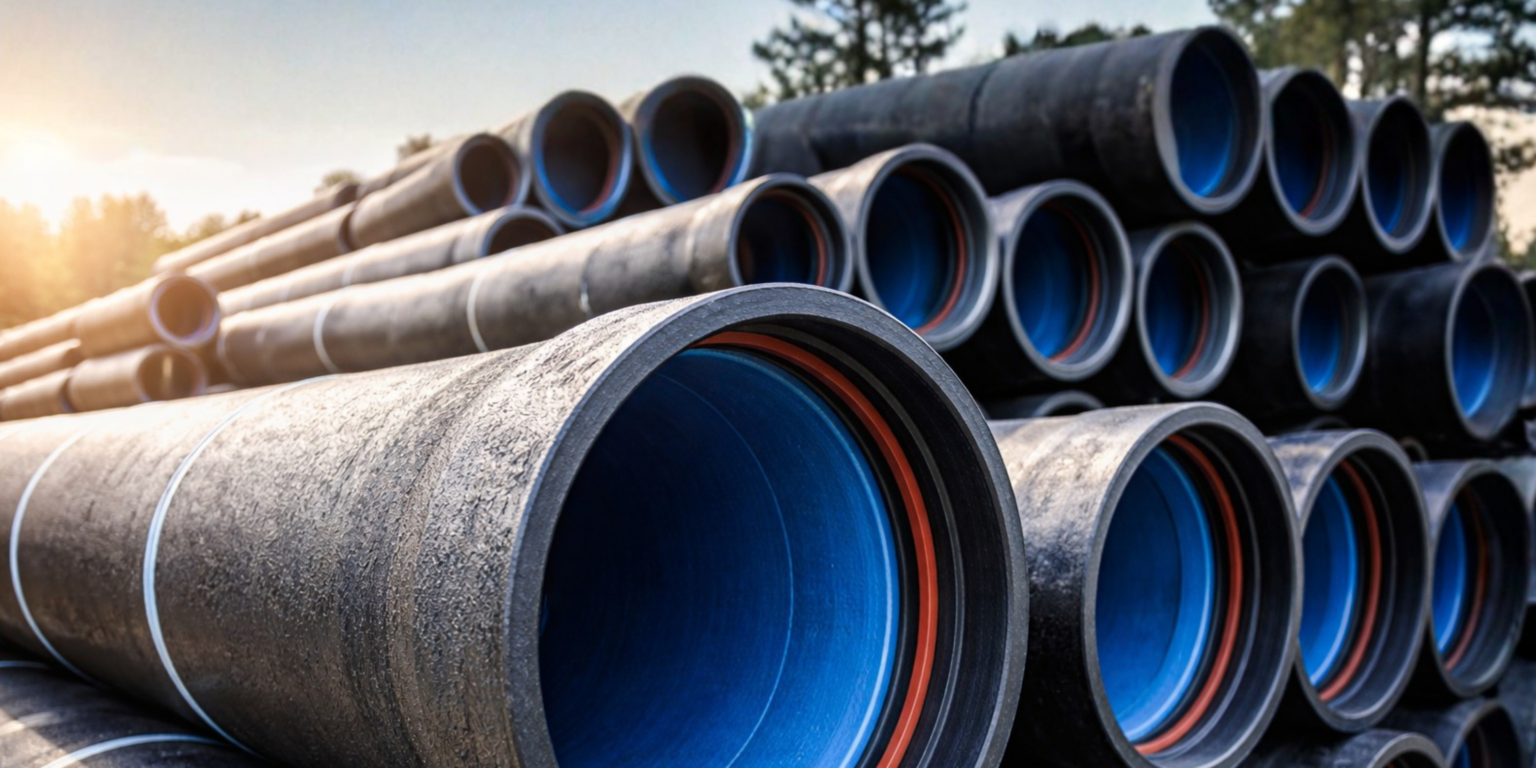
Due to its corrosion resistance and strength, ductile iron is commonly used in water and sewage pipelines, as well as fittings and valves, ensuring reliable operation under high-pressure conditions.
Construction Materials
Ductile iron is used in various construction applications, including manhole covers, drainage grates, and support brackets. Its durability and load-bearing capacity are instrumental in infrastructure projects.
Conclusion
Ductile iron represents a significant advancement in materials science, offering an exceptional blend of strength, ductility, and resistance to wear and corrosion. Its unique properties make it suitable for a variety of applications, from automotive components to pipelines and construction materials.
As industries evolve, ductile iron remains crucial for innovation across sectors. Understanding its capabilities is essential for engineers and manufacturers, particularly at AlignMFG, where high-quality materials and advanced manufacturing techniques are prioritized to effectively meet client needs.