
Tempering vs Hardening: What’s the Difference in Steel Treatment?
Steel is one of the most versatile materials used across various industries, from construction to automotive manufacturing. Its unique physical properties can be significantly altered through various treatment processes, primarily hardening and tempering. Understanding these two treatments is crucial for selecting the right material for specific applications.
In this article, we will explore what hardening and tempering entail, their differences, the processes involved, and their impact on the properties of steel.
Understanding Steel Treatment
Before delving into the specifics of hardening and tempering, let’s first understand why steel treatment is necessary. Steel is an alloy primarily made up of iron and carbon, and its mechanical properties can be enhanced through controlled heat treatment processes. These processes can improve hardness, tensile strength, ductility, and toughness.
Hardening
Hardening is a heat treatment process that increases the hardness of steel. It generally involves the following steps:
- Heating: The steel is heated to a specific temperature, usually above its critical temperature, where it transforms from a ferritic (soft) phase to austenitic (hard) phase. This temperature can vary depending on the alloying elements present in the steel.
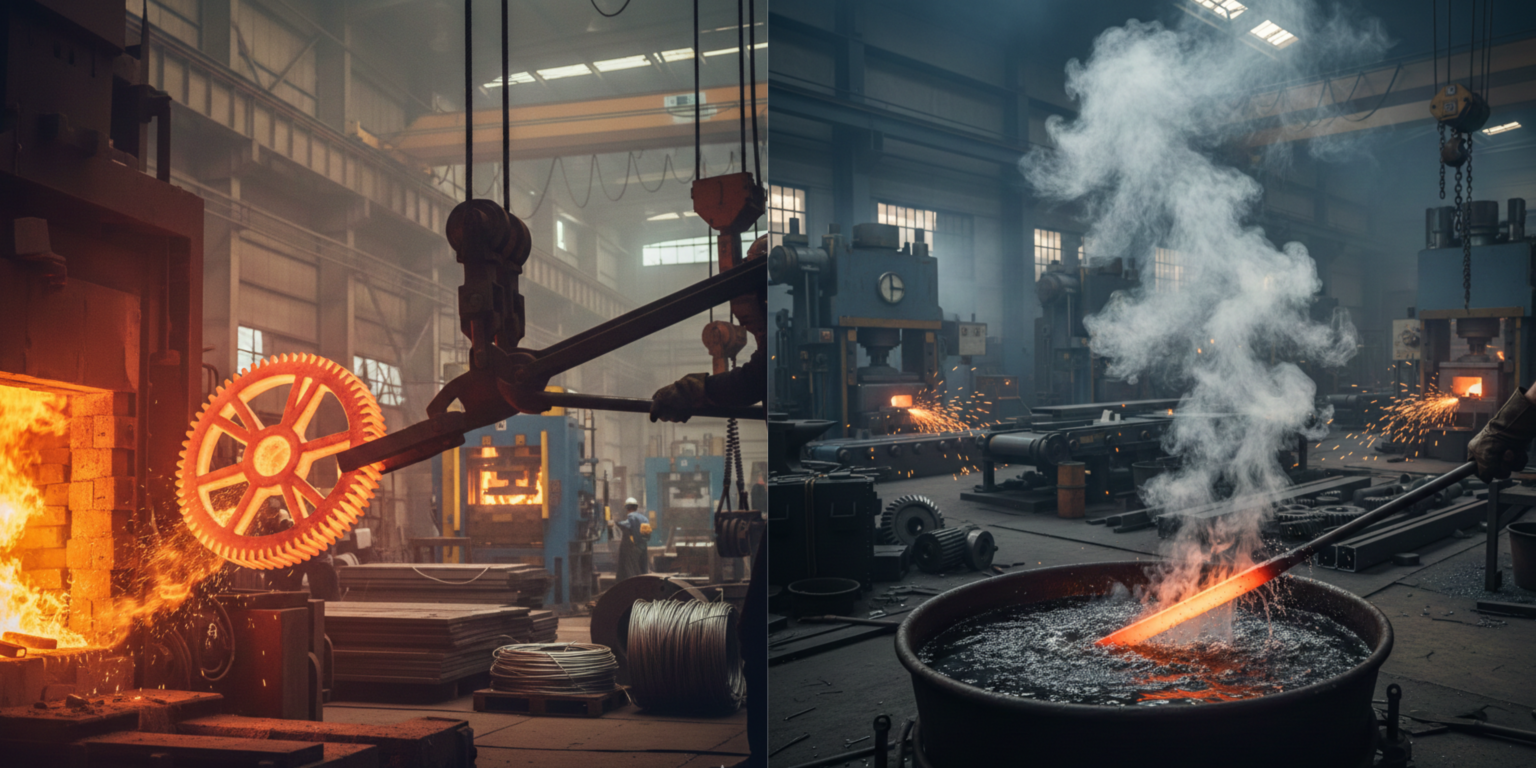
- Quenching: Once the steel reaches the desired temperature, it is rapidly cooled or “quenched” using water, oil, or air. This rapid cooling transforms the austenite into martensite, a much harder phase of steel.
- Resulting Properties: The resulting steel is hard and wear-resistant, making it suitable for applications requiring high durability, such as cutting tools, gears, and springs.
Advantages of Hardening
- Increased hardness and strength
- Enhanced wear resistance
- Improved tensile strength
Disadvantages of Hardening
- Reduced ductility (the ability to deform without breaking)
- Increased brittleness, which can lead to failure under impact or stress
Tempering
Tempering is a subsequent heat treatment process often performed after hardening. The main goal of tempering is to reduce the brittleness of hardened steel while maintaining most of its hardness. The tempering process encompasses the following steps:
- Heating: The hardened steel is reheated to a lower temperature, typically between 150°C and 700°C (302°F to 1292°F), depending on the desired properties.
- Soaking: The steel is held at this temperature for a specified period, allowing for some of the internal stresses to relieve and the martensite phase to transform into tempered martensite.
- Cooling: After the soaking period, the steel is cooled, usually at room temperature.
Resulting Properties
Through tempering, the steel retains significant hardness but gains improved toughness, ductility, and resilience. This balance makes tempered steel suitable for a wider range of applications, especially where impact resistance is critical.
Advantages of Tempering
- Improved ductility and toughness
- Reduced internal stress
- Better resistance to cracking and failure
Disadvantages of Tempering
- A slight reduction in hardness compared to fully hardened steel
- Requires additional processing time and energy
Key Differences Between Hardening and Tempering
| Aspect | Hardening | Tempering |
| Purpose | Increase hardness and strength | Reduce brittleness and improve toughness |
| Process | Heating followed by rapid quenching | Reheating the hardened steel to a lower temperature |
| Result | Hard, brittle steel | Hard steel with improved ductility and toughness |
| Temperature Range | Above critical temperature | Below critical temperature |
| Sequence | Typically the first step | Usually follows hardening |
| Applications | Cutting tools, dies, and structural components | Springs, gears, and applications requiring more flexibility |
Applications in Industry
Both hardening and tempering play crucial roles across several industries. Here are a few examples where each process is predominantly used:
Applications of Hardened Steel:
- Cutting Tools: Drill bits, saw blades, and tool edges require extreme hardness to withstand wear.
- Construction: Reinforced structures often use hardened steel to ensure durability under heavy loads
- Automotive Industry: Components like crankshafts and gears must endure high stress and fatigue.
Applications of Tempered Steel:
- Structural Components: Beams, plates, and frames that require a combination of strength and ductility to withstand various forces.
- Automotive Springs: Car suspensions require materials that can endure repeated stress without failing.
- Industrial Machinery: Components that must endure both torque and impact, like axles and levers.
Conclusion
Understanding the differences between tempering and hardening is crucial for anyone involved in metalworking. While hardening increases hardness and wear resistance, tempering reduces brittleness and enhances toughness. Properly applying these processes ensures that steel meets specific performance requirements, making it durable in challenging environments.
In countries like Thailand, where metal fabrication is expanding, effective hardening and tempering processes in metal fabrication Thailand are essential for producing high-quality, resilient products that align with global standards. Mastering these techniques will enhance competitiveness and drive advancements in the industry.