
The Difficulties of Shifting Your Supply Chain from China to Thailand
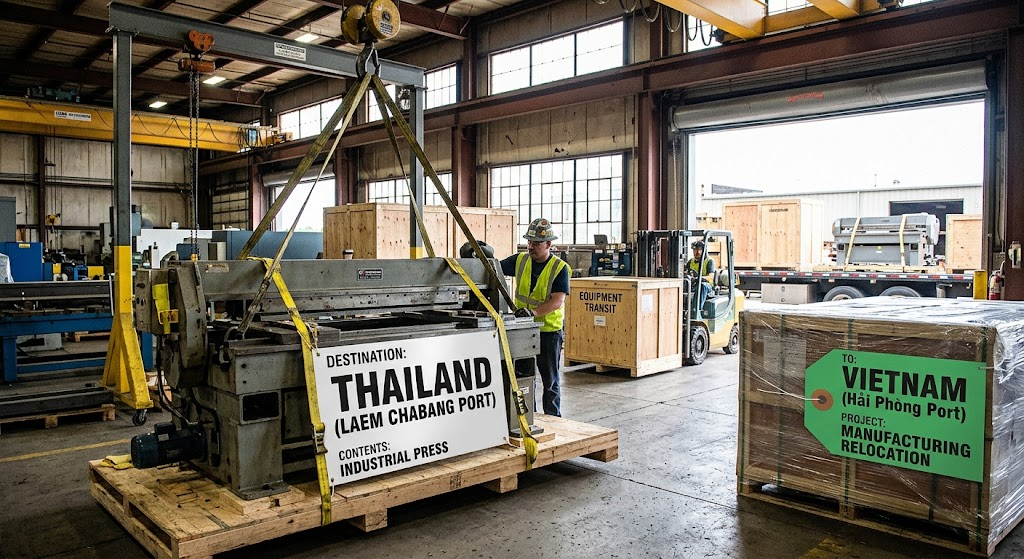
Every week we talk to sourcing managers who have been told to "get out of China" by their board, their customers, or a tariff bill that landed harder than expected. Most of them have already sat through the webinars promising that Thailand and Vietnam are drop-in replacements. They are not. After years of moving forged, cast, and machined parts out of China for American and European customers, we can tell you exactly where the move gets difficult, and where it works better than China ever did.
The capability is there. The depth is not.
China's real advantage was never price. It was depth: ten suppliers for any process, at any volume, within a two-hour drive. Thailand has genuine industrial capability. Decades of Japanese automotive investment built a serious forging and machining base around Chonburi and Rayong, but the bench is shorter. A forging factory in Thailand that runs 3,000-ton presses for truck and trailer components exists; there are just three of them competing for your order instead of thirty. That changes how you negotiate, how you schedule, and how much redundancy you need to build in.
The practical consequence: in China you could throw an RFQ over the wall and let suppliers fight. Sourcing forging in Thailand means qualifying the right shop for your part family the first time, because switching later costs you a tool and six months.
Where Thailand genuinely delivers
Some categories transfer beautifully. Automotive-grade closed-die forging in Thailand is mature, with proper heat treatment, in-house die shops, and IATF-certified quality systems. Gear manufacturing is a particular strength: hobbing, shaving, and grinding capability that grew up feeding Japanese transmission plants, now available to Western buyers of industrial gearboxes and drive components. Any competent shaft manufacturer in Thailand can hold the tolerances that matter, because that is exactly what the automotive tier system trained them to do for thirty years.
Oil and gas buyers do well here too. More than one valve manufacturer in Thailand machines bodies, bonnets, and trim to API specifications with full material traceability, often at quality levels that surprise buyers whose Chinese suppliers treated mill certs as a suggestion.
The problems nobody mentions in the webinar
Raw material is the trap. Thailand and Vietnam import most of their steel, and much of it comes from China. If your motivation for leaving China is country of origin, you must ask where the billet comes from and whether the work done locally amounts to substantial transformation under customs rules. A part forged, heat treated, and machined in Thailand from Chinese billet is Thai origin. A Chinese forging that gets a skim cut and a new label is not, and customs authorities are actively hunting for exactly that. Work with suppliers who document the full chain.
Specialty alloys thin out fast. Carbon steel and standard alloy grades are no problem. Start asking about forging duplex stainless steel for seawater or sour service and the list of capable shops in Southeast Asia gets short. Duplex demands tight temperature control in a narrow forging window, proper solution annealing, and corrosion testing that most general forgers have never run. It exists in the region, but it is a qualification project, not a catalog purchase.
Tooling patience. Expect your first tool to take longer than it did in Guangdong, and budget for iteration. The shops are good; the supporting die and fixture ecosystem is smaller.
Volume expectations cut both ways. Many Thai forgers were built for automotive volumes and get uninterested below serious quantities, while smaller shops lack systems. Finding the supplier whose sweet spot matches your 5,000-piece annual demand is most of the work. A forging blanks manufacturer who supplies rough blanks to the local machining trade can be an excellent route for mid-volume buyers: you buy the forging economics without owning the whole chain.
Vietnam is the other half of the answer
The smart moves we see treat Southeast Asia as one sourcing region, not one country. A forging manufacturer in Vietnam will typically beat Thailand on labor-intensive parts and lower volumes, and Vietnam's consumer goods clusters are world class in specific niches. The forged cookware Vietnam exports to Western kitchen brands, and more than one stainless steel knife manufacturer producing for names you would recognize, come out of forging ecosystems that also make excellent industrial hand-tool and hardware components. Thailand takes the automotive-grade, heat-treatment-critical work. Vietnam takes the machining-heavy and labor-heavy work. India covers castings and heavy forgings. Buyers who insist on a single country recreate the concentration risk they just left.
What actually works
Qualify with production intent: real drawings, first article inspection, material certs to EN 10204 3.1, and a pilot order, not a factory tour and a handshake. Confirm billet origin in writing. Match the part to the country instead of forcing one flag on everything. And be honest about the price: landed costs from Thailand typically run higher than pre-tariff China and lower than post-tariff China. You are buying origin diversity, tariff resilience, and increasingly better documentation, not a discount.
The companies that struggle are the ones that try to run the transition as a part-time project from a desk in Ohio. The region rewards presence: someone who knows which forging factory in Thailand actually owns its presses, which Vietnamese shop quietly makes the parts its neighbor quotes, and which quotes are real.