What is Alloy Steel? Grades, Properties, and Applications (2026 Guide)
Introduction
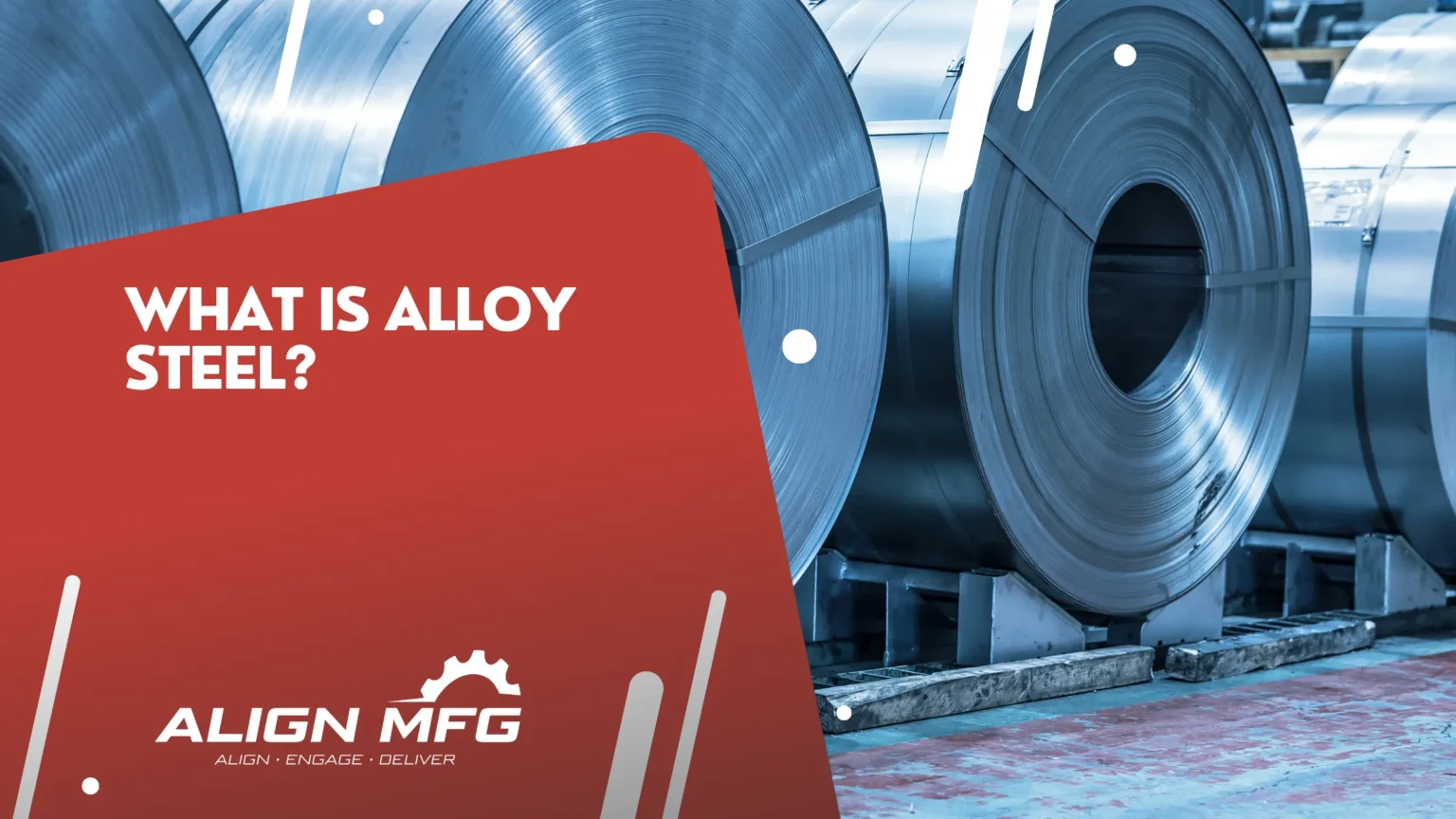
Alloy steel represents one of the most versatile and widely used material classes in modern manufacturing, combining the inherent strength of carbon steel with enhanced properties through carefully selected alloying elements. From automotive drivetrains to aerospace components, alloy steels provide the mechanical performance required for critical applications where standard carbon steels fall short.
This comprehensive guide examines the fundamental characteristics of alloy steel, explores the most common grades including AISI 4140, 4340, and 4130, and provides detailed technical data to support engineering decisions. Whether you're specifying materials for a new design, sourcing components for production, or seeking to understand heat treatment processes, this guide provides the detailed information needed for informed decision-making.
What is Alloy Steel? Definition and Classification
Definition
Alloy steel is steel that contains additional alloying elements beyond the standard carbon and manganese found in carbon steels. These intentional additions — typically totaling between 1% and 50% of the composition — fundamentally alter the material's mechanical properties, heat treatment response, and performance characteristics.
The primary purpose of alloying is to achieve specific property combinations impossible with carbon steel alone: enhanced hardenability, improved toughness, superior wear resistance, or increased strength at elevated temperatures.
Classification by Alloy Content
Alloy steels are categorized based on total alloying element content:
| Classification | Total Alloy Content | Characteristics | Examples |
|---|---|---|---|
| Low Alloy Steel | < 5% | Improved hardenability, moderate strength | 4140, 4130, 4340 |
| Medium Alloy Steel | 5% – 12% | High strength, good toughness | H-11, H-13 tool steels |
| High Alloy Steel | > 12% | Extreme properties, corrosion resistance | Stainless steels, high-speed steels |
Low alloy steels represent the most commonly used category in industrial applications, offering an optimal balance of cost, availability, and performance. Grades like AISI 4140 and 4340 fall within this classification.
Medium and high alloy steels command premium prices but deliver specialized properties: tool steels maintain hardness at elevated temperatures, while stainless steels provide corrosion resistance through high chromium content.
Understanding the SAE/AISI Steel Grade Designation System
The 4-Digit Numbering System
The Society of Automotive Engineers (SAE) and American Iron and Steel Institute (AISI) developed a standardized numbering system that provides immediate insight into a steel's composition and properties. Understanding this system enables engineers to quickly identify appropriate materials for specific applications.
SAE/AISI Alloy Steel Designation Structure:
| Digit Position | Meaning | Example Values |
|---|---|---|
| First digit | Primary alloying element | 1=Carbon, 2=Nickel, 3=Nickel-Chromium, 4=Molybdenum, 5=Chromium, 6=Chromium-Vanadium, 8=Nickel-Chromium-Molybdenum |
| Second digit | Secondary alloying element | Varies by series |
| Last two digits | Carbon content (× 0.01%) | 40 = 0.40% carbon |
Common Alloy Steel Series
| Series | Primary Alloying Elements | Representative Grades |
|---|---|---|
| 4xxx | Molybdenum | 4140, 4340, 4130 |
| 5xxx | Chromium | 5140, 5160 |
| 8xxx | Nickel-Chromium-Molybdenum | 8620, 8740 |
| 9xxx | Silicon-manganese | 9255, 9260 |
The 4xxx series — containing molybdenum as the primary alloying element — represents the most widely used alloy steel grades in manufacturing. These grades offer exceptional versatility through balanced combinations of strength, toughness, and heat treatment response.
Common Alloy Steel Grades: 4140, 4340, and 4130
AISI 4140 Steel Properties and Applications
AISI 4140 is the workhorse of the alloy steel family, offering an exceptional balance of strength, toughness, and cost-effectiveness. Its widespread availability and proven performance make it the default choice for countless industrial applications.
Chemical Composition (AISI 4140)
| Element | Weight % | Function |
|---|---|---|
| Carbon (C) | 0.38 – 0.43 | Hardness, strength |
| Manganese (Mn) | 0.75 – 1.00 | Hardenability, deoxidizer |
| Silicon (Si) | 0.15 – 0.35 | Deoxidizer, strength |
| Chromium (Cr) | 0.80 – 1.10 | Hardenability, wear resistance |
| Molybdenum (Mo) | 0.15 – 0.25 | High-temp strength, toughness |
| Phosphorus (P) | ≤ 0.035 | Impurity control |
| Sulfur (S) | ≤ 0.040 | Impurity control |
Mechanical Properties (Annealed Condition)
| Property | Metric | Imperial |
|---|---|---|
| Tensile Strength | 655 MPa | 95,000 psi |
| Yield Strength | 415 MPa | 60,200 psi |
| Elongation | 25.7% | 25.7% |
| Hardness (Brinell) | 197 HB | 197 HB |
| Hardness (Rockwell B) | 92 HRB | 92 HRB |
| Density | 7.85 g/cm³ | 0.284 lb/in³ |
Heat Treatment Response (4140)
| Condition | Tensile Strength | Yield Strength | Hardness |
|---|---|---|---|
| Annealed | 655 MPa | 415 MPa | 197 HB |
| Normalized | 930 MPa | 670 MPa | 280 HB |
| Hardened & Tempered (low) | 1,085 MPa | 930 MPa | 320 HB |
| Hardened & Tempered (med) | 1,240 MPa | 1,100 MPa | 370 HB |
| Hardened & Tempered (high) | 1,450 MPa | 1,280 MPa | 430 HB |
Common Applications (4140)
- Automotive: Axles, shafts, gears, crankshafts, connecting rods
- Oil & Gas: Drill collars, tool joints, subs, valve components
- Aerospace: Landing gear components, structural fittings
- Industrial: Hydraulic machinery parts, tooling, fixtures
- General: Pins, studs, bolts, fasteners requiring high strength
AISI 4340 Steel Properties and Applications
AISI 4340 represents the premium tier of low-alloy steels, delivering superior toughness and strength through its nickel-chromium-molybdenum composition. When applications demand exceptional performance under high stress or impact loading, 4340 is the grade of choice.
Chemical Composition (AISI 4340)
| Element | Weight % | Function |
|---|---|---|
| Carbon (C) | 0.38 – 0.43 | Hardness, strength |
| Manganese (Mn) | 0.60 – 0.80 | Hardenability |
| Silicon (Si) | 0.15 – 0.35 | Strength, deoxidizer |
| Nickel (Ni) | 1.65 – 2.00 | Toughness, impact resistance |
| Chromium (Cr) | 0.70 – 0.90 | Hardenability, wear resistance |
| Molybdenum (Mo) | 0.20 – 0.30 | High-temp strength, creep resistance |
| Phosphorus (P) | ≤ 0.035 | Impurity control |
| Sulfur (S) | ≤ 0.040 | Impurity control |
Mechanical Properties (Annealed Condition)
| Property | Metric | Imperial |
|---|---|---|
| Tensile Strength | 745 MPa | 108,000 psi |
| Yield Strength | 470 MPa | 68,200 psi |
| Elongation | 22% | 22% |
| Hardness (Brinell) | 217 HB | 217 HB |
| Impact Strength (Charpy) | 55 J | 41 ft-lbs |
| Density | 7.85 g/cm³ | 0.284 lb/in³ |
Heat Treatment Response (4340)
| Condition | Tensile Strength | Yield Strength | Hardness |
|---|---|---|---|
| Annealed | 745 MPa | 470 MPa | 217 HB |
| Normalized | 1,000 MPa | 710 MPa | 300 HB |
| Hardened & Tempered (low) | 1,240 MPa | 1,070 MPa | 360 HB |
| Hardened & Tempered (med) | 1,450 MPa | 1,310 MPa | 410 HB |
| Hardened & Tempered (high) | 1,720 MPa | 1,550 MPa | 480 HB |
Common Applications (4340)
- Aerospace: Landing gear, airframe components, fasteners requiring ultra-high strength
- Oil & Gas: Heavy-duty drilling components, wellhead equipment
- Automotive: High-performance racing components, heavy-duty transmission parts
- Defense: Armor plate, weapon components, military vehicle parts
- Heavy Industry: Large gears, shafts, couplings subject to shock loading
AISI 4130 Steel Properties and Applications
AISI 4130 offers a leaner alloy composition that emphasizes weldability and formability while maintaining good strength characteristics. Its chromium-molybdenum chemistry provides adequate hardenability for most applications without the cost premium of higher-alloy grades.
Chemical Composition (AISI 4130)
| Element | Weight % | Function |
|---|---|---|
| Carbon (C) | 0.28 – 0.33 | Hardness, strength |
| Manganese (Mn) | 0.40 – 0.60 | Hardenability |
| Silicon (Si) | 0.15 – 0.35 | Strength, deoxidizer |
| Chromium (Cr) | 0.80 – 1.10 | Hardenability, wear resistance |
| Molybdenum (Mo) | 0.15 – 0.25 | Strength at temperature |
| Phosphorus (P) | ≤ 0.035 | Impurity control |
| Sulfur (S) | ≤ 0.040 | Impurity control |
Mechanical Properties (Normalized Condition)
| Property | Metric | Imperial |
|---|---|---|
| Tensile Strength | 760 MPa | 110,000 psi |
| Yield Strength | 460 MPa | 67,000 psi |
| Elongation | 22% | 22% |
| Hardness (Brinell) | 217 HB | 217 HB |
| Reduction of Area | 50% | 50% |
| Density | 7.85 g/cm³ | 0.284 lb/in³ |
Common Applications (4130)
- Aerospace: Aircraft structures, tubing, roll cages (welded applications)
- Automotive: Race car chassis, roll bars, suspension components
- Cycling: Bicycle frames (notably in chromoly)
- Oil & Gas: Pressure vessels, fittings in less severe service
- General: Welded structures requiring moderate strength
Grade Comparison Table
| Property | AISI 4140 | AISI 4340 | AISI 4130 |
|---|---|---|---|
| Carbon | 0.38-0.43% | 0.38-0.43% | 0.28-0.33% |
| Chromium | 0.80-1.10% | 0.70-0.90% | 0.80-1.10% |
| Molybdenum | 0.15-0.25% | 0.20-0.30% | 0.15-0.25% |
| Nickel | — | 1.65-2.00% | — |
| Tensile (annealed) | 655 MPa | 745 MPa | 560 MPa |
| Yield (annealed) | 415 MPa | 470 MPa | 460 MPa |
| Hardness (annealed) | 197 HB | 217 HB | 156 HB |
| Machinability | 66% | 55% | 75% |
| Weldability | Fair | Poor | Good |
| Relative Cost | Baseline | +35% | -15% |
| Best For | General purpose | High stress/toughness | Welded structures |
Alloy Steel vs Carbon Steel: Key Differences
Understanding when to specify alloy steel versus carbon steel requires evaluating application requirements against material capabilities. The following comparison provides decision-making guidance.
Comprehensive Comparison Table
| Characteristic | Alloy Steel (4140) | Carbon Steel (1045) |
|---|---|---|
| Carbon Content | 0.38-0.43% | 0.43-0.50% |
| Key Alloying Elements | Cr, Mo | None significant |
| Hardenability | Excellent (deep hardening) | Limited (shallow hardening) |
| Heat Treatment Response | Strong response, predictable | Moderate response |
| Maximum Hardness | 60-64 HRC | 55-60 HRC |
| Toughness | High | Moderate |
| Wear Resistance | Excellent | Fair |
| Fatigue Resistance | Excellent | Good |
| Machinability (annealed) | 66% | 55% |
| Weldability | Fair (preheat required) | Good |
| Cost (relative) | 1.5-2.0× carbon steel | Baseline |
| Availability | Good | Excellent |
When to Choose Alloy Steel
Specify alloy steel when:
- Thick sections require through-hardening — Alloy steels maintain hardness throughout heavy sections that carbon steels cannot adequately harden
- High strength with good toughness is required — The combination of properties exceeds carbon steel capabilities
- Operating temperatures exceed 200°C — Alloying elements maintain strength at elevated temperatures
- Fatigue resistance is critical — Superior performance under cyclic loading
- Wear resistance must be combined with toughness — Hard surfaces on tough cores
When to Choose Carbon Steel
Specify carbon steel when:
- Cost is the primary driver — Carbon steels cost 40-60% less than equivalent alloy grades
- Weldability is paramount — Carbon steels generally weld with less restrictive procedures
- Strength requirements are moderate — Tensile strengths below 700 MPa are achievable
- Section sizes are small — Shallow hardening of carbon steel suffices for thin components
- Heat treatment facilities are limited — Carbon steels are more forgiving of process variation
Heat Treatment of Alloy Steel
Heat treatment transforms alloy steel's microstructure to achieve desired mechanical properties. The precise control enabled by alloying elements makes these steels exceptionally responsive to thermal processing.
Hardening and Quenching
Objective: Create a hard martensitic structure by rapid cooling from the austenitic phase.
Process for AISI 4140:
- Austenitize: Heat to 830°C – 880°C (1525°F – 1615°F)
- Hold: Soak for 1 hour per 25mm of section thickness
- Quench: Rapidly cool in oil or polymer quenchant
- Result: Hard, brittle martensite (60+ HRC)
Critical Considerations:
- Quenching medium: Oil provides adequate cooling rate for 4140 while minimizing distortion; water quenching risks cracking
- Section thickness: Thicker sections require slower quenchants to prevent thermal shock
- Distortion control: Proper fixturing and quenchant agitation minimize dimensional changes
Tempering Process
Objective: Reduce brittleness while maintaining substantial hardness by reheating to sub-critical temperatures.
Tempering Temperature Guidelines (AISI 4140):
| Tempering Temperature | Resulting Hardness | Applications |
|---|---|---|
| 150°C – 200°C (300-400°F) | 58-62 HRC | Cutting tools, wear parts |
| 200°C – 400°C (400-750°F) | AVOID — Temper embrittlement zone | — |
| 400°C – 450°C (750-840°F) | 45-50 HRC | Springs, impact parts |
| 450°C – 700°C (840-1290°F) | 28-40 HRC | Structural components, shafts |
⚠️ Critical Warning: The 200°C – 400°C range must be avoided due to temper embrittlement, which severely reduces toughness without corresponding hardness reduction.
Heat Treatment Temperature Summary Table
| Grade | Austenitizing | Quenching | Tempering Range | Typical Result |
|---|---|---|---|---|
| 4140 | 830-880°C | Oil/polymer | 450-700°C | 28-55 HRC |
| 4340 | 800-845°C | Oil | 200-650°C | 25-60 HRC |
| 4130 | 855-900°C | Oil/water | 400-700°C | 20-50 HRC |
Forging Considerations
Alloy steels can be forged to shape before heat treatment:
- Forging temperature: 850°C – 1150°C
- Avoid: Temperatures below 850°C (risk of cracking)
- Cooling after forging: Controlled cooling to prevent excessive hardness
Learn more about the tempering process and its differences from hardening and quenching procedures in our detailed guides.
Machinability and Weldability
Machinability Ratings
Machinability describes how easily a material can be cut by machine tools, expressed as a percentage relative to a standard reference material (AISI B1112 = 100%).
| Grade | Machinability Rating | Cutting Speed (m/min) | Recommended Tool |
|---|---|---|---|
| 4130 (annealed) | 75% | 25-35 | HSS or Carbide |
| 4140 (annealed) | 66% | 20-30 | Carbide preferred |
| 4340 (annealed) | 55% | 15-25 | Carbide required |
| 1045 (normalized) | 55% | 18-25 | HSS or Carbide |
Machining Recommendations:
- Always machine in annealed or normalized condition — Never machine hardened steel except with specialized grinding equipment
- Use sharp tools with positive rake angles — Reduces work hardening
- Maintain adequate coolant flow — Alloy steels generate significant heat
- Monitor tool wear — Alloying elements accelerate tool degradation
- Consider surface finish requirements — May require finish machining passes
Weldability Considerations
Weldability varies significantly among alloy steel grades based primarily on carbon content and alloying element combinations.
| Grade | Weldability | Preheat Required | Post-Weld Heat Treatment |
|---|---|---|---|
| 4130 | Good | 150-260°C for thick sections | Stress relief recommended |
| 4140 | Fair | 200-315°C always required | Stress relief mandatory |
| 4340 | Poor | 315-425°C required | Full heat treatment cycle |
Welding Best Practices:
- Preheat to specified temperature — Prevents hydrogen-induced cracking (cold cracking)
- Maintain interpass temperature — Don't allow weldment to cool below preheat
- Use low-hydrogen electrodes — Essential for crack-free welds
- Post-weld heat treatment — Relieves residual stresses, restores properties
- Consider alternative joining — For 4340, mechanical fastening may be preferable
Applications by Industry
Automotive Industry
Alloy steels are foundational to automotive powertrain and chassis components:
- Powertrain: Gears, shafts, axles, camshafts (4140, 4340)
- Chassis: Suspension components, steering linkages (4140, 4130)
- Transmission: Gear sets, synchronizers (8620 case-hardening steel)
- Racing: Roll cages, chassis tubes (4130 chromoly)
The combination of strength, fatigue resistance, and heat treatment versatility makes alloy steel indispensable for safety-critical automotive applications.
Aerospace Industry
Aerospace applications demand the premium performance of 4340 and similar high-performance grades:
- Landing gear: High-strength structural components (4340, 300M)
- Airframe: Fittings, brackets, fasteners (4130, 4340)
- Engine components: Hardware requiring elevated temperature strength
- Space applications: Structural members where weight-strength ratio is critical
The aerospace industry often requires material certifications, traceability, and specialized processing to meet stringent quality standards.
Oil & Gas Industry
The demanding service conditions of oil and gas extraction require alloy steels throughout the drill string and production equipment:
- Drilling: Drill collars, heavyweight drill pipe, tool joints (4140, 4145H)
- Downhole: Subs, stabilizers, reamers (4140, 4340)
- Wellhead: Valves, flanges, Christmas tree components (4130, 4140)
- Pressure control: Blowout preventer components requiring high yield strength
Corrosion resistance requirements may dictate the selection of stainless or corrosion-resistant alloy (CRA) grades for sour service applications.
Construction and Heavy Equipment
Alloy steels provide the durability required for construction machinery and infrastructure:
- Heavy equipment: Bucket teeth, cutting edges, wear plates
- Cranes: Boom sections, hook components (4340)
- Mining: Drill bits, crusher components, ground-engaging tools
- Infrastructure: High-strength fasteners, anchor bolts
Global Alloy Steel Market Overview
The alloy steel market reflects the material's critical role in industrial manufacturing worldwide. Understanding market dynamics helps procurement professionals and business leaders make informed sourcing decisions.
Market Size and Growth
| Metric | 2024 | 2032 (Projected) | CAGR |
|---|---|---|---|
| Global Market Size | $148.14 billion | $192.20 billion | 3.7% |
| Production Volume | 185 million tons | 230 million tons | 3.2% |
Growth Drivers
- Automotive lightweighting initiatives — High-strength steels enable thinner sections with maintained performance
- Renewable energy expansion — Wind turbines, solar mounting systems require alloy steel components
- Oil and gas investment — Exploration and production activities drive demand for drilling components
- Infrastructure renewal — Global infrastructure spending increases demand for construction equipment
- Aerospace recovery — Post-pandemic aviation growth drives premium alloy demand
Regional Production Context
AlignMFG sources alloy steel components from strategic manufacturing locations:
| Region | Strengths | Typical Grades Available |
|---|---|---|
| Thailand | Cost-competitive, growing automotive sector | 4140, 4130, standard grades |
| Vietnam | Expanding capacity, competitive labor | 4140, common grades |
| India | Established steel industry, technical capability | Full range including specialty grades |
Frequently Asked Questions (FAQ)
What are the main differences between 4140 and 4340 steel?
4340 contains 1.65-2.00% nickel, which significantly enhances toughness and impact resistance compared to 4140. While both grades offer similar hardenability and maximum achievable hardness, 4340 delivers approximately 25% higher toughness in the tempered condition. This comes at a 30-40% cost premium, making 4340 the choice for critical applications where failure is not an option.
Can you weld 4140 steel?
Yes, but with significant precautions. 4140 requires preheating to 200-315°C, low-hydrogen electrodes, and mandatory post-weld heat treatment to prevent cracking and restore mechanical properties. For welded structures, 4130 offers better weldability and is often preferred when welding is required.
What is the strongest alloy steel?
For commercially available grades, 4340 and 300M (a modified 4340 with silicon and vanadium) achieve the highest strength levels — up to 1,900 MPa (275,000 psi) tensile strength when properly heat treated. For specialized applications, maraging steels and aerospace grades can achieve even higher strengths but at significantly higher costs.
Is 4140 steel good for knives?
Possible but not ideal. While 4140 can be hardened to 55+ HRC, it lacks the carbon content and carbide-forming elements of dedicated blade steels. It will not hold an edge as well as steels like 1095, D2, or 440C. For occasional-use tools, 4140 works; for quality knives, dedicated cutlery steels are recommended.
What is chromium used for in steel?
Chromium (Cr) serves multiple functions: (1) Increases hardenability — deeper hardening during heat treatment; (2) Forms hard carbides — enhances wear resistance; (3) Provides corrosion resistance — at levels above 12%, creates stainless steel; (4) Improves high-temperature strength — maintains properties when heated.
How is alloy steel made?
Alloy steel production begins with either basic oxygen furnaces (BOF) or electric arc furnaces (EAF). EAF production is preferred for alloy steels as it allows precise control of alloy additions and uses recycled scrap as feedstock. After melting, the steel is refined, alloyed, cast into forms, and then hot-rolled or forged to final dimensions.
What industries use the most alloy steel?
Automotive consumes the largest volume of alloy steel for drivetrain components. Oil and gas represents the highest value segment due to stringent quality requirements. Aerospace uses smaller volumes of premium grades. Construction equipment and general machinery account for significant consumption of standard grades like 4140.
What does AISI stand for?
AISI stands for American Iron and Steel Institute, the organization that historically developed steel grade designation systems in North America. Today, AISI works alongside SAE (Society of Automotive Engineers) in maintaining steel standards, and the combined SAE-AISI system is the predominant designation method for steels in the United States.
Can alloy steel be case hardened?
Yes, specific alloy grades excel at case hardening. Grades like 8620 and 4320 contain lower carbon content (0.18-0.23%) that makes them ideal for carburizing and nitriding processes. These treatments create a hard, wear-resistant surface while maintaining a tough, ductile core — perfect for gears, bearings, and camshafts.
What is the difference between annealing and normalizing?
Annealing involves slow cooling (in furnace) from the austenitizing temperature, producing the softest, most ductile condition for machining. Normalizing involves air cooling, resulting in slightly higher hardness and strength than annealing, with finer grain structure. For alloy steels, annealing is preferred when maximum machinability is required.
Conclusion
Alloy steels represent a critical material class that enables modern manufacturing across automotive, aerospace, oil and gas, and heavy equipment industries. Grades like AISI 4140, 4340, and 4130 each offer distinct property combinations suited to specific application requirements.
Key decision factors when selecting alloy steel:
- Mechanical property requirements — Strength, toughness, hardness needs
- Processing constraints — Weldability, machinability, heat treatment capabilities
- Economic considerations — Raw material cost, processing cost, availability
- Quality requirements — Certification needs, traceability, testing
By understanding the detailed characteristics, heat treatment responses, and application suitability of each grade, engineers and procurement professionals can optimize material selection for performance, reliability, and cost-effectiveness.
For specific sourcing needs or technical consultation on alloy steel selection, contact AlignMFG's engineering team to discuss your project requirements.