
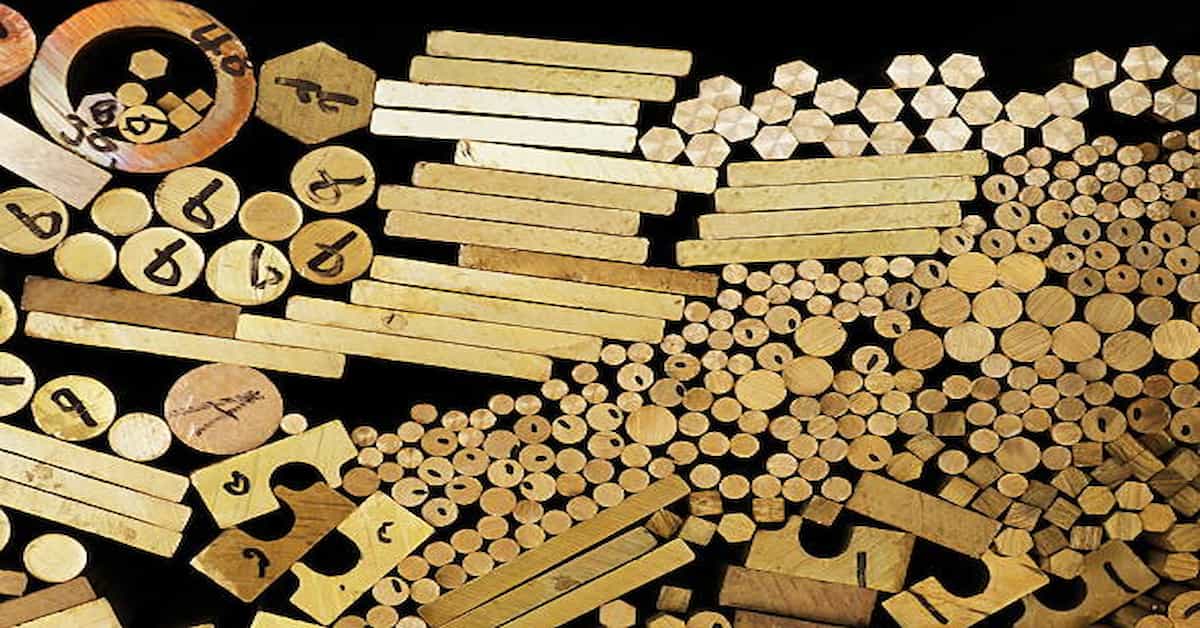
Brass Material Specifications: Understanding UNS, DIN, and ISO Standards
According to Mordor Intelligence, the global brass market is projected to reach USD 15.28 billion by 2034, growing at a 5.0% CAGR from its 2025 valuation of USD 9.82 billion. For engineers, procurement managers, and manufacturers working with brass components, understanding material specifications is not merely academic. It directly impacts product performance, regulatory compliance, and supply chain efficiency.
Brass material specifications span multiple international standards systems, each with its own numbering conventions and classification methods. At Align Manufacturing, we work with these specifications in practical sourcing and production environments, where the correct alloy designation can affect machining performance, inspection requirements, and final part quality.
This guide explains UNS, DIN, EN, and ISO standards, providing practical cross-reference tools and selection guidance for real-world engineering decisions.
What Is Brass and Why Do Standards Matter?
Brass is a copper-zinc alloy that typically contains 60% to 95% copper, with zinc making up the remainder, according to the Copper Development Association. The ratio of copper to zinc determines the alloy’s properties, from ductility and corrosion resistance to machinability and strength. Small additions of lead, tin, aluminium, or other elements further modify these characteristics for specific applications.
Material standards exist to ensure consistency, interoperability, and safety across global supply chains. When an engineer specifies UNS C36000 or DIN CuZn39Pb3, they are communicating precise chemical composition and mechanical property requirements. Understanding how these designations relate across different standards systems prevents costly procurement errors and ensures components meet performance expectations regardless of geographic origin.
For buyers comparing brass against other copper-based materials, our brass vs. bronze manufacturing guide can also help clarify where each alloy family makes sense.
What Does UNS Stand for in Brass Specifications?
UNS stands for Unified Numbering System, a North American standard administered by the Copper Development Association and ASTM International. The UNS provides a consistent designation system for metals and alloys across the United States and Canada, with widespread adoption in global supply chains.
Different regions use different brass standards because national and regional standards bodies developed separately over time. North America predominantly uses UNS, Europe uses DIN and EN standards, while ISO provides international frameworks. As global sourcing has expanded, cross-referencing between these systems has become increasingly important.
How Does the UNS Numbering System Work?
The Unified Numbering System organises copper alloys into logical categories based on composition and form. For brass specifically, understanding these number ranges enables engineers to quickly identify alloy families and their general characteristics.
Wrought and Cast Brass Use Different Number Ranges
UNS distinguishes between wrought and cast brass alloys through number ranges:
| Category | UNS Range | Description |
| Wrought brass alloys | C20000 to C49999 | Worked brass alloys used for sheet, strip, rod, bar, and formed products |
| Cast brass alloys | C83300 to C89999 | Cast brass alloys used for components made through casting processes |
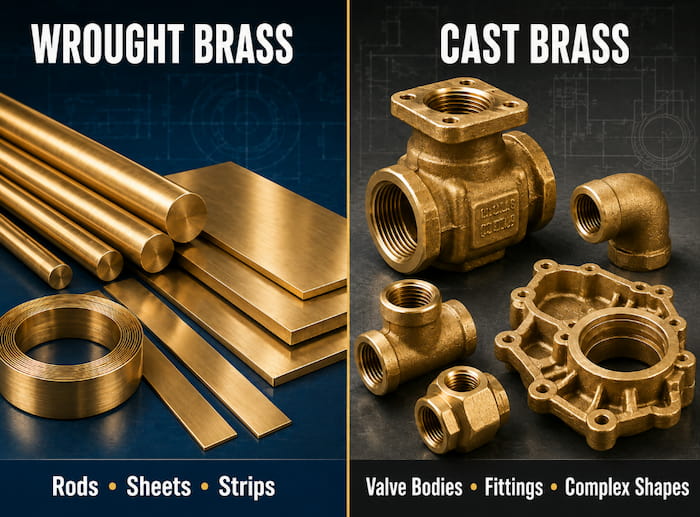
Wrought brass alloys include:
- C20000 to C29999: copper-zinc alloys, also known as binary brasses
- C30000 to C39999: copper-zinc-lead alloys, also known as leaded brasses
- C40000 to C49999: copper-zinc-tin alloys, also known as tin brasses
Cast brass alloys include:
- C83300 to C84999: cast copper-zinc alloys
- C85000 to C89999: cast copper-zinc-lead and special brasses
This distinction matters because cast and wrought alloys have different mechanical properties, even with similar chemical compositions. Cast alloys typically have lower ductility but can achieve complex geometries that may be difficult or impossible with wrought materials.
UNS Numbers Give Quick Alloy Clues
Each UNS number provides immediate clues about alloy composition:
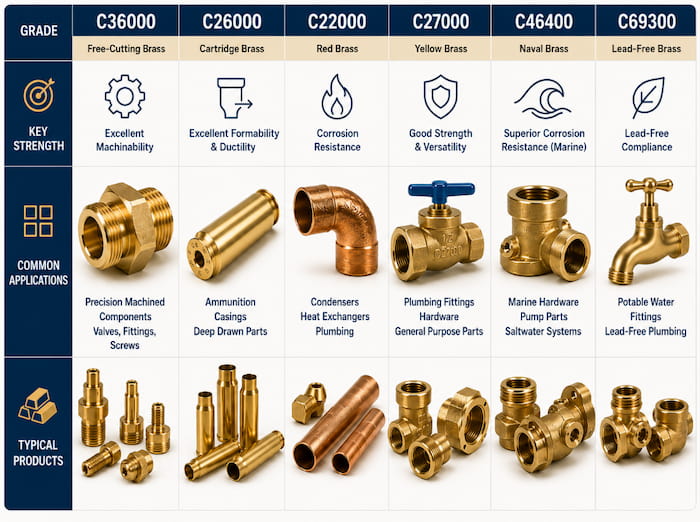
- C26000: cartridge brass, approximately 70% copper and 30% zinc
- C36000: free-cutting brass, approximately 61.5% copper, 35.5% zinc, and 3% lead
- C46400: naval brass, approximately 60% copper, 39% zinc, and 1% tin
The UNS does not encode exact composition percentages. Engineers must consult datasheets or standards for precise values. However, the numbering patterns help engineers quickly identify alloy families during initial material selection.
For machining-focused projects, our brass alloy guide for machining gives a deeper comparison of grades such as C360, C464, and other commonly specified brass alloys.
What Is the Difference Between C260 and C360 Brass?
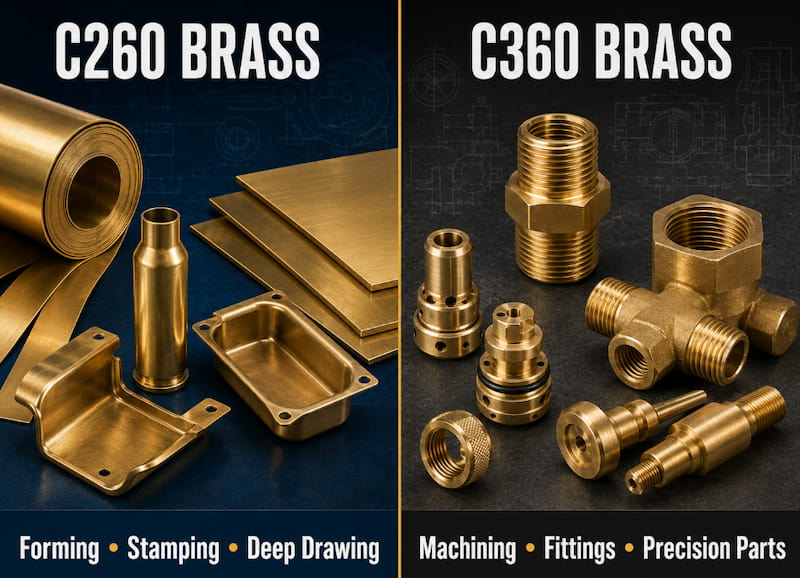
C26000, also known as cartridge brass, contains approximately 70% copper and 30% zinc. It offers excellent ductility for cold working applications such as ammunition casings, heat exchangers, and formed components.
C36000, also known as free-cutting brass, contains approximately 61.5% copper, 35.5% zinc, and 3% lead. It provides superior machinability but limited cold formability, making it ideal for high-speed screw machine products, fittings, and precision machined parts.
The “C” prefix in UNS brass designations refers to copper and copper alloys. This distinguishes brass, bronze, and copper alloy grades from other metal systems.
How Do European DIN and EN Brass Standards Work?
European brass specifications operate under two primary frameworks: DIN standards and EN standards. DIN refers to Deutsches Institut für Normung, historically the German national standards system. EN standards are European Norms maintained by CEN, the European Committee for Standardization.
DIN Material Numbers Describe Copper Alloy Families
DIN uses a material number system, also known as Werkstoffnummer, with the format 2.0XXX for copper alloys:
| DIN Range | Alloy Family |
| 2.02XX | Binary copper-zinc alloys |
| 2.03XX | Leaded copper-zinc alloys |
| 2.04XX | Special brasses |
| 2.05XX | Tin brasses |
Common DIN material numbers include:
- 2.0265: CuZn30, cartridge brass equivalent
- 2.0321: CuZn37, general-purpose brass
- 2.0401: CuZn39Pb3, free-cutting brass equivalent
- 2.0375: CuZn36Pb2As, DZR brass
The chemical formula format, such as CuZn30 or CuZn39Pb3, explicitly states the composition. This makes DIN designations more descriptive than UNS numbers for engineers familiar with alloy chemistry.
EN Codes Identify Product Type and Alloy Group
EN standards use a six-character alphanumeric code:
C + W/B/C/M + three digits + letter
Common prefixes include:
- CW: wrought products
- CB: ingot for casting
- CC: cast products
Brass number ranges within the EN system include:
- CW500L to CW549L: copper-zinc alloys
- CW600N to CW649N: copper-zinc-lead alloys
- CW700R to CW749R: copper-zinc complex alloys
Examples include:
- CW505L: CuZn30, equivalent to C26000
- CW603N: CuZn39Pb3, equivalent to C36000
- CW712R: CuZn38Sn1, naval brass equivalent
Temper Designations Define Mechanical Condition
European standards specify mechanical properties through temper designations:
| Temper Designation | Meaning |
| R | As drawn or rolled |
| H | Hard temper |
| Y | As extruded |
| M | As manufactured |
Suffix numbers indicate specific strength ranges. For example, R250 means 250 MPa minimum tensile strength, while H04 indicates a hard temper with specific hardness requirements.
What Does CW508L Mean in Brass Designation?
CW508L is an EN designation for CuZn37, a common general-purpose brass containing approximately 63% copper and 37% zinc. The “CW” indicates wrought product, “508” is the specific alloy code, and “L” denotes the material group within copper-zinc alloys.
To convert UNS to DIN or EN numbers, engineers usually cross-reference composition equivalence. For example, UNS C36000 corresponds to DIN 2.0401, DIN CuZn39Pb3, and EN CW603N.
What ISO Standards Apply to Brass?
The International Organization for Standardization provides frameworks that bridge regional standards, enabling global trade and technical cooperation.
ISO 1190 Uses Chemical Designations
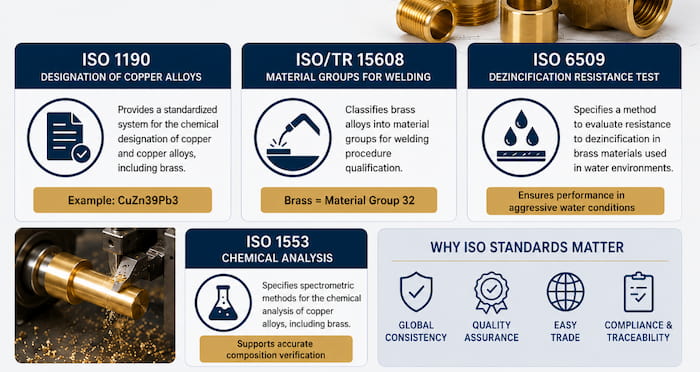
ISO 1190 Part 1 establishes a compositional designation system for copper alloys. The format uses chemical symbols with percentage indicators:
- CuZn38Pb2: copper-zinc alloy with 38% zinc and 2% lead
- CuZn37: binary copper-zinc alloy with 37% zinc
- CuZn40Mn1Pb1: complex brass with manganese and lead additions
This system is chemically descriptive, similar to DIN, making it intuitive for engineers familiar with alloy chemistry.
ISO Material Groups Support Welding and Fabrication
ISO/TR 15608 categorises materials into groups for welding and fabrication purposes. Brass alloys fall into Material Group 32:
| ISO Group | Brass Type |
| Group 32.1 | Alpha brasses with less than 37% zinc |
| Group 32.2 | Alpha-beta or duplex brasses with 38% to 42% zinc |
This classification matters for welding procedures, as alpha and alpha-beta brasses have different welding characteristics and require different process parameters.
ISO Testing Standards Help Verify Brass Performance
ISO maintains testing standards relevant to brass specification, including:
- ISO 6509: dezincification resistance testing
- ISO 1190: designation system for copper alloys
- ISO 1553: spectroscopic analysis for unalloyed copper and copper alloys
These standards support consistent testing and reporting of material properties across international supply chains.
What Is the Difference Between Alpha and Alpha-Beta Brass?
Alpha brasses contain less than 37% zinc and have a single-phase microstructure. They offer excellent cold working properties and are commonly used for forming, bending, and drawing.
Alpha-beta brasses, also called duplex brasses, contain approximately 38% to 42% zinc. They have a two-phase microstructure, giving them higher strength but reduced cold ductility. These alloys are better suited for hot working and casting applications.
What Are Common UNS, DIN, EN, and ISO Brass Equivalents?
The following tables provide practical cross-references for commonly specified brass alloys.
Common Brass Grades and International Equivalents
| Alloy Type | UNS | EN | DIN | JIS | Material No. |
| Free-cutting brass | C36000 | CuZn39Pb3 / CW603N | CuZn39Pb3 | C3604 | 2.0401 |
| Forging brass | C37700 | CuZn39Pb2 / CW612N | CuZn39Pb2 | C3771 | 2.0380 |
| Cartridge brass | C26000 | CuZn30 / CW505L | CuZn30 | C2600 | 2.0265 |
| Naval brass | C46400 | CuZn38Sn1 / CW712R | CuZn38Sn1 | C4640 | Not specified |
| Lead-free brass | C27450 | CuZn39Pb0.5 / CW610N | CuZn39Pb0.5 | Not specified | Not specified |
| DZR brass | Not specified | CW602N | CuZn36Pb2As | Not specified | 2.0375 |
| High tensile brass | C67500 | CW721R | CuZn40Mn1Pb1AlFeSn | Not specified | Not specified |
Brass Applications by Grade
| Application | Recommended Grades | Key Properties |
| Machining and screw machine work | C36000, C37700 | Excellent machinability |
| Plumbing fittings | C27450, CW602N | Corrosion resistance, lead-free options |
| Electrical connectors | C26000, C27000 | Good conductivity and formability |
| Marine hardware | C46400, C46500 | Seawater corrosion resistance |
| Decorative and architectural parts | C26000, C27000 | Colour and polishability |
| Automotive components | C36000, C37700 | Machinability and strength |
Chemical Composition Ranges
| Grade | Cu % | Zn % | Pb % | Sn % | Other |
| C26000 | 68.5 to 71.5 | Remainder | ≤0.07 | Not specified | Not specified |
| C36000 | 60.0 to 63.0 | Remainder | 2.5 to 3.7 | Not specified | Fe ≤0.35 |
| C46400 | 59.0 to 62.0 | Remainder | ≤0.20 | 0.50 to 1.00 | Not specified |
| C37700 | 58.0 to 61.0 | Remainder | 1.5 to 2.5 | Not specified | Fe ≤0.30 |
What Is Equivalent to UNS C36000 Brass?
UNS C36000, also known as free-cutting brass, is commonly equivalent to EN CW603N, DIN CuZn39Pb3, JIS C3604, and material number 2.0401.
These equivalents are useful for procurement teams sourcing across regions. However, final approval should always be based on the exact standard, chemical composition range, mechanical properties, and compliance requirements listed in the purchase specification.
When documentation control is critical, material equivalents should also be supported by certificates, traceability records, and controlled specification revisions. Our guide to manufacturing documentation control and material traceability explains how these records support quality assurance across suppliers.
What Is Dezincification Resistant Brass?
Dezincification resistant brass, or DZR brass, contains small arsenic or antimony additions, typically around 0.02% to 0.15%. These additions help inhibit selective leaching of zinc in water environments.
CW602N, also known as CuZn36Pb2As, is a common DZR grade used for plumbing fittings in aggressive water conditions.
How Do You Select the Right Brass for Your Application?
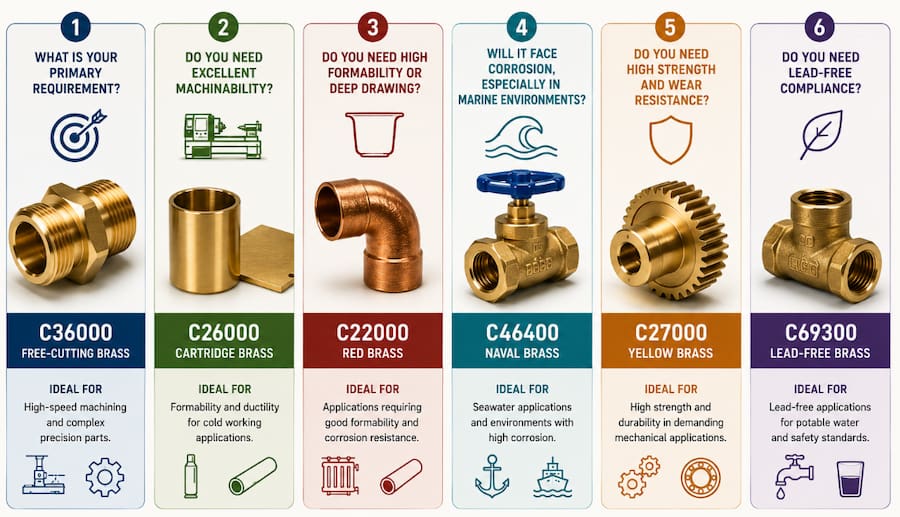
Material selection requires balancing mechanical requirements, manufacturing processes, environmental exposure, regulatory compliance, and cost.
High-Speed Machining Requires Free-Cutting Brass
C36000 free-cutting brass offers excellent machinability and is commonly used for threaded fittings, valves, and precision components. Its lead content provides lubrication during cutting, helping produce small, brittle chips that break cleanly. This supports longer tool life and faster production on screw machines.
For buyers evaluating part tolerances, surface finish, and production method, our guide on what CNC machining is explains how computer-controlled machining produces precision parts to exact specifications.
Cold Forming and Stamping Require Ductile Brass
C26000 cartridge brass provides excellent ductility for deep drawing, bending, and stamping operations. Its single-phase alpha microstructure allows significant deformation without cracking.
Corrosion-Resistant Applications Require Special Brass Grades
C46400 naval brass contains tin, which improves seawater corrosion resistance. DZR grades such as CW602N help prevent dezincification in potable water systems and aggressive water conditions.
Lead-Free Requirements Need Compliant Brass Alternatives
C27450 and similar low-lead alloys are used for potable water applications where lead content restrictions apply. Engineers should verify compliance with relevant standards such as NSF/ANSI 61 and applicable drinking water regulations before specifying materials.
For projects affected by lead restrictions, our guide to lead-free brass standards for manufacturing explains how regulatory changes influence alloy choice and supplier qualification.
What Regulations Affect Brass Selection?
Brass selection may need to consider drinking water, electronics, consumer product, and regional compliance requirements.
NSF/ANSI 61 Applies to Drinking Water Components
Drinking water system components require strict control of lead content. For potable water applications, engineers should verify that the selected brass alloy meets NSF/ANSI 61 and applicable Safe Drinking Water Act requirements.
RoHS and REACH Affect EU Market Access
European regulations such as RoHS and REACH restrict hazardous substances in electrical, electronic, and consumer products. Engineers must verify compliance when specifying leaded brasses for EU markets.
Proposition 65 May Affect Consumer Products in California
California Proposition 65 requires warnings for products containing certain listed substances, including lead. Alternative alloys, protective coatings, or product warnings may be required depending on the application and market.
Which Brass Temper Should You Specify?
Temper designation indicates mechanical properties and formability.
| Temper | Best Use |
| Soft annealed, O | Maximum ductility for severe forming |
| Quarter hard, H01 | Moderate strength with good formability |
| Half hard, H02 | Balanced strength and formability |
| Full hard, H04 | Higher strength with limited formability |
| Spring, H08 | Highest strength for spring applications |
Specify soft annealed temper for severe forming operations. Use a half-hard temper for general-purpose applications requiring moderate strength. Specify full-hard or spring temper for components requiring maximum strength with minimal forming.
When Should You Choose C36000 Over C26000 Brass?
Choose C36000 for applications requiring extensive machining, such as threaded fittings, valves, and precision components. Its lead content improves chip breaking and machinability.
Choose C26000 for applications requiring forming, bending, or deep drawing, such as ammunition casings, radiator cores, and decorative hardware. Its ductility makes it better suited for cold working than C36000.
For pressure and flow-control components, material choice also depends on the production route. Our article on brass valve manufacturing explains how forging and casting affect durability, pressure performance, and manufacturing decisions.
What Are Lead-Free Brass Alternatives?
Lead-free brass alternatives include silicon brass such as C69400, bismuth brass alloys, and low-lead modifications of standard grades such as C27450.
These alloys improve machinability through silicon or bismuth additions instead of lead. They are often used when manufacturers need to meet drinking water or environmental compliance requirements while maintaining acceptable production performance.
Is Brass Magnetic?
No, brass is not magnetic. As a copper alloy, brass is non-ferromagnetic and does not exhibit magnetic properties under normal conditions. This makes brass suitable for applications where magnetic interference must be avoided.
Conclusion
Understanding brass material specifications across UNS, DIN, EN, and ISO standards helps engineers, procurement teams, and manufacturers avoid sourcing errors and maintain consistent part quality. Although each system uses different naming conventions, many standards refer to the same underlying brass alloys, such as UNS C36000, EN CW603N, DIN CuZn39Pb3, and ISO CuZn39Pb3.
For industrial buyers, OEMs, and promotional products suppliers, clear brass specifications make it easier to compare quotations, verify compliance, and manage international suppliers with confidence.
At Align Manufacturing, we help customers turn technical material requirements into reliable, manufacturable components. Whether the project involves CNC-machined brass parts, cast components, or gravity casting Vietnam production, we focus on reducing sourcing risk and improving part consistency from design to delivery.
FAQ
What Does UNS Stand for in Brass Specifications?
UNS stands for Unified Numbering System. It is a North American designation system for metals and alloys, including copper alloys such as brass and bronze.
What Does the “C” Prefix Mean in UNS Brass Designations?
The “C” prefix designates copper and copper alloys within the UNS system. Brass, bronze, and copper alloy grades commonly use this prefix.
What Is the ISO Standard for Brass?
ISO 1190 provides a compositional designation system for copper alloys, while ISO/TR 15608 places brass alloys under Material Group 32 for welding and fabrication classification.
How Do You Convert UNS to DIN Numbers?
UNS to DIN conversion is usually done by comparing chemical composition and mechanical property requirements. For example, UNS C36000 corresponds to DIN CuZn39Pb3 and material number 2.0401.
What Does CW508L Mean?
CW508L is an EN designation for CuZn37, a general-purpose wrought brass containing approximately 63% copper and 37% zinc.
What Is Equivalent to UNS C36000 Brass?
UNS C36000 is commonly equivalent to EN CW603N, DIN CuZn39Pb3, JIS C3604, and material number 2.0401.
What Is Dezincification Resistant Brass?
DZR brass is designed to resist zinc leaching in aggressive water environments. CW602N, also known as CuZn36Pb2As, is a common DZR brass used in plumbing applications.
What Temper Should I Specify for Brass?
Use soft annealed temper for severe forming, half-hard temper for general-purpose strength and formability, and full-hard or spring temper where higher strength is required.