Table of Contents
    What Is CNC Precision Machining

    Vietnam CNC Precision Machining: The 2026 Guide to Asia’s Manufacturing Hub

    CNC precision machining plays a vital role in global manufacturing, powering sectors from aerospace and automotive to medical devices and consumer electronics. While leaders like China, Japan, and Germany continue to dominate, Vietnam is steadily expanding its capabilities. As industries look to balance cost, quality, and flexibility, many consider how Vietnam precision machining suppliers fit into the broader Southeast Asian manufacturing landscape.

    Vietnam has transformed from a low-cost assembly base into a premier global CNC precision machining hub, with the country’s precision machining market projected to reach $2.8 billion by 2030, growing at 7.8% CAGR. This remarkable evolution positions Vietnam as the strategic “China Plus One” destination for manufacturers seeking to balance cost, quality, and supply chain resilience. This comprehensive guide explores every facet of Vietnam’s CNC machining ecosystem—from technical capabilities and cost advantages to industry applications and future growth trajectories.

    Once viewed mainly as a low-cost assembly base, Vietnam now blends competitive pricing with technical proficiency and growing innovation capacity.

    What Is Driving the Explosive Growth of Vietnam’s CNC Machining Market in 2026?

    Vietnam’s CNC machining sector is experiencing unprecedented expansion, driven by several transformative factors:

    • Market Growth: Vietnam precision machining market projected at $2.8 billion by 2030 (7.8% CAGR)
    • Global Context: Global precision machining market to reach $228.75 billion by 2033 (8.1% CAGR)
    • Cost Advantages: 40–50% lower labor costs compared to China’s major manufacturing regions
    • Trade Benefits: EVFTA, CPTPP, and UKVFTA provide 0% tariffs for EU/UK exports
    • Investment Surge: $15.8 billion FDI in manufacturing (2025), with 65% targeting high-tech sectors

    This growth reflects Vietnam’s strategic positioning as manufacturers diversify supply chains away from China while maintaining access to Asian manufacturing ecosystems. The country has successfully transitioned from simple assembly to complex precision manufacturing, with CNC machining at the forefront of this industrial evolution.

    What Is CNC Precision Machining?

    What Is CNC Precision Machining

    CNC (Computer Numerical Control) machining is an automated manufacturing process that uses computer-controlled tools to shape raw materials like metals or plastics, into precise, complex parts. It’s ideal for creating both prototypes and full-scale production parts.

    Because CNC machining combines speed, accuracy, and versatility, it’s ideal for producing parts used in industries where reliability and performance are non-negotiable like automotive, aerospace, oil & gas, robotics, and consumer electronics.

    Core CNC Machining Processes in Vietnam

    1. CNC Milling (3-, 4-, and 5-Axis)

    • 3-Axis: Basic X, Y, Z movement for prismatic parts
    • 4-Axis: Adds rotational axis for complex contours
    • 5-Axis: Simultaneous 5-axis movement for aerospace/aerospace components
    • Vietnamese Capability: 85% of major facilities have 5-axis capability

    2. CNC Turning (Lathe Operations)

    • Standard Turning: Cylindrical parts, shafts, bushings
    • Swiss Turning: Micro-precision components (medical devices)
    • Multi-Axis Turning: Combined milling/turning operations
    • Vietnamese Expertise: 60,000+ skilled CNC operators nationwide

    3. Multi-Axis Machining Centers

    • Mill-Turn Centers: Combined milling and turning in single setup
    • B-Axis Machining: Complex angle machining capabilities
    • Vietnamese Investment: $2.1 billion in advanced machinery (2020–2025)

    4. Specialized Processes

    • EDM (Electrical Discharge Machining): For hardened materials
    • Wire EDM: Precision cutting of conductive materials
    • Laser Cutting: High-speed sheet metal processing
    • Waterjet Cutting: For composites and sensitive materials

    Vietnam vs. China: Complete 2026 CNC Machining Comparison

    ParameterVietnamChina
    Labor Costs$196-321/month average$500-800/month average
    Energy Costs$0.085/kWh$0.114/kWh
    Minimum Order Quantity50-500 units1,000-10,000+ units
    Lead Times4-8 weeks6-12 weeks
    Tariff Advantages0% to EU/UK via EVFTA/UKVFTA8-12% tariffs to EU/US
    Political RiskLow (stable, pro-business)Moderate (trade tensions)
    Supply Chain DepthGrowing rapidly (15-20% localization)Mature (80-90% localization)
    Technical ExpertiseRapidly advancingEstablished and deep
    Best ForMid-volume, complex parts, EU/UK exportsMass production, complex supply chains
    Quality StandardsISO 9001: 85% certifiedISO 9001: 95%+ certified

    How Do CNC Machining Costs in Vietnam Compare with China?

    Direct Cost Comparison (Per Part Basis):

    • Labor Component: Vietnam 40–50% lower
    • Material Costs: China 10–15% lower (scale advantages)
    • Energy Costs: Vietnam 25% lower
    • Overhead/Management: Vietnam 20–30% lower
    • Total Landed Cost (EU Market): Vietnam 15–25% lower (including tariffs)

    Break-Even Analysis:

    • Volume Threshold: Vietnam excels at 500–50,000 units
    • Complexity Sweet Spot: Medium to high complexity parts
    • Material Considerations: Better for aluminum, stainless steel, titanium
    • Tolerance Requirements: ±0.01mm to ±0.1mm optimal range

    Why Vietnam Is Becoming a Global CNC Destination?

    1. Competitive Costs Without Compromising Quality

    Vietnam offers significantly lower labor and facility costs compared to China, Japan, or Western countries, while still maintaining a high standard of output. Skilled machinists are able to deliver precise, high-quality components without the premium costs often associated with other manufacturing hubs. Additionally, shorter supply chains and regional access to raw materials help reduce logistics expenses, further improving cost efficiency.

    2. Rapidly Growing Skilled Workforce

    One of Vietnam’s strongest advantages lies in its rapidly expanding pool of skilled workers. Technical schools and vocational training programs across the country are producing engineers and machinists who are proficient in CAD/CAM design and CNC programming. This growing talent base is complemented by hands-on experience with international quality standards, ensuring that Vietnamese manufacturers can deliver complex, precision-engineered projects with consistency and reliability.

    3. Modern Facilities and Advanced Equipment

    Vietnamese machining facilities are investing heavily in state-of-the-art technology. Many workshops are now equipped with 3-, 4-, and 5-axis CNC machining centers capable of handling highly complex geometries. Advanced quality control systems, including CMMs and optical inspection tools, are increasingly common, allowing manufacturers to maintain tight tolerances and ensure product accuracy. The adoption of smart manufacturing practices also boosts efficiency, reduces errors, and shortens lead times.

    4. Business-Friendly Environment and Trade Advantages

    Vietnam’s government has created a highly supportive business environment that encourages foreign partnerships and investment. Tax incentives, well-planned industrial zones, and simplified regulations make it easier for companies to set up and scale operations. In addition, Vietnam’s participation in key trade agreements, such as the CPTPP and EVFTA, lowers tariffs and simplifies market entry for global customers, giving manufacturers and clients a clear competitive edge.

    5. Strategic Location in Southeast Asia

    Vietnam’s geographic position is another factor behind its growing appeal. Its proximity to material suppliers and tooling manufacturers helps reduce procurement times, while access to major shipping routes ensures fast and cost-effective global exports. Moreover, Vietnam’s location makes it an ideal hub for companies operating multi-country supply chains across Asia, offering both logistical convenience and strategic reach.

    What Are Vietnam’s CNC Machining Advantages Beyond Cost Savings?

    1. Technical Capabilities and Equipment Modernization

    Vietnamese CNC facilities have invested heavily in state-of-the-art equipment:

    Equipment Portfolio:

    • 5-Axis Machining Centers: DMG Mori, Mazak, Haas
    • Multi-Tasking Machines: Nakamura, Okuma, Doosan
    • High-Speed Machining: Spindles up to 30,000 RPM
    • Automated Systems: Robotic loading/unloading, pallet changers
    • Measurement Equipment: CMMs (Zeiss, Mitutoyo), optical comparators

    Technical Specifications:

    • Positioning Accuracy: ±0.005mm
    • Repeatability: ±0.002mm
    • Surface Finish: Ra 0.4–1.6μm achievable
    • Maximum Part Size: Up to 2000mm × 1000mm × 800mm
    • Material Range: Aluminum, steel, titanium, Inconel, plastics

    2. Skilled Workforce Development

    Vietnam’s technical education system produces 50,000+ engineering graduates annually:

    Workforce Profile:

    • Average Age: 28 years
    • Technical Training: 85% have vocational certification
    • Language Skills: 40% conversational English proficiency
    • Software Proficiency: Mastercam, SolidWorks, CATIA, Siemens NX
    • Quality Mindset: Strong focus on precision and continuous improvement

    Training Infrastructure:

    • Technical Colleges: 150+ nationwide
    • Industry Partnerships: 80% of major manufacturers have training programs
    • Government Support: $500 million annual investment in technical education
    • International Certification: IHK (Germany), City & Guilds (UK) programs

    3. Quality Management and Certifications

    Vietnamese manufacturers have embraced international quality standards:

    Common Certifications:

    • ISO 9001: 85% of major facilities
    • IATF 16949: 40% of automotive suppliers
    • AS9100: 25% of aerospace suppliers
    • ISO 13485: 30% of medical device manufacturers
    • NADCAP: 15 facilities for special processes

    Quality Control Systems:

    • Inspection Equipment: CMM, optical comparators, surface roughness testers
    • Process Control: SPC (Statistical Process Control) implementation
    • Traceability: Full material and process traceability
    • Documentation: Comprehensive FAIR (First Article Inspection Reports)**

    4. Strategic Geographic Location

    Vietnam’s location provides unique logistical advantages:

    Port Infrastructure:

    • Cai Mep-Thi Vai: Deep-water port (16m draft), 6.5 million TEU capacity
    • Hai Phong: Northern hub, 8.2 million TEU capacity
    • Da Nang: Central region gateway
    • Transshipment: Direct routes to EU, US, and regional hubs

    Industrial Zones:

    • Number: 400+ industrial parks nationwide
    • Specialized Zones: 50+ high-tech parks
    • Infrastructure: Ready-built factories, utilities, logistics
    • Location Strategy: Coastal zones for export, inland for domestic supply

    Supply Chain Integration:

    • Proximity to China: 1–2 days trucking for components
    • Regional Materials: Access to Southeast Asian raw materials
    • Local Support Industries: Tooling, heat treatment, surface finishing
    • Logistics Network: Road, rail, sea, and developing air cargo

    5. Government Support and Business Environment

    Vietnam’s pro-business policies accelerate manufacturing growth:

    Investment Incentives:

    • Corporate Tax: 10–17% (vs China’s 25%)
    • Tax Holidays: 4-year exemption + 9-year 50% reduction
    • Import Duty: Exemption for production materials
    • Land Rental: 50–70% reduction in industrial zones
    • Training Support: 50–100% subsidy for workforce development

    Trade Agreements:

    • EVFTA (EU): 99% tariff elimination by 2027
    • CPTPP (11 countries): Comprehensive tariff reduction
    • UKVFTA (UK): 99% tariff elimination
    • RCEP (15 countries): Largest trading bloc globally
    • ASEAN Agreements: Regional preferential access

    Which Industries Benefit Most from CNC Machining in Vietnam?

    Automotive Components (35% Market Share)

    Technical Requirements:

    • Tolerances: ±0.02mm
    • Materials: Aluminum 6061-T6, 7075-T6, steel alloys
    • Volumes: 10,000–100,000 units annually
    • Certifications: IATF 16949 mandatory

    Key Components:

    • Engine Parts: Cylinder heads, blocks, manifolds
    • Transmission: Gearbox housings, shafts, synchronizers
    • Suspension: Control arms, knuckles, brackets
    • EV Components: Battery enclosures, motor housings, thermal management

    Case Study: European automaker achieved 30% cost reduction while improving quality metrics:

    • Cost Savings: 30% vs Chinese suppliers
    • Quality Improvement: PPM reduced from 800 to 100
    • Lead Time: Reduced from 14 to 10 weeks
    • Sustainability: Carbon footprint reduced 35%

    Aerospace and Defense (15% Market Share)

    Technical Requirements:

    • Tolerances: ±0.005mm
    • Materials: Titanium (Ti-6Al-4V), Inconel, aluminum 2024
    • Certifications: AS9100, NADCAP for special processes
    • Traceability: Full material and process documentation

    Key Components:

    • Structural Elements: Brackets, fittings, mounts
    • Interior Components: Seat frames, overhead bins
    • Engine Parts: Non-rotating components, housings
    • Defense Applications: Guidance system components, enclosures

    Quality Standards:

    • First Article Inspection: AS9102 compliance
    • Process Control: SPC for critical dimensions
    • Material Verification: Mill certificates, heat lot tracking
    • Surface Integrity: Controlled machining parameters

    Medical Devices (20% Market Share)

    Technical Requirements:

    • Tolerances: ±0.01mm
    • Materials: Stainless steel 316L, titanium, PEEK
    • Surface Finish: Ra 0.4μm or better
    • Certifications: ISO 13485, FDA compliance

    Key Components:

    • Surgical Instruments: Forceps, retractors, handles
    • Implants: Orthopedic components, dental fixtures
    • Diagnostic Equipment: Housings, mounts, components
    • Disposable Devices: Precision plastic components

    Cleanroom Manufacturing:

    • Class 100,000: 40+ facilities nationwide
    • Class 10,000: 15 facilities for critical components
    • Validation: IQ/OQ/PQ protocols
    • Packaging: Cleanroom packaging and sterilization

    Industrial Machinery (20% Market Share)

    Technical Requirements:

    • Tolerances: ±0.05mm
    • Materials: Steel, cast iron, aluminum
    • Surface Treatments: Hard coating, plating, painting
    • Assembly: Sub-assembly and testing capabilities

    Key Components:

    • Pump Housings: Centrifugal, gear, diaphragm pumps
    • Valve Bodies: Gate, globe, check valves
    • Gearbox Components: Housings, shafts, gears
    • Automation Equipment: Robot end effectors, fixtures

    Electronics and Consumer Products (10% Market Share)

    Technical Requirements:

    • Tolerances: ±0.1mm
    • Materials: Aluminum, plastics, composites
    • Surface Finish: Anodizing, powder coating, painting
    • Volumes: 5,000–500,000 units

    Key Components:

    • Enclosures: Electronic housings, bezels, panels
    • Heat Sinks: Custom thermal management solutions
    • Connectors: Precision-machined connector bodies
    • Consumer Goods: High-end appliance components

    What to Look for in a Vietnamese CNC Partner?

    Choosing the right partner is crucial. Key factors:

    • Technical expertise. Can they achieve the tolerances, finishes, and complexities your parts require?
    • Equipment & capacity. Do they have advanced machinery (e.g., 4-/5-axis) and capacity for future growth?
    • Quality assurance. Are they equipped with CMMs, inspection protocols, and traceability systems?
    • Certifications. Look for ISO 9001 and, if relevant, sector-specific certifications like IATF 16949 or AS9100.
      Communication & project management. Do they provide responsive updates, DFM (Design for Manufacturability) support, and clear documentation?
    • Value-added services. Consider whether they offer finishing, assembly, or packaging to streamline your supply chain.

    Technical Capability Assessment

    Equipment Verification:

    • 5-axis machining capability
    • Multi-axis turning centers
    • CMM inspection equipment
    • Surface finish measurement
    • Material testing facilities

    Technical Expertise:

    • CAD/CAM software proficiency
    • Engineering support team
    • DFM (Design for Manufacturing) capability
    • Prototyping experience
    • Material selection guidance

    Quality Management Evaluation

    Certification Verification:

    • ISO 9001:2015 certification
    • Industry-specific certifications (IATF, AS, ISO 13485)
    • Calibration certificates for measurement equipment
    • Material certification processes
    • Traceability systems

    Quality Processes:

    • First Article Inspection process
    • Statistical Process Control implementation
    • Non-conformance management
    • Corrective action procedures
    • Customer complaint handling

    Business and Communication Assessment

    Project Management:

    • Dedicated project manager
    • Regular progress reporting
    • Communication channels (email, video calls, messaging)
    • Language proficiency (English, Chinese, etc.)
    • Time zone compatibility

    Commercial Terms:

    • Transparent pricing structure
    • Payment terms flexibility
    • Incoterms understanding
    • Insurance coverage
    • Contract terms and conditions

    Logistics and Supply Chain Evaluation

    Shipping and Logistics:

    • Export documentation experience
    • Freight forwarder partnerships
    • Packaging standards
    • Lead time reliability
    • Customs clearance support

    Supply Chain Management:

    • Local material sourcing
    • Import material experience
    • Inventory management
    • Risk mitigation strategies
    • Business continuity planning

    What Is the Future Outlook for CNC Machining in Vietnam from 2026 to 2030?

    The Future of CNC Machining in Vietnam
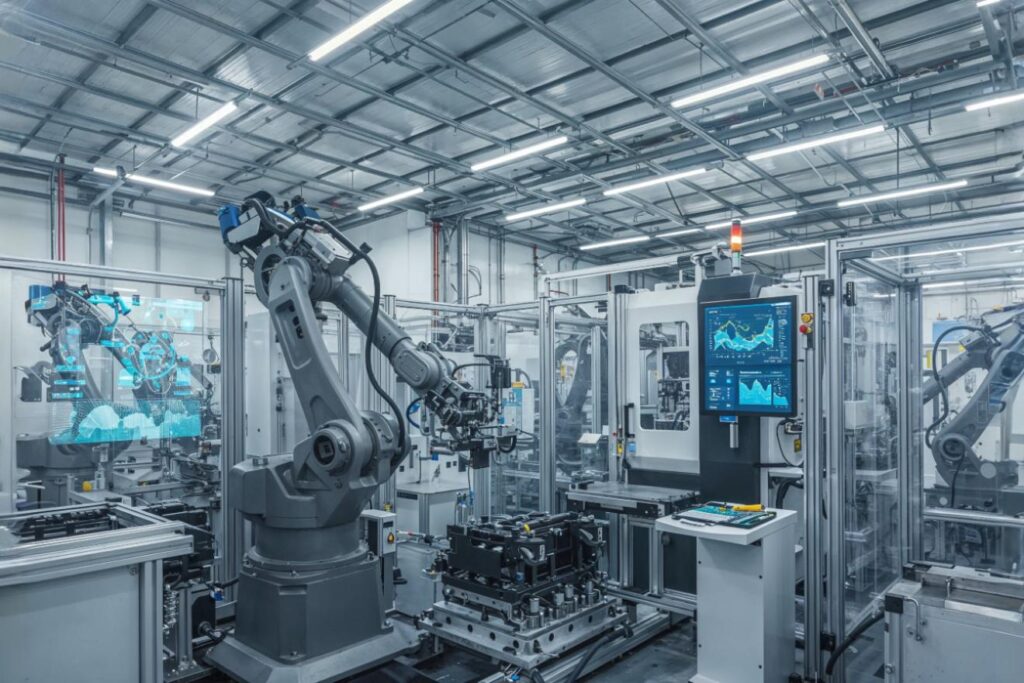
    Technology Adoption Trends

    Industry 4.0 Integration:

    • Digital Twins: Virtual machining simulation and optimization
    • IoT Sensors: Real-time machine monitoring and predictive maintenance
    • AI Quality Inspection: Computer vision for defect detection
    • Automated Material Handling: Robotic loading/unloading systems
    • Cloud Manufacturing: Distributed production networks

    Advanced Manufacturing Technologies:

    • Additive Manufacturing: Hybrid CNC/3D printing systems
    • Ultra-Precision Machining: Sub-micron accuracy capabilities
    • Smart Tooling: Adaptive cutting tools with embedded sensors
    • Sustainable Machining: Minimum quantity lubrication, energy recovery

    Market Expansion Projections

    Growth Forecasts:

    • Market Size: $2.8 billion by 2030 (7.8% CAGR)
    • Export Value: $45 billion manufacturing exports by 2030
    • Employment: 500,000+ skilled CNC professionals by 2030
    • Facility Investment: $5 billion in new capacity (2026–2030)

    Industry Diversification:

    • Aerospace: Targeting $2 billion in component exports by 2030
    • Medical Devices: $1.5 billion export goal for precision components
    • EV Components: $3 billion manufacturing capacity for electric vehicles
    • Renewable Energy: Wind turbine and solar panel components

    Sustainability Initiatives

    Environmental Commitments:

    • Carbon Neutral Goals: Net-zero emissions by 2050
    • Energy Efficiency: 20% reduction in energy intensity by 2030
    • Water Conservation: 30% reduction in water usage
    • Waste Reduction: 90% recycling rate for metal scrap
    • Green Certifications: ISO 14001 adoption across industry

    Circular Economy Integration:

    • Material Recycling: Closed-loop aluminum and steel recycling
    • Tool Life Extension: Advanced coating and refurbishment
    • Energy Recovery: Waste heat utilization systems
    • Sustainable Packaging: Biodegradable and reusable packaging

    Conclusion

    CNC precision machining is no longer the domain of a few established nations. Vietnam has proven that it can deliver world-class quality, cutting-edge technology, and competitive pricing, all while offering the supply chain resilience and agility modern manufacturers demand.
    Navigating a new manufacturing region can feel daunting. At Align MFG, we connect companies with reliable CNC machining partners in Vietnam and across Asia. From prototype to production, we manage quality, communication, and logistics every step of the way.

    Frequently Asked Questions (FAQ)

    1. How does Vietnam’s CNC machining quality compare to China?

    Vietnamese CNC machining quality is comparable to mid-to-high-tier Chinese suppliers, with 85% of major facilities ISO 9001 certified. While China has deeper experience in ultra-high precision (±0.001mm), Vietnam excels in the ±0.01mm to ±0.1mm range with better cost efficiency and faster response times.

    2. What are the typical lead times for CNC machining in Vietnam?

    Standard lead times range from 4-8 weeks for production quantities, including tooling fabrication. Prototype lead times are typically 2-4 weeks. These compare favorably to China’s 6-12 week lead times, though China offers faster turnaround for established tooling.

    3. What materials are commonly machined in Vietnam?

    Vietnam has strong capabilities with aluminum alloys (6061, 7075), stainless steel (304, 316), carbon steel, brass, and engineering plastics. Advanced material capabilities include titanium (Ti-6Al-4V), Inconel, and magnesium alloys, though these may have longer lead times.

    4. How do tariffs affect sourcing from Vietnam vs China?

    Vietnam offers significant tariff

    Align Manufacturing

    Align Manufacturing

    Align Manufacturing is a Western owned and operated engineering and manufacturing company with local staff, to help you effectively source your industrial parts for US projects from South and South East Asia.