
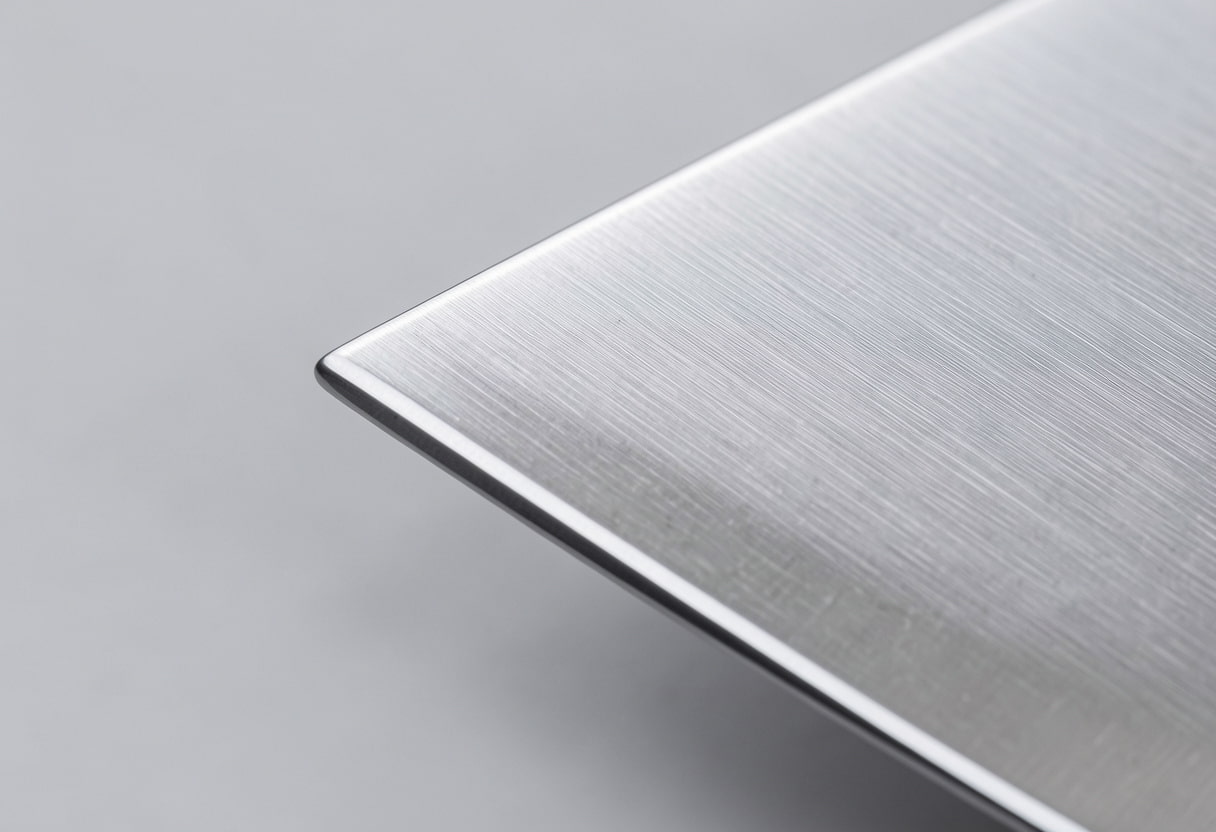
What is 440C Stainless Steel? Properties & Knife Applications
Grade 440C stainless steel represents the pinnacle of hardness and wear resistance among all stainless steel grades. As a high-carbon martensitic stainless steel, it has earned its reputation as the go-to material for applications requiring exceptional strength, durability, and the ability to maintain a sharp edge under demanding conditions. From precision ball bearings in critical machinery to surgical instruments and high-performance knife blades, 440C delivers performance that few other materials can match.
Understanding 440C Stainless Steel Composition and Classification
What Makes 440C Unique in the 440 Series
The 440 series of stainless steels includes three primary grades: 440A, 440B, and 440C. While all three share similar base characteristics, 440C stands apart due to its significantly higher carbon content. This elevated carbon level enables 440C to achieve the highest hardness, wear resistance, and strength of any stainless steel grade in the series after proper heat treatment.
Grade 440A contains 0.60–0.75% carbon, making it the most corrosion-resistant but least hardenable of the three. Grade 440B contains 0.75–0.95% carbon, offering a balance between hardness and corrosion resistance. In contrast, 440C contains 0.95–1.20% carbon, allowing it to achieve maximum hardness levels of 58–60 HRC and up to 62 HRC with optimized heat treatment.
Technical Specifications and Standards
Understanding official designations is essential for procurement, compliance, and engineering documentation. 440C stainless steel is recognized under the following standards:
- UNS Number: S44004
- ASTM Standard: A276
- SAE Grade: 51440C
- Euronorm: 1.4125
- DIN: X105CrMo17
- JIS: SUS 440C
These standardized identifiers ensure consistent material quality across global supply chains.
Detailed Chemical Composition
The performance characteristics of 440C stainless steel are driven by its chemical composition:
- Carbon (0.95–1.20%) – Primary hardening element responsible for high strength and wear resistance
- Chromium (16.0–18.0%) – Provides corrosion resistance and forms chromium carbides
- Manganese (≤1.00%) – Improves hardenability
- Silicon (≤1.00%) – Acts as a deoxidizer
- Molybdenum (≤0.75%) – Enhances corrosion resistance and strength
- Iron (Balance) – Base element
The combination of high carbon and chromium enables the formation of hard chromium carbides, which significantly enhance wear resistance.
Mechanical and Physical Properties
Hardness and Strength Characteristics
After proper heat treatment, 440C stainless steel achieves exceptional mechanical properties:
- Hardness: 58–60 HRC (up to 62 HRC possible)
- Tensile Strength: 1,750–2,030 MPa
- Yield Strength: 1,230–1,900 MPa
These values position 440C among the hardest commercially available stainless steels.
Physical Properties
Key physical properties include:
- Density: 7,650 kg/m³
- Elastic Modulus: 200 GPa
- Thermal Conductivity: 24.2 W/m·K
These characteristics contribute to dimensional stability and reliable mechanical performance under load.
Heat Treatment for Maximum Performance
Hardening Procedure
To achieve optimal hardness and wear resistance, 440C undergoes a controlled heat treatment process:
- Preheating: Heat to approximately 760°C (1,400°F)
- Austenitizing: Raise temperature to 1,010–1,065°C
- Quenching: Oil quench or air cool
This process transforms the microstructure into martensite, enabling maximum hardness.
Tempering
Tempering fine-tunes the final mechanical properties.
- Low-temperature tempering (150–370°C) produces maximum hardness of 58–60 HRC.
- For knife applications, tempering at 200–230°C typically delivers an ideal balance of hardness and toughness.
Why 440C is Popular for Knives and Bearings
Superior Edge Retention in Knife Applications
440C is widely used in cutlery due to its exceptional edge retention and wear resistance.
Its hardness of 58–60 HRC allows blades to resist edge deformation during cutting. The high carbon content produces abundant chromium carbides, which improve abrasion resistance. At the same time, its 16–18% chromium content provides sufficient corrosion resistance for kitchen and outdoor environments.
Anti-Friction Properties in Bearing Applications
440C dominates the market for rolling element bearings used in corrosive or high-humidity environments. Its combination of high hardness, dimensional stability, and moderate corrosion resistance makes it ideal for:
- Aerospace bearings
- Medical and dental equipment
- Food processing machinery
- Marine components
Comparison with Other Blade Steels
| Property | 440C | D2 |
|---|---|---|
| Carbon Content | 0.95–1.20% | 1.40–1.60% |
| Chromium Content | 16–18% | 11–13% |
| Hardness | 58–60 HRC | 58–62 HRC |
| Corrosion Resistance | Good | Moderate |
440C vs. D2 Tool Steel
D2 contains higher carbon (1.40–1.60%) but lower chromium (11–13%). While both steels achieve similar hardness ranges (58–62 HRC), 440C offers superior corrosion resistance, making it more suitable for humid or wet conditions.
440C vs. 154CM Stainless Steel
154CM was developed as a modification of 440C with increased molybdenum content. This addition improves hot hardness and toughness, though often at higher cost. 440C remains more widely available and cost-effective.
440C vs. VG-10 Japanese Stainless Steel
VG-10 generally provides enhanced edge retention and toughness due to its refined alloy design. However, 440C offers comparable hardness with better global availability and competitive pricing.
Industrial Applications Beyond Knives
Although often associated with cutlery, 440C serves a broad range of industrial applications.
Ball Bearings and Rolling Elements
440C is considered the premier material for corrosion-resistant ball bearings due to its hardness and wear resistance.
Valve Components and Seats
Its strength and wear resistance make it suitable for:
- Ball valve components
- Valve seats
- Needle valve parts
Molds and Dies
440C is also used in:
- Plastic injection molds
- Blow molds
- Extrusion dies
Its hardness and dimensional stability support extended service life in tooling applications.
Conclusion
440C stainless steel continues to set the benchmark for high-hardness martensitic stainless grades, offering exceptional wear resistance, edge retention, and mechanical strength when properly heat treated. Its high carbon and chromium content allow it to achieve hardness levels up to 60–62 HRC, making it ideal for knife blades, precision bearings, valve components, and other wear-critical applications. While it requires careful processing and is less suitable for highly chloride-rich environments, 440C remains a proven, performance-driven material where strength and durability are prioritized over extreme corrosion resistance.
At Align Mfg, we apply this metallurgical understanding to deliver precision components manufactured from advanced investment casting steel materials, including high-performance grades like 440C. By combining material expertise with controlled casting and post-processing techniques, we ensure optimal microstructure, hardness consistency, and dimensional accuracy for demanding industrial applications. Whether producing wear-resistant components or high-strength mechanical parts, Align Mfg focuses on aligning material science with manufacturing precision to achieve long-term performance reliability.
Frequently Asked Questions
What is the maximum hardness achievable with 440C?
With optimal heat treatment, 440C can achieve 60–62 HRC.
Is 440C truly stainless steel?
Yes. With 16–18% chromium content, 440C qualifies as a martensitic stainless steel.
Can 440C be used for ball bearings?
Absolutely. It is widely recognized as the preferred material for corrosion-resistant ball bearings.
What is the best tempering temperature for 440C knife blades?
Tempering at 200–230°C typically produces 58–60 HRC, balancing hardness and toughness.
Is 440C magnetic?
Yes. Due to its martensitic structure, 440C is ferromagnetic.