
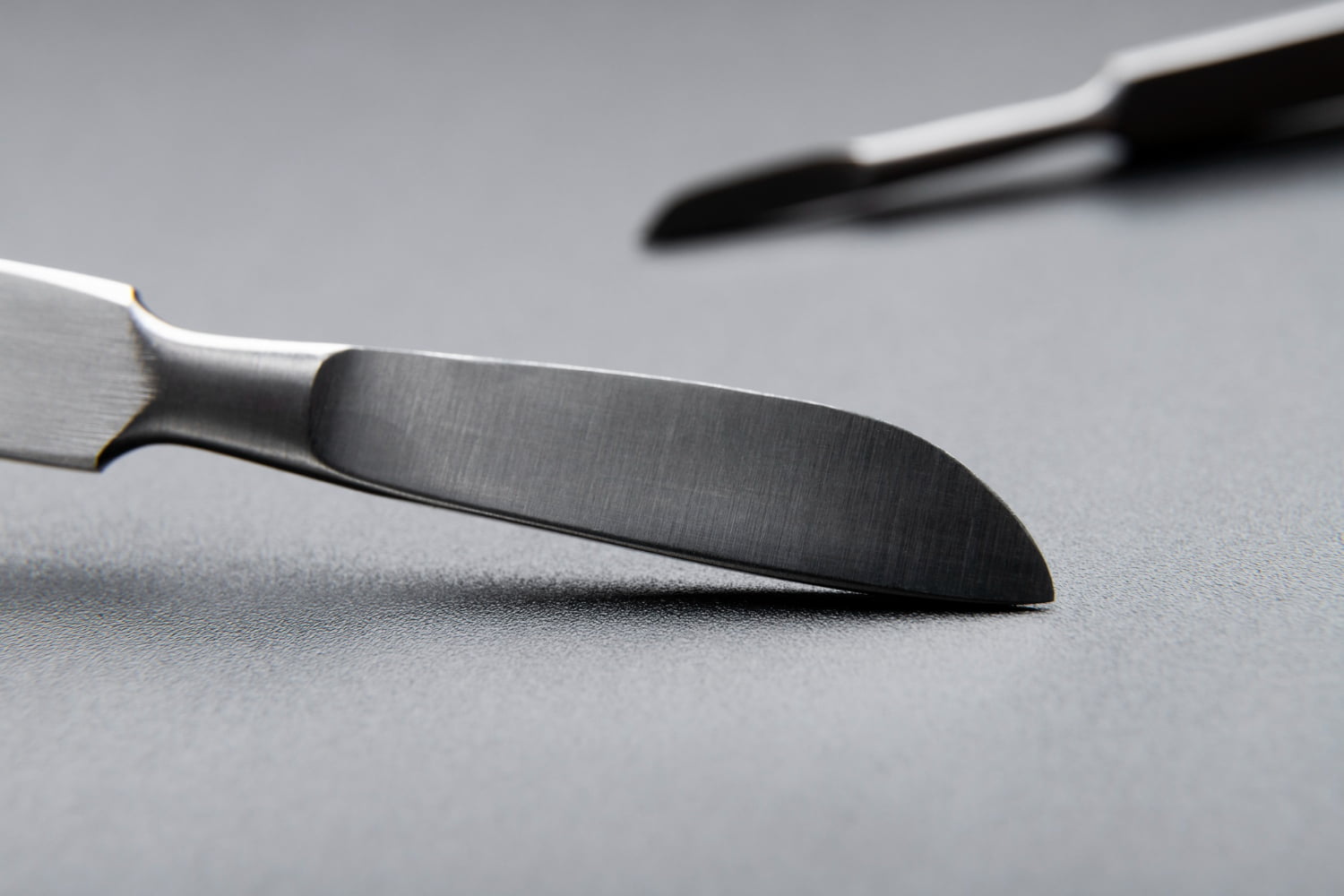
What is 440C Stainless Steel? Properties & Knife Applications
Introduction
440C stainless steel is one of the most widely used materials in knife manufacturing, prized for its exceptional combination of hardness, corrosion resistance, and edge retention. This comprehensive guide explores the properties, applications, and characteristics that make 440C a preferred choice for knife makers and manufacturers worldwide [^1^].
Understanding 440C stainless steel is essential for anyone involved in blade production, from hobbyist knife makers to industrial manufacturers. This martensitic stainless steel offers a unique balance of performance characteristics that have made it a staple in the cutlery industry for decades [^2^].
What is 440C Stainless Steel?
440C is a high-carbon martensitic stainless steel that belongs to the 440 series of stainless steels. It is known for its high hardness and excellent wear resistance, making it particularly suitable for applications requiring sharp edges and durability [^3^].
Chemical Composition
The chemical composition of 440C stainless steel includes:
- Carbon (C): 0.95–1.20% – Provides hardness and edge retention
- Chromium (Cr): 16.0–18.0% – Offers corrosion resistance
- Manganese (Mn): 1.0% max – Improves hardenability
- Silicon (Si): 1.0% max – Enhances strength
- Molybdenum (Mo): 0.75% max – Increases wear resistance
- Phosphorus (P): 0.04% max
- Sulfur (S): 0.03% max
This composition gives 440C its characteristic properties that make it ideal for knife applications [^4^].
Key Properties of 440C Stainless Steel
Hardness and Heat Treatment
440C stainless steel can achieve high hardness levels through proper heat treatment:
- Annealed Hardness: 200–250 HB (Brinell)
- Hardened Hardness: 58–60 HRC (Rockwell C)
- Maximum Hardness: Up to 60 HRC with optimal heat treatment
The heat treatment process involves:
- Austenitizing: Heating to 1850-1900°F (1010-1038°C)
- Quenching: Rapid cooling in oil or air
- Tempering: Reheating to 300-800°F (149-427°C) to achieve desired hardness [^5^]
Corrosion Resistance
440C offers excellent corrosion resistance due to its high chromium content (16-18%). This makes it suitable for:
- Kitchen knives exposed to moisture
- Marine applications
- Food processing equipment
- Medical instruments [^6^]
Wear Resistance
The high carbon content and presence of chromium carbides provide exceptional wear resistance, ensuring:
- Long-lasting sharp edges
- Reduced need for frequent sharpening
- Durability in cutting applications [^7^]
Machinability
440C stainless steel has moderate machinability in the annealed condition. However, it becomes more difficult to machine after hardening. Manufacturers should consider:
- Using sharp cutting tools
- Maintaining proper cutting speeds
- Applying adequate coolant
- Allowing for tool wear [^8^]
Applications of 440C Stainless Steel
Knife Manufacturing
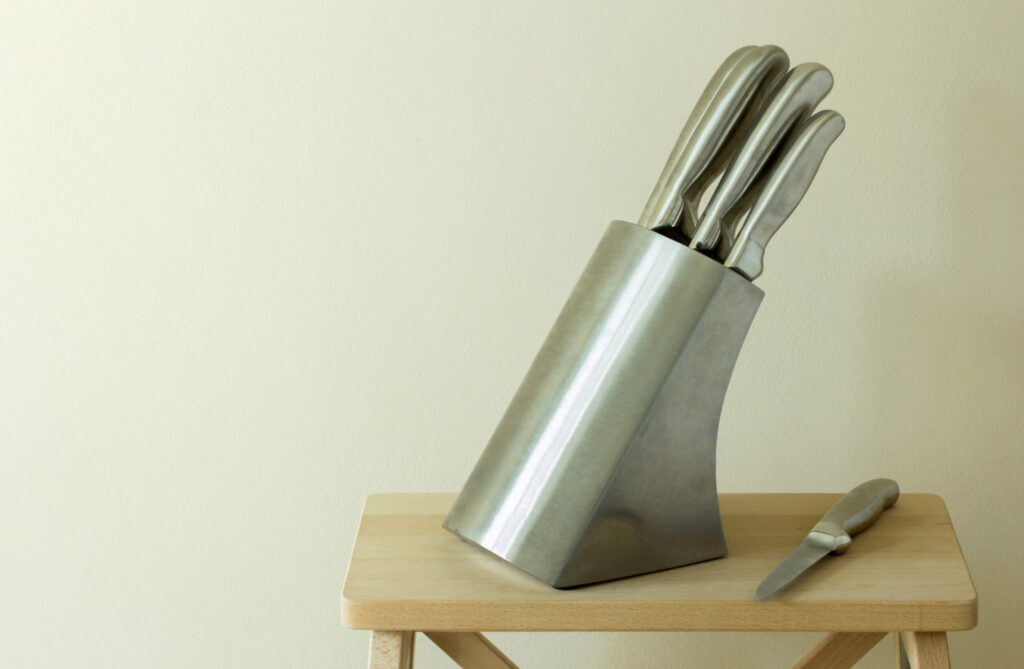
440C is extensively used in various types of knives:
Kitchen Knives
- Chef’s knives
- Paring knives
- Utility knives
- Boning knives
Sporting Knives
- Hunting knives
- Fishing knives
- Pocket knives
- Tactical knives
Industrial Blades
- Cutting tools
- Surgical instruments
- Razor blades
- Precision cutting equipment [^9^]
Other Applications
Beyond knives, 440C is used in:
- Ball bearings and races
- Valve components
- Nozzles
- Mold and die components
- Measuring instruments [^10^]
440C vs Other Knife Steels
440C vs D2 Steel
| Property | 440C | D2 |
|---|---|---|
| Hardness | 58-60 HRC | 55-62 HRC |
| Corrosion Resistance | Excellent | Good |
| Edge Retention | Good | Excellent |
| Ease of Sharpening | Moderate | Difficult |
| Price | Moderate | Higher |
440C vs 154CM
| Property | 440C | 154CM |
|---|---|---|
| Hardness | 58-60 HRC | 58-61 HRC |
| Corrosion Resistance | Excellent | Excellent |
| Toughness | Moderate | Better |
| Price | Lower | Higher |
440C vs VG-10
| Property | 440C | VG-10 |
|---|---|---|
| Hardness | 58-60 HRC | 60-62 HRC |
| Corrosion Resistance | Excellent | Excellent |
| Edge Retention | Good | Excellent |
| Origin | American | Japanese |
Advantages of 440C Stainless Steel
- Excellent Corrosion Resistance: High chromium content provides superior rust resistance
- High Hardness: Achieves 58-60 HRC for excellent edge retention
- Good Wear Resistance: Carbide content ensures long-lasting performance
- Cost-Effective: Offers good performance at a reasonable price point
- Proven Track Record: Decades of successful use in knife manufacturing
- Availability: Widely available from multiple suppliers
- Heat Treatable: Can be optimized for specific applications [^11^]
Disadvantages and Limitations
- Moderate Toughness: Can be brittle compared to some modern steels
- Machining Difficulty: Requires specialized equipment after hardening
- Edge Stability: May chip under heavy impact compared to tougher steels
- Not Premium Grade: Outperformed by newer super steels in some applications [^12^]
Manufacturing Considerations
Forging
440C can be forged at temperatures between 1700-2100°F (927-1149°C). Proper forging requires:
- Uniform heating
- Adequate reduction ratios
- Controlled cooling to prevent cracking [^13^]
Heat Treatment Best Practices
- Preheat to 1200-1400°F (649-760°C) before austenitizing
- Austenitize at 1850-1900°F (1010-1038°C) for 30-40 minutes
- Quench rapidly in oil or use air quenching for thinner sections
- Temper immediately at desired temperature (typically 300-400°F for knives)
- Cryogenic treatment optional for maximum hardness [^14^]
Surface Finishing
440C accepts various surface finishes:
- Satin finish: Brushed appearance, hides scratches
- Mirror polish: High reflectivity, maximum corrosion resistance
- Bead blast: Matte finish, uniform appearance
- Acid etch: Patterned finish, enhances aesthetics [^15^]
Quality Control and Testing
Hardness Testing
Rockwell C (HRC) testing is the standard method for verifying heat treatment:
- Test multiple points on the blade
- Ensure consistency across the piece
- Document results for quality assurance [^16^]
Corrosion Testing
Salt spray testing (ASTM B117) can verify corrosion resistance:
- 24-48 hour exposure
- Visual inspection for rust formation
- Comparison to industry standards [^17^]
Conclusion
440C stainless steel remains a dependable and cost-effective material for knife manufacturing because it offers a strong balance of hardness, corrosion resistance, wear resistance, and edge retention. Even as newer premium alloys continue to enter the market, 440C still holds its place as a practical option for many blade applications thanks to its proven performance, broad availability, and reasonable cost. For manufacturers and buyers looking for a steel that performs reliably across kitchen, sporting, and industrial uses, 440C continues to be a smart and versatile choice.
At Align Mfg, we understand that material selection is never just about technical properties on paper. It is about choosing the right process and alloy for the end-use environment, performance target, and production requirements. Whether your project involves precision-machined components, blade-related parts, or broader metal manufacturing solutions such as sand casting stainless steel, our team focuses on helping customers turn material knowledge into real-world manufacturing results with the right balance of quality, consistency, and cost efficiency.
FAQ
Q: Is 440C good for kitchen knives?
A: Yes, 440C is excellent for kitchen knives due to its high corrosion resistance and ability to maintain a sharp edge. It’s particularly suitable for knives that will be exposed to moisture.
Q: How hard can 440C stainless steel get?
A: With proper heat treatment, 440C can achieve hardness levels of 58-60 HRC, with some applications reaching up to 60-61 HRC.
Q: Is 440C easy to sharpen?
A: 440C has moderate sharpenability. It’s harder to sharpen than softer steels but easier than many modern super steels. Standard sharpening stones work well.
Q: How does 440C compare to 440A and 440B?
A: 440C has the highest carbon content (0.95-1.20%) compared to 440A (0.65-0.75%) and 440B (0.75-0.95%), making it the hardest and most wear-resistant of the three.
Q: Can 440C rust?
A: While 440C has excellent corrosion resistance, it can still rust if exposed to harsh conditions or not properly maintained. Regular cleaning and drying are recommended.
Q: What is the best heat treatment for 440C knife blades?
A: Austenitize at 1850-1900°F, oil quench, and temper at 300-400°F for optimal combination of hardness and toughness for knife applications.
Q: Is 440C suitable for beginner knife makers?
A: Yes, 440C is a good choice for beginners due to its forgiving heat treatment window and widespread availability. However, proper heat treatment equipment is necessary.
Q: How does 440C perform in saltwater environments?
A: 440C performs well in saltwater due to its high chromium content, but regular maintenance (rinsing and drying) is still necessary to prevent corrosion.
Q: What is the typical price range for 440C steel?
A: 440C is considered a mid-range steel, typically costing less than premium steels like S30V or 154CM while offering good performance for the price.
Q: Can 440C be used for Damascus steel?
A: Yes, 440C can be used in Damascus patterns, though it’s more commonly used as a solid blade material. It pairs well with 1095 or 15N20 for contrast.
Q: What grinding methods work best for 440C?
A: Belt grinding with ceramic or zirconia belts works well. For hand sanding, use progressive grits from 120 to 600+ for a fine finish.
Q: How long does a 440C knife edge last?
A: Edge retention depends on use, but 440C typically holds an edge well for moderate use. Heavy cutting may require sharpening after several hours of use.
Q: Is 440C magnetic?
A: Yes, 440C is magnetic in both annealed and hardened conditions due to its martensitic structure.
Q: Can 440C be welded?
A: Welding is possible but challenging due to hardening and potential cracking. Preheating and post-weld heat treatment are essential.
Q: What safety precautions are needed when working with 440C?
A: Standard metalworking safety applies: eye protection, dust masks when grinding, proper ventilation, and heat-resistant gloves during heat treatment.