
Posts by Align Manufacturing
How to Choose the Right Fabrication Partner in Vietnam
If you’ve been keeping an eye on global manufacturing trends, you’ve probably noticed one country making waves in the fabrication industry: Vietnam. Once considered a secondary player to giants like China or India, Vietnam has rapidly become a go-to destination for companies looking to outsource metal fabrication, welding, laser cutting, and CNC machining.
Choosing the right partner is critical if you want quality, consistency, cost-efficiency, and risk mitigation. In this guide, we’ll walk you through everything you need to know to confidently choose a fabrication partner in Vietnam, from what to look for and questions to ask, to pitfalls to avoid.
Why Vietnam Is Becoming a Fabrication Hotspot
- Cost Advantages Without Cutting Corners
Vietnam offers lower labor and operating costs compared to many traditional manufacturing hubs. This often translates to 20–40% cost savings without sacrificing quality, a big win for companies trying to stay competitive.
2) Skilled Workforce and Modern Capabilities
Fabrication in Vietnam has come a long way. Today, you’ll find suppliers with advanced capabilities like laser cutting, robotic welding, CNC machining, bending, and assembly, often matching the standards of factories in more established markets.
3) Strategic Trade Agreements and Location
Vietnam is part of multiple trade deals (like CPTPP and EVFTA) and strategically located near major shipping routes. This means easier access to key markets like the U.S., Europe, and Japan, often with lower tariffs and shorter transit times.
4) Diversification and Supply Chain Resilience
With many companies adopting a “China + 1” sourcing strategy, Vietnam is a natural choice to diversify risk and build more resilient supply chains.
What to Look for in a Fabrication Partner in Vietnam
Capabilities That Match Your Needs
Start by understanding what services the supplier actually offers. A good fabrication partner should provide a range of processes so you don’t have to juggle multiple vendors. Look for capabilities like:
- Laser cutting and bending
- Welding and assembly
- CNC machining (3-, 4-, or 5-axis)
- Surface finishing (painting, coating, polishing)
- Prototyping and low-volume runs
- Final assembly and packaging
Quality Control and Certifications
Quality can make or break your product. Before committing, dig into how your potential partner manages quality. Look for:
- ISO 9001 certification (quality management)
- ISO 14001 (environmental management)
- Industry-specific standards (e.g., AWS for welding, ASME for pressure vessels)
- In-house inspection tools like CMM machines, material testing labs, and NDT capabilities
Proven Track Record
Experience matters. A supplier that’s already produced for your industry will better understand your needs, from tolerance requirements to compliance standards.
Look for signs of credibility:
- Case studies or client success stories
- References you can contact
- Years in operation and size of facility
- Export experience (especially to your target market)
Capacity and Scalability
One common mistake is choosing a partner that’s perfect for today’s order but can’t scale when you grow. If your product is likely to grow in volume, make sure the supplier is ready to grow with you. Ask about:
- Current production capacity and utilization
- Lead times for prototypes, small batches, and large orders
- Ability to add shifts or expand production if needed
Communication and Project Management
Even the most technically capable fabricator can cause problems if communication is poor. Clear, timely communication is crucial especially if you’re managing projects from overseas.
Ask these questions early:
- Do they have English-speaking engineers or project managers?
- How often will they provide updates (weekly reports, milestone check-ins)?
- Can they work directly from your CAD files and technical drawings?
Cost Transparency
Cost isn’t just about the price per part. The best suppliers will give you a clear breakdown of what’s included in the quote:
- Material costs
- Tooling/setup fees
- Labor and machining time
- Surface finishing
- Packaging and logistics
Transparent pricing helps you avoid unpleasant surprises later and makes it easier to compare quotes from multiple suppliers.
Intellectual Property (IP) Protection
Your designs are valuable. Before sharing CAD files or prototypes, make sure your partner takes IP protection seriously. Here’s how to reduce risk:
- Sign a Non-Disclosure Agreement (NDA) before sharing any technical data.
- Clearly outline IP ownership in your contract.
- Ask if they’ve worked with clients who have strict IP requirements.
Pitfalls to Avoid When Choosing a Fabrication Partner
Even experienced sourcing managers sometimes make these mistakes. Avoid them to save yourself headaches later:
- Choosing on price alone. A cheap quote can cost more in the long run if quality or reliability suffers.
- Skipping due diligence. Always check certifications, visit the factory if possible, and ask for references.
- Vague contracts. Clearly define quality expectations, tolerances, delivery schedules, and penalties in writing.
- Underestimating communication needs. Misunderstandings can cause costly delays. Make sure your supplier is responsive and aligned with your processes.
Conclusion
Choosing a fabrication partner in Vietnam is one of the most impactful decisions you’ll make for your product’s success. It’s not just about cost savings. It’s about building a partnership that supports your growth, protects your reputation, and ensures your customers get the quality they expect.
If you’re exploring fabrication in Vietnam, companies like Align Manufacturing can help make the process smoother. With capabilities that include welding and assembly, laser cutting, bending, and precision CNC machining, Align offers end-to-end fabrication solutions tailored to your needs.And if you’re ready to explore fabrication in Vietnam with a partner who ticks all those boxes, Align Manufacturing is a great place to start.
Investment Casting in Vietnam: Process & Benefits
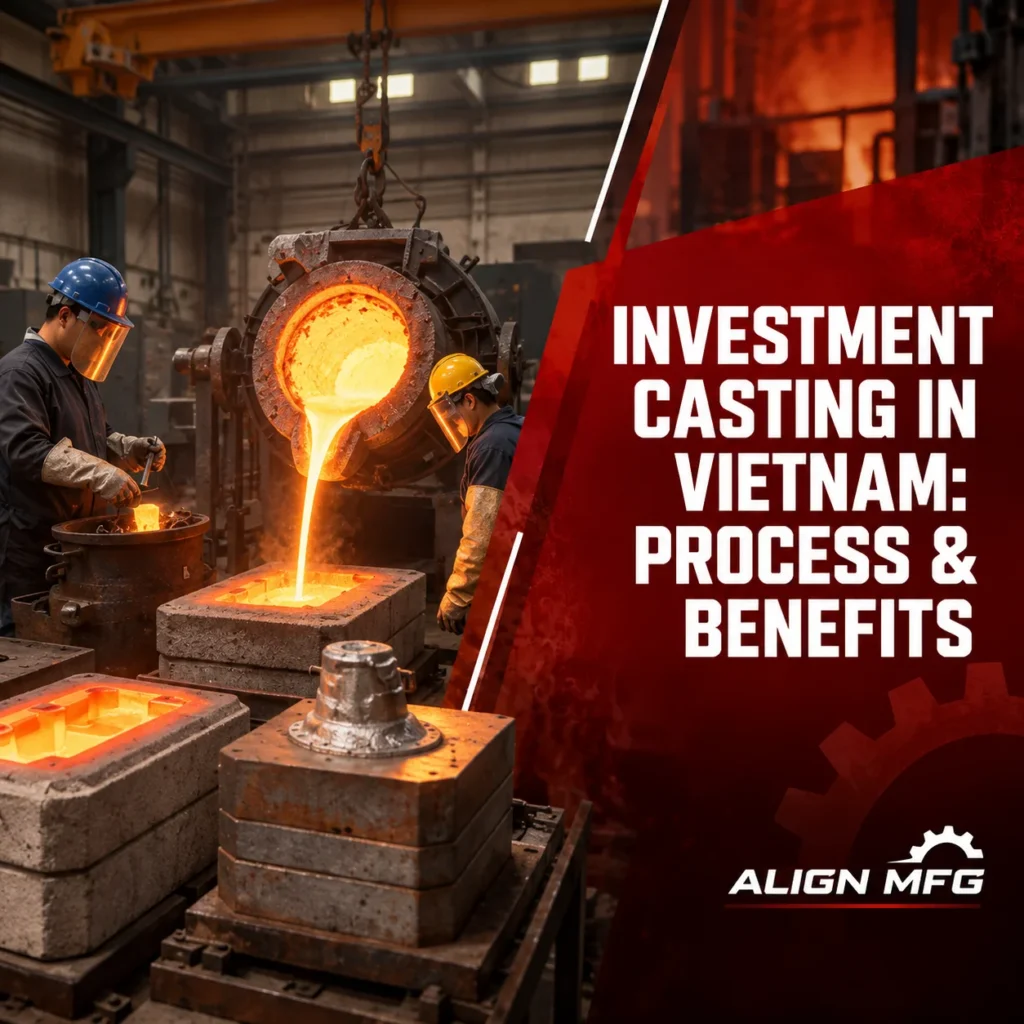
Investment casting, also known as lost-wax casting, is a versatile, cost-effective method for producing complex, high-precision metal components across industries like aerospace, automotive, medical, and industrial machinery. As companies look for reliable alternatives to traditional manufacturing hubs, Vietnam is emerging as a top destination, offering competitive costs, skilled labor, and modern capabilities. This guide explains how investment casting works, why it’s widely used, and why Vietnam is ideal for your next project.
What Is Investment Casting?
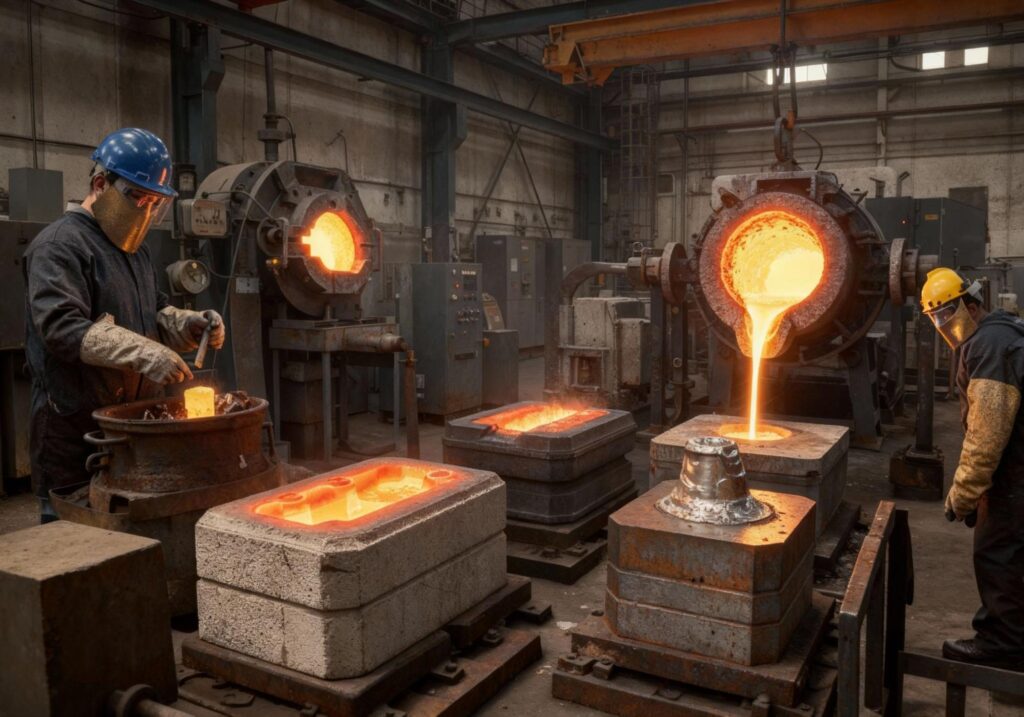
Investment casting is a precision metal-forming process that uses a wax pattern to create a ceramic mold, into which molten metal is poured to produce complex parts with excellent surface finish and tight tolerances. Because the mold is destroyed after each casting, the process is ideal for intricate geometries, thin walls, and near-net-shape components that would be difficult or expensive to machine.
Step-by-Step: How the Investment Casting Process Works
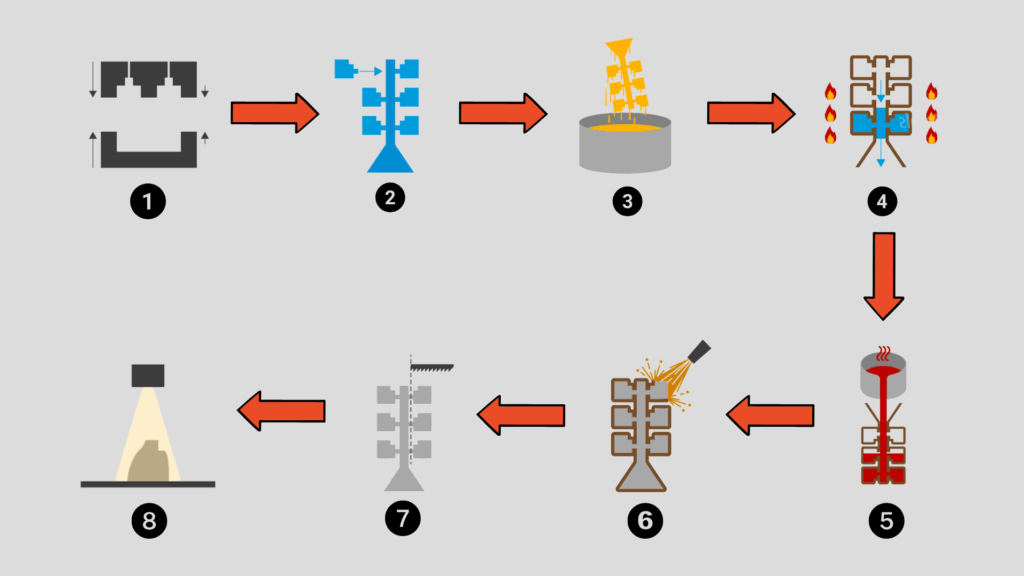
1. Wax Pattern Creation
The process starts with creating a wax replica of the final part. This pattern is typically made by injecting molten wax into a metal die. If the part is complex, multiple wax sections are assembled together.
2. Assembly (Treeing)
Multiple wax patterns can be attached to a central wax sprue, forming what’s known as a “tree.” This allows multiple components to be cast in a single batch, improving efficiency.
3. Ceramic Shell Building
The wax tree is repeatedly dipped into a ceramic slurry and coated with fine sand. After each layer dries, the process is repeated several times to build a strong ceramic shell capable of withstanding high casting temperatures.
4. Dewaxing
Once the ceramic shell is complete, the wax is melted and drained out, leaving a hollow mold cavity that precisely mirrors the original part geometry.
5. Metal Pouring
The preheated ceramic mold is filled with molten metal under carefully controlled conditions. The choice of alloy depends on the application, ranging from stainless steel and carbon steel to cobalt- or nickel-based superalloys.
6. Cooling and Shell Removal
After the metal solidifies, the ceramic shell is broken away, revealing the raw cast part.
7. Cutting, Finishing & Inspection
Individual castings are cut from the tree and undergo finishing processes like grinding, machining, heat treatment, and surface finishing.
8. Inspection
Rigorous inspections (including dimensional checks, NDT, and chemical analysis) ensure the final components meet all specifications.
Why Choose Investment Casting?
- Complex Geometry & Design Freedom
Because the wax pattern can replicate almost any shape, investment casting allows for intricate designs with fine details, thin walls, undercuts, and internal cavities without expensive tooling changes.
- Superior Surface Finish
The ceramic mold delivers a smooth surface straight out of the casting process, significantly reducing or even eliminating secondary machining and polishing.
- Material Versatility
Investment casting supports a wide range of metals and alloys (stainless steel, aluminum, titanium, cobalt-chrome, and more) enabling engineers to meet demanding performance and environmental requirements.
Why Vietnam Is Becoming a Top Choice for Investment Casting
1) Cost-Effective Manufacturing
Vietnam’s lower labor costs, often 30–50% below China, translate into highly competitive pricing without compromising quality. Combined with efficient operations and favorable logistics, buyers often achieve significant cost savings per unit.
2) Skilled Workforce & Industrial Growth
Vietnam’s rapid industrialization has been accompanied by a focus on technical training and manufacturing excellence. Many foundries now operate with modern equipment, ISO certifications, and experienced engineering teams.
3) Strategic Location & Trade Advantages
With free trade agreements like the CPTPP and EVFTA, Vietnam enjoys preferential access to major markets in the U.S., EU, and Asia. Its proximity to global supply chain hubs also reduces shipping times and logistics costs.
4) Advanced Capabilities
Vietnamese foundries have invested heavily in advanced casting technology, from 3D-printed wax patterns to automated shell building, enabling them to produce high-precision components for demanding industries.
5) Flexible Production Volumes
From low-volume prototype runs to high-volume production, investment casting facilities in Vietnam offer scalability that suits both startups and global OEMs.
Industries That Rely on Investment Casting in Vietnam
- Aerospace: Turbine blades, brackets, housings
- Automotive: Turbocharger components, suspension parts
- Energy: Pump bodies, valve components, impellers
- Medical: Surgical instruments, implantable components
- Industrial Equipment: Tooling, wear-resistant parts, machine housings
Conclusion
Investment casting remains one of the most powerful manufacturing methods for producing high-quality metal components with precision and design flexibility. As companies rethink their sourcing strategies in a globalized landscape, Vietnam stands out as a smart, strategic choice, combining cost advantages with technical expertise, modern facilities, and strong quality standards.Ready to explore investment casting solutions in Vietnam? Align Manufacturing’s engineering team can support your project from concept to completion, helping you bring high-quality, cost-effective components to market faster.
Why Vietnam is Emerging as a CNC Precision Machining Hub
CNC precision machining plays a vital role in global manufacturing, powering sectors from aerospace and automotive to medical devices and consumer electronics. While leaders like China, Japan, and Germany continue to dominate, Vietnam is steadily expanding its capabilities. As industries look to balance cost, quality, and flexibility, many consider how Vietnam precision machining suppliers fit into the broader Southeast Asian manufacturing landscape.
Once viewed mainly as a low-cost assembly base, Vietnam now blends competitive pricing with technical proficiency and growing innovation capacity.
What Is CNC Precision Machining?
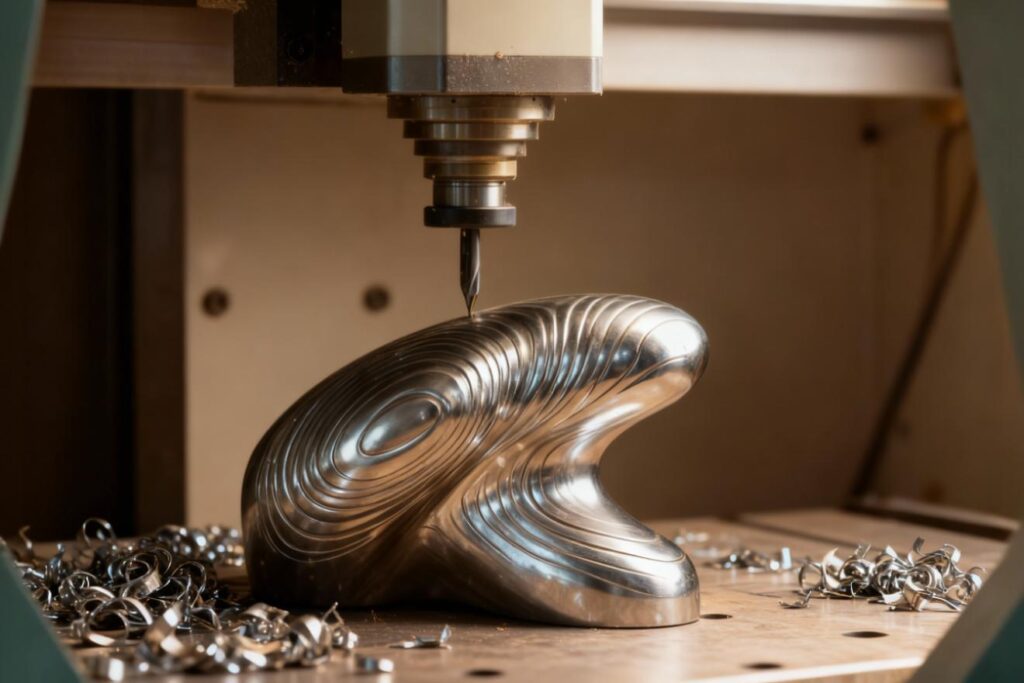
CNC (Computer Numerical Control) machining is an automated manufacturing process that uses computer-controlled tools to shape raw materials like metals or plastics, into precise, complex parts. It’s ideal for creating both prototypes and full-scale production parts.
Because CNC machining combines speed, accuracy, and versatility, it’s ideal for producing parts used in industries where reliability and performance are non-negotiable like automotive, aerospace, oil & gas, robotics, and consumer electronics.
Why Vietnam Is Becoming a Global CNC Destination
1. Competitive Costs Without Compromising Quality
Vietnam offers significantly lower labor and facility costs compared to China, Japan, or Western countries, while still maintaining a high standard of output. Skilled machinists are able to deliver precise, high-quality components without the premium costs often associated with other manufacturing hubs. Additionally, shorter supply chains and regional access to raw materials help reduce logistics expenses, further improving cost efficiency.
2. Rapidly Growing Skilled Workforce
One of Vietnam’s strongest advantages lies in its rapidly expanding pool of skilled workers. Technical schools and vocational training programs across the country are producing engineers and machinists who are proficient in CAD/CAM design and CNC programming. This growing talent base is complemented by hands-on experience with international quality standards, ensuring that Vietnamese manufacturers can deliver complex, precision-engineered projects with consistency and reliability.
3. Modern Facilities and Advanced Equipment
Vietnamese machining facilities are investing heavily in state-of-the-art technology. Many workshops are now equipped with 3-, 4-, and 5-axis CNC machining centers capable of handling highly complex geometries. Advanced quality control systems, including CMMs and optical inspection tools, are increasingly common, allowing manufacturers to maintain tight tolerances and ensure product accuracy. The adoption of smart manufacturing practices also boosts efficiency, reduces errors, and shortens lead times.
4. Business-Friendly Environment and Trade Advantages
Vietnam’s government has created a highly supportive business environment that encourages foreign partnerships and investment. Tax incentives, well-planned industrial zones, and simplified regulations make it easier for companies to set up and scale operations. In addition, Vietnam’s participation in key trade agreements, such as the CPTPP and EVFTA, lowers tariffs and simplifies market entry for global customers, giving manufacturers and clients a clear competitive edge.
5. Strategic Location in Southeast Asia
Vietnam’s geographic position is another factor behind its growing appeal. Its proximity to material suppliers and tooling manufacturers helps reduce procurement times, while access to major shipping routes ensures fast and cost-effective global exports. Moreover, Vietnam’s location makes it an ideal hub for companies operating multi-country supply chains across Asia, offering both logistical convenience and strategic reach.
Vietnam vs. China: How Do They Compare?
| Feature | China | Vietnam |
| Labor cost | Rising | Lower, stable |
| Machine technology | Mature | Rapidly modernizing |
| Supply chain depth | Very deep | Growing fast |
| Political/trade risk | Higher | Lower |
| Agility & responsiveness | Slower for smaller clients | Highly flexible |
| Best for | Very large volume | Mid-volume, complex, diversified projects |
What to Look for in a Vietnamese CNC Partner
Choosing the right partner is crucial. Key factors:
- Technical expertise. Can they achieve the tolerances, finishes, and complexities your parts require?
- Equipment & capacity. Do they have advanced machinery (e.g., 4-/5-axis) and capacity for future growth?
- Quality assurance. Are they equipped with CMMs, inspection protocols, and traceability systems?
- Certifications. Look for ISO 9001 and, if relevant, sector-specific certifications like IATF 16949 or AS9100.
Communication & project management. Do they provide responsive updates, DFM (Design for Manufacturability) support, and clear documentation? - Value-added services. Consider whether they offer finishing, assembly, or packaging to streamline your supply chain.
The Future of CNC Machining in Vietnam
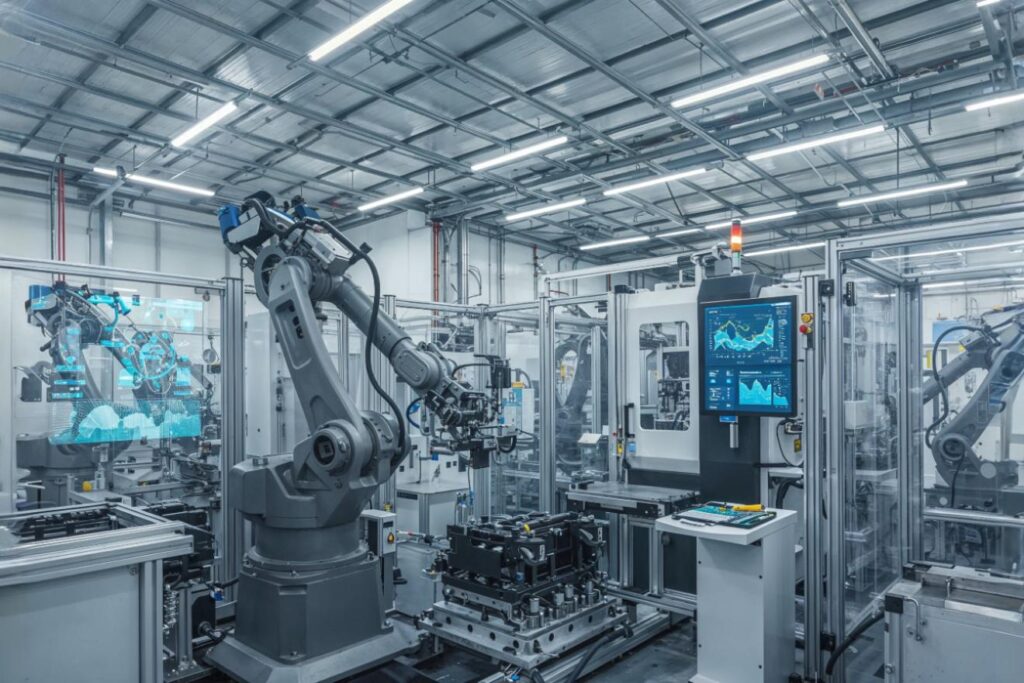
The rise of CNC machining in Vietnam is only just beginning. In the next decade, several trends will accelerate its growth:
- Automation & Industry 4.0: Expect more robotics, automated tool changers, and smart manufacturing systems.
- Advanced materials: As capabilities improve, Vietnamese shops will increasingly machine high-performance alloys like titanium, Inconel, and specialty steels.
- Specialized industries: Growth in aerospace, medical devices, and renewable energy will drive demand for even higher precision and tighter quality controls.
- Localized supply chains: More domestic suppliers for raw materials, tooling, and coatings will reduce reliance on imports and shorten lead times.
Conclusion
CNC precision machining is no longer the domain of a few established nations. Vietnam has proven that it can deliver world-class quality, cutting-edge technology, and competitive pricing, all while offering the supply chain resilience and agility modern manufacturers demand.
Navigating a new manufacturing region can feel daunting. At Align MFG, we connect companies with reliable CNC machining partners in Vietnam and across Asia. From prototype to production, we manage quality, communication, and logistics every step of the way.
Forged vs Cast: What’s the Real Difference in Strength and Cost?
Forging and casting are two foundational metal manufacturing processes that produce the majority of structural components used in automotive, aerospace, energy, and medical devices. In simple terms, forging reshapes solid metal by compressive force to align and refine its grain structure, while casting pours molten metal into a mold to form complex shapes. A growing body of studies and industry data shows forged parts often exhibit higher tensile, yield, and fatigue strength (for example, +26% tensile and +37% fatigue in representative comparisons), whereas castings excel in geometric complexity and low-to-medium volume economics.
In this article, you’ll get: clear definitions, quantified comparisons of mechanical properties, cost-per-unit models across volumes, quality and inspection considerations, application-specific guidance, decision matrices, and a balanced look at trade-offs, sustainability, and future trends.
Summary
- Strength: Forgings generally outperform castings in tensile, yield, impact, and fatigue strength due to refined and aligned grain flow and reduced internal defects.
- Cost: Castings typically have lower upfront tooling costs and are often more economical at low volumes and for complex geometries; forgings become cost-effective as volumes and strength requirements rise.
- Quality: Casting risks include porosity, inclusions, hot tears, and cold shuts; forging risks include laps/folds if poorly controlled. Proper heat treatment and inspection can elevate both.
- Applications: Choose forging for high-load, fatigue-critical, safety-critical parts (e.g., crankshafts, landing gear); choose casting for intricate housings, engine blocks, and components with internal passages.
- Rule of thumb: If strength/fatigue is mission-critical and volume is medium-high, lean forging. If complexity is high and volume is low-medium, lean casting.
What Do “Forged” and “Cast” Mean? Definitions and Core Mechanics
Forging plastically deforms hot, warm, or cold solid metal with compressive forces (presses, hammers) so grains flow along the part geometry, which enhances mechanical properties and reliability. Casting melts the alloy and pours it into a mold where it solidifies, enabling near-net shapes and complex internal features with fewer secondary operations.
Forging 101: Hot, Warm, and Cold Forging
- Hot forging works above the recrystallization temperature (for steel typically 900–1250°C or 1650–2280°F), enabling significant deformation, refined grains, and good ductility.
- Warm forging occurs in the 600–900°C (1110–1650°F) range for steel, balancing formability with dimensional control.
- Cold forging near room temperature offers superior surface finish and dimensional accuracy with work hardening; it suits smaller parts and ductile alloys.
Typical forging outcomes: aligned grain flow, reduced porosity, and high material utilization (often 85–95% for closed-die parts after trim).
Casting 101: Sand, Investment, Die, and Permanent Mold
- Sand casting: flexible, low tooling cost, broad alloy range; rougher surface and wider tolerances.
- Investment casting: wax patterns with ceramic shells; excellent detail and tighter tolerances; higher per-part cost than sand.
- Die casting: high-pressure injected molten metal (commonly aluminum, zinc, magnesium); excellent precision and surface finish at high volumes; expensive dies.
- Permanent mold casting: reusable metal molds; better surface finish than sand; good for moderate volumes.
Casting advantages include near-net shape potential, internal passages/cores, and agility in complex geometries that would be difficult to forge.
Strength Performance Frame: Quantified Property Comparisons
Forged parts generally deliver higher tensile, yield, impact, and fatigue performance than cast counterparts because forging consolidates and aligns grains, closes voids, and minimizes defect size and frequency.
Tensile and Yield Strength Comparisons
- Representative comparisons report forged parts exhibiting approximately 26% higher tensile strength and higher yield strength (e.g., 400 MPa vs 300 MPa in like-for-like alloy/process conditions) compared with cast parts of similar chemistry and heat treatment.
- Standards for testing: ASTM E8/ISO 6892 for tensile testing; ASTM A370 for steel mechanical testing protocols.
Fatigue Strength and Life
- Fatigue is highly sensitive to defects. Studies comparing forged versus cast crankshafts and similar components report about 37% higher fatigue strength for forgings and in some cases up to 50% longer fatigue life, given equivalent surface finish and heat treatment.
- Standards for testing: ASTM E466 for axial fatigue tests; surface condition per ASTM E739 methodologies for S-N curve analysis.
- Why it matters: Even small pores or inclusions act as crack initiation sites. The refined, aligned microstructure of forgings increases resistance to crack initiation and growth.
Impact Toughness and Ductility
- Forgings typically achieve higher Charpy impact values at room and sub-zero temperatures, a key reason they’re favored for safety-critical aerospace and energy parts.
- Ductility-hardness balance: With appropriate heat treatment (e.g., quench-and-temper for steels; solution and aging for Al/Ti), forgings can achieve a better strength-ductility compromise.
Defects and Reliability
- Common casting defects: gas/shrinkage porosity, inclusions, cold shuts, hot tears, misruns. These reduce fatigue resistance and sometimes leak tightness.
- Common forging defects: laps, folds, underfills, and flow-line interruptions due to die design or insufficient deformation; typically detectable and mitigated with process control.
- Inspection standards: Magnetic particle (ASTM E1444) and penetrant testing (ASTM E1417) for surface cracks; radiography (ASTM E446/E186/E280, E155 for aluminum) and ultrasonics (ASTM A609 for castings; ASTM E2375/E114 for wrought) for internal discontinuities.
Materials Lens: Steel, Aluminum, Titanium, Specialty Alloys
- Steel: Forged 1045/4140 show higher yield and fatigue strength versus comparable cast steel grades after similar heat treatment. Ductile iron casting can be competitive in certain stiffness/weight targets but generally trails forgings in fatigue-critical uses.
- Aluminum: Die cast Al offers excellent net-shape and surface finish but may contain microporosity; forged 6xxx/7xxx aluminum often outperforms in fatigue and impact loads.
- Titanium: Forged Ti-6Al-4V is standard for aerospace structural parts; cast Ti is used in some medical and aero components but typically with stricter inspection due to defect sensitivity.
- Specialty alloys (Ni, Co): Casting is common for intricate turbine components (with rigorous controls); forging is preferred for disks, rings, and shafts requiring high integrity.
Table 1. Representative mechanical property comparison (illustrative, actual values depend on alloy, geometry, and heat treatment; test methods: ASTM E8/E466/A370)
| Property (room temp) | Forged medium-alloy steel | Cast steel (comparable chemistry) | Forged aluminum (6xxx/7xxx) | Die cast aluminum (Al-Si) |
| Tensile strength | +20–30% vs cast (e.g., 800–950 MPa) | Baseline (e.g., 620–750 MPa) | 350–550 MPa | 240–320 MPa |
| Yield strength | Often 400–700 MPa | Often 300–500 MPa | 250–480 MPa | 160–260 MPa |
| High-cycle fatigue (10^7) | +30–40% vs cast | Lower due to porosity | 120–220 MPa | 70–140 MPa |
| Impact toughness (Charpy) | Higher, better at low T | Lower on average | Moderate-high | Lower on average |
Cost Economics Frame: Tooling, Unit Cost, and Volume Breakpoints
Casting typically wins on low upfront cost and design freedom at low volumes, while forging becomes cost-effective as volumes grow and strength-critical performance is required.
Cost Model Components
Unit cost ≈ (Tooling cost / Volume) + Material + Processing (forge/ pour + heat treat) + Machining + Quality/Inspection + Scrap/Rework.
- Material utilization: Forging often achieves 85–95% utilization (after flash trim) with well-designed preforms; casting utilization varies by process—die casting can be very efficient, sand casting may require more machining stock.
- Machining: Near-net castings may reduce machining for complex shapes; however, porosity can drive rework. Forgings may need machining stock but benefit from predictable, sound material.
Tooling and Setup Costs (typical ranges; vary widely by size/complexity)
- Closed-die forging: moderate-to-high tooling investment; robust dies; lead time weeks.
- Sand casting: low pattern cost; fastest to iterate.
- Investment casting: moderate tooling; ceramic shell cycles.
- Die casting: highest die cost; fast cycle times and low unit cost at scale.
Volume Scenarios and Break-Even Analysis
The figure below uses indicative values to show how the economics shift with volume. Use your own RFQ data for exact breakpoints.
Table 2. Indicative cost-per-unit vs volume (normalized cost index; lower is better)
| Process | Tooling cost (relative) | 100 units | 1,000 units | 10,000 units | Notes |
| Sand casting | Low | 1.00 | 0.80 | 0.70 | Best for low volume, large parts |
| Investment casting | Medium | 1.30 | 0.85 | 0.75 | Tighter tolerances, complex shapes |
| Closed-die forging | Medium-high | 1.50 | 0.90 | 0.65 | Strong lifecycle economics |
| Die casting (Al/Zn) | High | 2.00 | 1.00 | 0.50 | Requires high volumes to amortize dies |
Machining, Tolerances, and Surface Finish
- Forgings: good dimensional stability post-heat treat; machining stock required at bosses/parting lines; near-net options reduce stock.
- Castings: investment and die castings offer tighter as-cast tolerances and smoother surfaces; sand castings require more machining.
Table 3. Typical tolerances and surface finishes (guideline values; consult supplier capability)
| Process | Linear tolerance | Surface finish (Ra) |
| Sand casting | ±0.8–3.0 mm (±0.03–0.12 in) | 6.3–25 μm (250–1000 μin) |
| Investment casting | ±0.1–0.5 mm (±0.004–0.020 in) | 1.6–3.2 μm (63–125 μin) |
| Die casting (Al/Zn) | ±0.05–0.25 mm (±0.002–0.010 in) | 0.8–1.6 μm (32–63 μin) |
| Closed-die forging | ±0.5–1.5 mm (±0.020–0.060 in) typical pre-machine | 3.2–6.3 μm (125–250 μin) |
Scrap, Rework, and Inspection Costs
- Casting scrap stems from porosity, misruns, and inclusions; rigorous gating, degassing, and process control reduce this but add cost.
- Forging scrap often relates to laps/underfill; improved die design and preform control minimize it.
- Quality assurance (NDT, destructive testing) is a non-trivial cost driver for safety-critical parts in both processes.
Quality Assurance Frame: Standards, Specs, and Inspection
Meeting specified properties and defect thresholds requires process control, heat treatment discipline, and appropriate inspection plans matched to risk.
Material and Process Standards
- Forgings: ASTM A668/A788 (steel forgings), AMS specs for aerospace forgings.
- Castings: ASTM A27/A216 (carbon/low-alloy steel castings), ASTM A356 (aluminum castings), ASTM A536 (ductile iron), and AMS/ISO equivalents.
- Supplier process standards: ISO 9001; IATF 16949 for automotive; AS9100 for aerospace.
Heat Treatment and Grain Control
- Steel: normalize, quench-and-temper to balance strength and toughness; forging can leverage controlled deformation + heat to refine grains.
- Aluminum: solution treat + age (T6/T7) to reach peak strength and fatigue resistance.
- Titanium: solution treat + age; beta anneals for certain applications.
NDT Plans by Risk Class
- Surface: PT (ASTM E1417) for non-ferrous; MT (ASTM E1444) for ferromagnetic steels.
- Internal: RT (ASTM E446/E186/E280; E155 for aluminum) to characterize porosity/shrinkage; UT (ASTM A609 for castings, ASTM E2375/E114 for wrought).
- Dimensional: CMM inspection; CT scanning increasingly used for complex castings with internal passages.
Application Suitability Frame: Which Process Fits Which Part?
Direct answer: Across heavy industries, choose forging for components that see high cyclic loads, shock, or pressure containment where defect tolerance is low; choose casting for complex shapes, internal flow paths, or large one‑piece structures where geometry and cost efficiency dominate.
Oil & Gas
Forged (strength/pressure-critical):
- Wellhead and Christmas tree components: flanges, hubs, adapters, clamps, hangers (API 6A classes) for pressure integrity and toughness.
- Drilling components: drill collars, subs, kellys, rotary/drive shafts, tool joints—high torsion and bending fatigue.
- Production hardware: BOP rams/bonnets, choke/kill line fittings, high-pressure unions—fracture toughness and reliability in sour service (NACE MR0175/ISO 15156).
- Materials: 4130/4140/4340 low-alloy steels, 410/13Cr stainless, duplex/super duplex, Ni-based alloys—often forged then Q&T or solution aged.
Cast (complex geometry/flow management):
- Valve and pump bodies, manifolds, separators, compressor casings—internal passages and boss features benefit from casting.
- Large, integrated housings where weight is secondary to complexity and cost.
- Notes: Use high-integrity steel/CRAs with rigorous NDT; HIP and CT scanning mitigate porosity for pressure-rated castings.
Railway
Forged (fatigue/impact-critical):
- Axles (AAR/EN), wheel centers/rings, crankshafts—rotating parts with high bending fatigue and impact demands.
- Coupler draw hooks, yokes (in some designs), brake rigging links, suspension and traction rods—shock loads and low-temperature toughness.
- Bogie pins, draft gear elements requiring high toughness.
Cast (large structural/complex shapes):
- Freight truck (bogie) side frames and bolsters—large, complex steel castings proven in service.
- Coupler bodies and knuckles (commonly cast steel) with robust heat treatment and inspection.
- Housings and brake caliper bodies where geometry and manufacturability favor casting.
Construction
Forged (high shock/wear/load-path parts):
- Crane hooks, shackles, lifting eyes, swivels—impact-critical hardware with strict defect tolerance.
- Track links/shoes, bucket linkage pins and bushings, hydraulic cylinder rods/ends—abrasion and cyclic loads.
- Cutting edges, ripper shanks, and high-strength connectors—grain flow along load paths improves durability.
Cast (near-net, complex, wear-shaped parts):
- Ground-engaging tool teeth/adapters, complex wear parts—optimized geometries and alloys (e.g., high-Mn, low-alloy cast steels).
- Gearbox housings, pump/valve bodies, engine blocks/heads on machinery—internal passages and mounting features.
- Counterweights and large bases where size and cost dominate over fatigue.
Truck & Trailer
Forged (steering/suspension/towing critical):
- Steering knuckles, control arms, tie-rod ends, pitman/idler arms—fatigue and impact performance.
- Kingpins, fifth‑wheel pins, tow hooks/eyes, drawbar eyes, hitch components—shear and shock loading.
- Axle spindles, spring seats, U‑bolt plates where concentrated stresses occur.
- Wheels: forged aluminum wheels favored for high strength-to-weight and fatigue life.
Cast (housings/rotating mass with complex geometry):
- Differential and axle housings, brake calipers, brake drums (cast iron), some wheel hubs—shape complexity and damping benefits.
- Engine/transmission cases and mounts—integrated features and passageways.
- Notes: For weight-sensitive builds, compare forged vs cast hubs/wheels; consider lifecycle fatigue and corrosion.
Industrial (General Machinery, Power Transmission, Material Handling)
Forged (shafts/rotors/load-bearing cores):
- Drive shafts, gear blanks, crank and eccentric shafts, rolls, press rams—core integrity under torsion/bending.
- Lifting hooks, clevises, eyebolts, rigging hardware—safety-critical with high impact demands.
- High-pressure fittings, unions, flanges—sound material for sealing and fatigue.
Cast (housings/impellers/complex internals):
- Pump and compressor casings, impellers, volutes—flow-optimized internal passages.
- Large machine bases, frames, gearboxes—vibration damping and integrated features.
- Fans, blower housings, and complex covers—cost-effective near-net shapes.
- Notes: For rotating cast components (impellers/fans), specify NDT and balance requirements; HIP or upgraded processes improve fatigue resistance.
Decision cues across these sectors
- Choose forging when: cyclic or impact loads are high; pressure containment and leak-tightness are critical; certification requires high toughness/reliability; failure consequences are severe.
- Choose casting when: internal channels or complex shapes are essential; part size or integration favors one-piece construction; volumes are low-to-medium with tight cost targets; damping or thermal mass is beneficial.
- Hybrid strategies: cast the complex body and forge the highly stressed interfaces (e.g., forged hubs/shafts mated to cast housings), or use HIP and CT for critical castings to approach forging-like reliability.
Micro-Context: Trade-Offs, Risks, and Counterpoints
When Casting Beats Forging
- Low volume where tooling amortization dominates.
- Complex internal features (coolant/oil passages) that would be expensive to machine from forgings.
- Tight as-cast tolerances and smooth surfaces via investment or die casting reduce machining.
When Forging Beats Casting
- High mechanical integrity and fatigue life are essential (e.g., rotating shafts, suspension).
- Severe service environments (impact, low temperature) where higher toughness is mandatory.
- Certification pathways that favor wrought/forged microstructures and allow smaller inspection burdens for the same reliability target.
Common Misconceptions (quick answers)
- “Casting is always cheaper.”
Not at high volumes or when high scrap/rework erases savings; die cost for forging can amortize quickly at scale.
- “Forging can’t make complex shapes.”
Near-net forging, multi-impression die sets, and finish machining can achieve substantial complexity; still, intricate internal cavities favor casting.
- “All castings are porous.”
High-quality foundries control gas/shrinkage; rigorous NDT and process control can deliver low-porosity castings suitable for demanding uses.
FAQs
Is a forged part always stronger than a cast part?
Generally yes for like alloys and heat treatments, especially in fatigue and impact performance, because forging minimizes defects and aligns grains. But high-integrity castings can meet many strength targets with proper design and inspection.
At what volume does forging become cheaper than casting?
It depends on tooling cost, complexity, and machining. As a rule of thumb, closed-die forging becomes competitive in the low thousands of units, while die casting requires higher volumes (often 10,000+ units) to amortize expensive dies.
Can heat-treated cast parts match forged strength?
Heat treatment improves both, but castings’ defect sensitivity typically limits fatigue performance relative to wrought/forged material.
What about tolerances and surface finish?
Investment and die casting deliver tighter as-cast tolerances and smoother surfaces; forgings often require more finish machining but yield stable, sound stock.
How do inspection needs differ?
Castings often require more intensive radiography/UT to mitigate porosity risks. Forgings focus on surface and internal integrity via MT/PT and UT; plan inspection to match risk and certification.
Conclusion: Strength vs Cost
The real difference in strength and cost comes down to microstructure and manufacturing economics. Forgings typically deliver superior mechanical performance—often around 26% higher tensile and 37% higher fatigue strength in representative comparisons—because grains are refined and aligned and internal defects are minimized. Castings shine in complexity and lower upfront cost, often winning at low volumes and for intricate geometries or internal passages. Your best choice depends on property criticality, geometry, volume, and certification requirements.
Tempering Steel: Definition, Process, Temperatures, Microstructure, Types
Tempering steel is the controlled reheating of quenched steel to a temperature below the lower critical point, typically between 150 to 700 °C, followed by a soak and a controlled cool. The goal is simple yet profound. reduce brittleness, relieve internal stresses, and tune the balance between hardness and toughness so the steel can perform reliably in service.
From the straw and blue tempering colors used by ancient swordsmiths to the multi zone vacuum and atmosphere furnaces used in industry today, the principle has remained the same. take an overly hard and brittle microstructure and make it durable. At Align MFG, we apply these same fundamentals across our manufacturing hubs in Thailand, Vietnam, and India, using modern process control to deliver consistent performance in industrial parts.
In this first half of the article, you will learn what tempering is, why manufacturers rely on it, how the process works step by step, what happens to the steel microstructure, the major types of tempering with their best use cases, and how temperature relates to properties. The second half will cover applications by industry, advantages and limitations, comparisons to other heat treatments, quality control, troubleshooting, safety, and future trends.
What Is Tempering Steel
Tempering is a heat treatment performed after quenching that reheats steel to a temperature below the austenite formation threshold in order to reduce brittleness, stabilize the microstructure, and achieve a targeted balance of hardness and toughness. The process is essential because as quenched martensitic steel is hard but prone to cracking under impact or cyclic loads. Tempering moderates that brittleness without discarding the beneficial hardness entirely.
Historically, craft workers used tempering colors on polished steel surfaces to estimate temperature. straw at about 200 °C, brown near 240 to 260 °C, purple near 280 to 300 °C, and blue near 300 to 320 °C. Modern manufacturing uses thermocouples, programmed recipes, and controlled atmospheres, but the principle of precise temperature control remains the foundation.
Why Temper Steel in Manufacturing
Tempering provides a set of practical, high value benefits that align with real world performance needs.
- It increases toughness and ductility so parts can absorb energy without catastrophic fracture.
- It relieves internal stresses from quenching, which reduces the risk of cracking and distortion.
- It stabilizes dimensions, which improves fit and tolerance control during finishing and assembly.
- It tunes hardness and wear resistance to the working conditions of the part.
- In certain alloy systems, it enables secondary hardening for improved hot strength and wear resistance at higher temper temperatures.
Without tempering, quenched steels remain vulnerable to impact failure, quench cracking, and premature fatigue. With tempering, the result is a more forgiving and predictable material that can endure service loads with confidence.
A helpful analogy is to think of quenching as an intense workout that leaves the material tense and strained. Tempering is the active recovery session that relaxes the microstructure and brings performance into an optimal range.
How Tempering Works. Heating, Dwelling, Cooling
Tempering follows a three stage sequence that can be summarized as Heating followed by Dwelling followed by Cooling. Each stage is controlled to achieve specific metallurgical outcomes.
Step 1. Heating
- Target range. 150 to 700 °C depending on steel grade, carbon content, alloying elements, and property targets.
- Selection logic. Lower temperatures favor retention of higher hardness but limited toughness increase. Higher temperatures increase toughness and ductility at the expense of hardness.
- Timing. For most steels, tempering should occur soon after quenching to reduce the risk of delayed cracking.
- Rate control. Heat rates are managed to avoid steep thermal gradients. Larger or more complex parts often use staged preheats to ensure even temperature rise.
- Atmosphere. To minimize scale and decarburization, parts are tempered in vacuum, inert gas, or controlled atmospheres. Choice depends on material, surface finish requirements, and furnace capability.
Step 2. Dwelling
- Purpose. The soak allows carbon to diffuse, carbides to precipitate, and residual stresses to relax. This is where most of the property tuning occurs.
- Typical soak time. A common starting rule is about one hour per inch of section thickness, adjusted to alloy and specification. Thin sections or highly conductive parts may require shorter times.
- Uniformity. Proper racking and spacing promote uniform temperature and reduce shadowing or cold spots inside the furnace.
Step 3. Cooling
- Method. Most tempering cycles end with air cooling to ambient temperature.
- Special cases. Certain alloy steels are susceptible to temper embrittlement if held or cooled slowly through specific temperature bands. In such cases, faster cooling from the tempering temperature can be beneficial.
- Surface control. Atmosphere management continues to matter during cool down. In many operations, parts remain under protective gas during the initial cool to minimize oxidation.
Microstructural Changes During Tempering
Tempering transforms an unstable, stressed microstructure into a stable and tougher one through diffusion driven processes. The main actors are martensite, retained austenite, ferrite, and carbides.
Martensite Decomposition and Carbon Diffusion
Quenching creates a supersaturated martensite with a distorted lattice and very high dislocation density. During tempering, carbon atoms diffuse and reduce lattice distortion, which lowers internal stress and brittleness. At low tempering temperatures, very fine transition carbides precipitate within the martensite. As temperature rises, these transition carbides evolve and coarsen, and the microstructure gradually approaches tempered martensite, which is ferritic matrix containing uniformly distributed carbides.
Retained Austenite Transformation
Some quench conditions and alloy chemistries leave a fraction of austenite untransformed at room temperature. Tempering destabilizes retained austenite, which can transform during the cycle or in a subsequent temper. In tool steels and high alloy grades, a double temper is often used to transform retained austenite more completely and then refine the resultant structure. In critical applications, a cryogenic step before tempering can reduce retained austenite content further.
Precipitation and Secondary Hardening
Alloyed steels that contain elements like chromium, molybdenum, vanadium, and tungsten can show secondary hardening when tempered at higher temperatures. In this regime, very fine alloy carbides precipitate, which can raise hardness after an initial drop. This is advantageous for hot work and high speed tool steels where wear resistance and hot strength are needed at elevated service temperatures.
Relating these transformations to core materials science, the iron carbon phase diagram defines the austenite stability boundaries, while time temperature transformation and continuous cooling transformation curves help predict what happens during quench and temper cycles. In practice, tempering is about guiding diffusion and precipitation to a target end state.
Types of Tempering and When to Use Each
Tempering strategies vary by temperature, number of cycles, and method of heat input. Selection depends on alloy, section size, part geometry, and the required property profile.
Low Temperature Tempering. 150 to 250 °C
- Purpose. Stress relief and modest toughness increase while retaining high hardness.
- Typical uses. Cutting tools, bearings, gauge blocks, and parts that need maximum wear resistance with limited impact loading.
- Outcomes. Internal stress reduction, slight decrease in hardness, and controlled microstructural stabilization.
Medium Temperature Tempering. 300 to 450 °C
- Purpose. Balanced hardness and toughness for parts that see both wear and dynamic loading.
- Typical uses. Springs, wear plates, gears that need a compromise between surface durability and core toughness.
- Outcomes. More significant toughness improvement with a moderate drop in hardness relative to low temperature tempering.
High Temperature Tempering. 450 to 700 °C
- Purpose. Maximum toughness and ductility with substantial stress relief and dimensional stability.
- Typical uses. Structural components, heavy duty shafts, automotive and industrial machinery parts where impact and fatigue resistance dominate.
- Outcomes. Lower hardness, high toughness, stable dimensions, and improved machinability when post temper finishing is required.
Double Tempering
- Purpose. Reduce retained austenite content, homogenize carbide distribution, and stabilize the microstructure for demanding service.
- Typical uses. Cold work and hot work tool steels such as D2 and H13, and high strength alloy steels for aerospace grade parts.
- Outcomes. Improved dimensional stability, more consistent hardness through section, better fatigue performance.
Precipitation Tempering and Secondary Hardening
- Purpose. Exploit alloy carbide precipitation to regain hardness at higher temper temperatures.
- Typical uses. High speed steels and Cr Mo V tool steels that must retain wear resistance at elevated temperatures.
- Outcomes. A hardness valley followed by a hardness rise at higher temper ranges, along with improved hot strength.
Subcritical Tempering versus Intercritical Treatments
- Conventional tempering is subcritical, meaning always below the Ac1 temperature so that no austenite forms. This is the standard approach for quench and temper processes.
- Intercritical treatments are specialized cycles that briefly enter the austenite formation range for certain alloy designs. These are not typical for standard tempering and should be used only with a validated metallurgical rationale.
Induction Tempering and Flash Tempering
- Induction tempering uses localized heating for rapid and targeted tempering of selective areas such as gear teeth or welded regions. The short cycle time and precision of heat placement can minimize distortion and increase throughput.
- Flash tempering is an ultra rapid temper used primarily on very thin sections or surface hardened cases. It relies on brief exposure to the target temperature with immediate cool down.
Temperature and Property Relationships
Tempering temperature is the most powerful lever for tuning hardness, toughness, ductility, and wear resistance. As a general rule, higher tempering temperatures give more toughness and ductility with lower hardness, while lower tempering temperatures preserve hardness at the cost of brittleness. Some alloy systems show secondary hardening at higher temperatures due to fine alloy carbide precipitation.
Tempering Colors as Practical Guides
Although not a replacement for thermocouples and calibrated control, tempering colors on a polished surface provide a quick visual cue in workshop settings.
- Pale straw. about 200 °C
- Dark straw to brown. about 230 to 260 °C
- Purple. about 280 to 300 °C
- Blue. about 300 to 320 °C
- Gray. above about 330 °C
These colors depend on surface condition, atmosphere, and lighting. They are best considered supplemental indicators rather than primary controls.
Representative Property Trends by Tempering Range
The following tables summarize typical relationships between tempering temperature and mechanical outcomes. Values are representative and depend on chemistry, prior austenitization, quench severity, section size, and temper time.
Table 1. Tempering temperature and typical outcomes for common steels
| Steel grade | Tempering temperature °C | Typical hardness HRC | Toughness trend | Wear resistance | Notes |
| 1045 medium carbon | 200 to 250 | 50 to 55 | Slight increase | High | Stress relief and minor softening |
| 1045 medium carbon | 400 to 500 | 35 to 45 | Significant increase | Moderate | Balanced properties for shafts and pins |
| 1045 medium carbon | 600 to 650 | 20 to 30 | High | Low | Maximum ductility and machinability |
| Steel grade | Tempering temperature °C | Typical hardness HRC | Toughness trend | Wear resistance | Notes |
| 4140 alloy | 200 to 250 | 52 to 58 | Moderate increase | High | Useful for wear critical parts with limited impact |
| 4140 alloy | 400 to 500 | 38 to 48 | Large increase | Moderate | Common range for gears and shafts |
| 4140 alloy | 550 to 650 | 28 to 35 | High | Lower | Suitable for structural duties with impact loads |
| Steel grade | Tempering temperature °C | Typical hardness HRC | Toughness trend | Wear resistance | Notes |
| D2 tool steel | 150 to 250 | 58 to 62 | Small increase | Very high | First temper in double temper practice |
| D2 tool steel | 450 to 550 | 56 to 60 | Moderate | Very high | Secondary hardening region for wear tools |
| D2 tool steel | 575 to 600 | 54 to 57 | Moderate to high | High | Often used for dies needing toughness and wear |
| Steel grade | Tempering temperature °C | Typical hardness HRC | Toughness trend | Wear resistance | Notes |
| H13 hot work | 500 to 600 | 46 to 52 | Moderate to high | High at temperature | Typical double temper range |
| H13 hot work | 600 to 650 | 44 to 48 | High | Moderate | Improves thermal fatigue resistance |
| H13 hot work | 650 to 700 | 40 to 44 | High | Moderate to low | Maximizes toughness and stability |
| Steel grade | Tempering temperature °C | Typical hardness HRC | Toughness trend | Wear resistance | Notes |
| M2 high speed | 200 to 300 | 63 to 66 | Small | Very high | Retains high hardness at low temper |
| M2 high speed | 500 to 560 | 60 to 64 | Moderate | Very high | Secondary hardening plateau |
| M2 high speed | 560 to 600 | 58 to 62 | Moderate | High | Used for hot strength and wear at temperature |
Key patterns to note
- Medium carbon steels such as 1045 show a steady hardness decrease with increasing temper temperature and a consistent rise in toughness.
- Alloy steels such as 4140 offer broad temper windows that can be tuned for balanced properties. This is why they are common in shafts, gears, and fasteners.
- Cold work tool steels such as D2 show strong wear resistance across a wide temper range, with a beneficial secondary hardening response in the higher temper region.
- Hot work and high speed steels such as H13 and M2 leverage secondary hardening to sustain hardness at elevated operating temperatures.
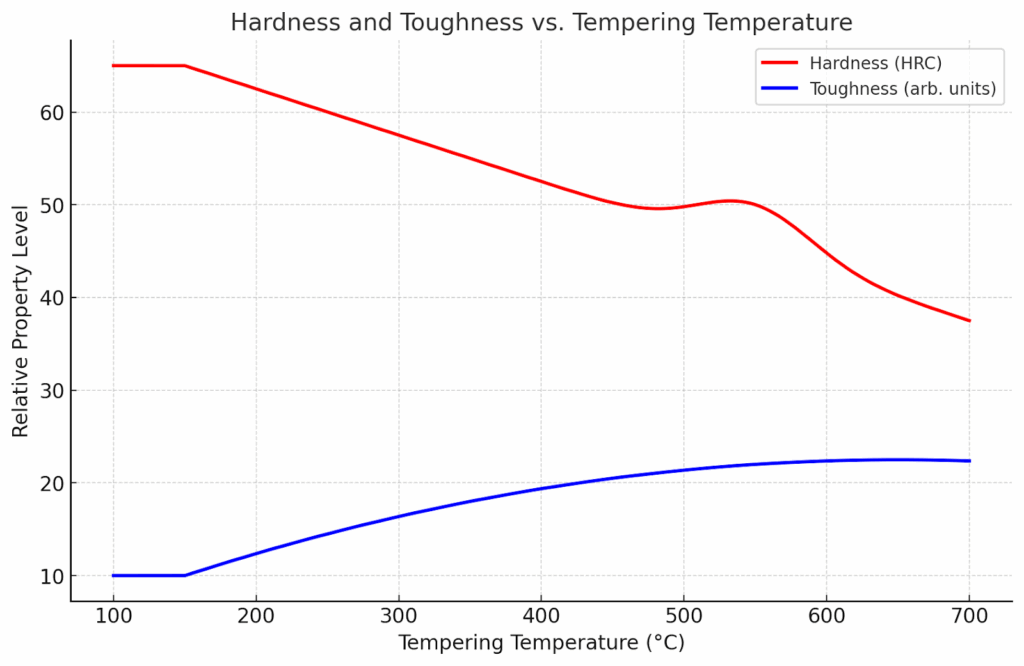
Practical Guidance for Selecting Tempering Temperatures
- Start with the alloy data sheet and recommended temper ranges for the intended application. Target the lowest temperature that meets toughness and stability requirements if wear resistance is critical. Choose higher temper temperatures if impact and fatigue performance dominate.
- Consider double temper cycles for tool steels and high hardenability alloys. The first temper reduces brittleness and transforms some retained austenite. The second temper homogenizes the microstructure and stabilizes properties.
- Avoid dwelling in temperature ranges known to produce temper embrittlement for susceptible steels. If the application or alloy is at risk, plan for faster cooling from the temper.
- Use witness samples and hardness checks to verify time and temperature choices before full scale production. Document the relationship between hardness and temper temperature for your specific material lot and section size.
Industrial Applications and Case Examples
Tempering tailors steel to the in service loads and environments of five core sectors we support at Align MFG. Oil and Gas, Railway, Construction, Truck and Trailer, and Industrial equipment. By selecting the right tempering window and cycle, we trade just enough hardness for toughness, dimensional stability, and fatigue strength to match each component’s duty.
Oil and Gas
These components see high loads, pressure cycling, abrasion, and sometimes corrosive media. Tempering choices prioritize strength with high impact toughness and tight hardness control across sections.
- Downhole tools such as drill collars, jars, and subs
Typical approach. quench and temper 4140, 4145H, or 4330V mod at 500 to 650 °C to achieve high toughness with controlled hardness through section
- Wellhead bodies, flanges, and valve internals
Typical approach. quench and temper 8630M or 4130 at 500 to 650 °C for fracture resistance. For martensitic stainless such as 410 or 420, temper at 200 to 350 °C to balance hardness and corrosion performance
- Pressure control connectors and adapters
Typical approach. high toughness temper on 8630M at 550 to 650 °C to mitigate crack initiation at stress concentrations
Railway
Railway hardware demands long life under bending and impact with strict dimensional control. The temper strategy aims at high fatigue strength and impact toughness.
- Axles and large shafts
Typical approach. quench and temper 42CrMo4 or 4140 at 500 to 650 °C for a tough core with good surface durability
- Couplers, yokes, and draft gear components
Typical approach. quench and temper 8630 or 4330 at 450 to 600 °C for strength with reliable notch toughness
- Bogie links, brake levers, and brackets
Typical approach. quench and temper medium carbon steels such as 1045 to 1050 at 400 to 550 °C to balance wear and impact resistance
Construction
Equipment faces abrasive wear, shock loading, and outdoor exposure. Tempering balances wear resistance with the toughness needed to avoid brittle failures in the field.
- Ground engaging tools such as bucket teeth and cutting edges
Typical approach. quench and temper boron alloy steels such as 10B38 or 15B30 at 200 to 450 °C depending on the hardness target and wear requirement
- Hydraulic cylinder rods and pins
Typical approach. quench and temper 1045 or 4140 at 400 to 600 °C for stable dimensions, good toughness, and machinability after temper
- High strength anchor rods and heavy fasteners
Typical approach. quench and temper 4140 at 450 to 600 °C to meet strength class while preserving ductility for installation
Truck and Trailer
Components need endurance under vibration, road shock, and varying loads. Tempering targets fatigue strength and reliable toughness.
- Axles, spindles, and hubs
Typical approach. quench and temper 4140 or 4340 at 500 to 650 °C for high toughness and dimensional stability
- Leaf springs and suspension links
Typical approach. quench and temper 5160 or Si Cr spring steels at 350 to 500 °C to achieve high yield strength with endurance under cyclic loading
- Kingpins, drawbar eyes, and fifth wheel plates
Typical approach. quench and temper 4140 at 450 to 600 °C for impact resistance and wear durability
- Wheel studs and U bolts
Typical approach. case harden medium carbon boron steels such as 10B21, then temper subcritically at 200 to 300 °C to stabilize the case and relieve stresses
Industrial
This covers general machinery, power transmission, and plant equipment with many balance of property requirements. Tempering is the lever that tunes hardness, wear, and fatigue.
- Gears, pinions, and shafts
Typical approach. quench and temper 4140 or 4340 at 400 to 550 °C for a balanced hardness with strong tooth root toughness
- Sprockets, couplings, and drive pins
Typical approach. quench and temper 1045 or 4140 at 400 to 550 °C to blend wear resistance with toughness
- Grade 8 type fasteners and studs
Typical approach. case harden medium carbon boron steels, then temper at 200 to 350 °C for controlled case hardness and a tough core
- Press tooling and holders
Typical approach. double temper D2 or H13 at 500 to 650 °C to stabilize the microstructure and improve resistance to wear or thermal fatigue
| Industry | Component | Typical steel | Tempering range °C | Primary property goals |
| Oil and Gas | Drill collar and jar body | 4140, 4145H, 4330V mod | 500 to 650 | High impact toughness and stable hardness through section |
| Oil and Gas | Wellhead or valve body | 8630M or 4130 | 500 to 650 | Fracture resistance and dimensional stability |
| Oil and Gas | Valve trim and seats | 410 or 420 martensitic stainless | 200 to 350 | Edge retention with balanced toughness and corrosion performance |
| Railway | Axle | 42CrMo4 or 4140 | 500 to 650 | Fatigue strength and impact toughness |
| Railway | Coupler and yoke | 8630 or 4330 | 450 to 600 | High strength with reliable notch toughness |
| Railway | Bogie link and brake lever | 1045 to 1050 | 400 to 550 | Balanced wear resistance and impact performance |
| Construction | Bucket tooth and cutting edge | 10B38 or 15B30 | 200 to 450 | Surface hardness for abrasion with adequate toughness |
| Construction | Hydraulic rod and pin | 1045 or 4140 | 400 to 600 | Dimensional stability and core toughness |
| Construction | Anchor rod and heavy fastener | 4140 | 450 to 600 | Strength class with ductility for installation |
| Truck and Trailer | Axle and hub | 4140 or 4340 | 500 to 650 | Fatigue life and impact resistance |
| Truck and Trailer | Leaf spring | 5160 or Si Cr spring steel | 350 to 500 | High yield strength and endurance under cyclic load |
| Truck and Trailer | Kingpin or fifth wheel plate | 4140 | 450 to 600 | Impact toughness and wear durability |
| Industrial | Gear and pinion | 4140 or 4340 | 400 to 550 | Balanced tooth hardness with root toughness |
| Industrial | Sprocket and drive pin | 1045 or 4140 | 400 to 550 | Wear resistance with robust core |
| Industrial | Tool holder and die shoe | D2 or H13 | 500 to 650 | Stable microstructure and resistance to wear or thermal fatigue |
Advantages and Limitations of Tempering
Tempering delivers safer, tougher, and more stable components, but it does introduce process considerations and constraints.
Advantages
- Major toughness increase with a controlled reduction in hardness
- Relief of residual stress and reduction in quench cracking risk
- Dimensional stability that improves fit and finish in precision assemblies
- Ability to tune properties for wear, impact, or fatigue based on temperature selection
- Secondary hardening in select alloy systems for improved hot strength and wear
Limitations and risks
- Excessive softening if temperature or time exceeds specification
- Susceptibility to temper embrittlement in certain temperature bands in alloy steels
- Oxidation and decarburization if atmosphere is not controlled
- Distortion if heating and cooling are non uniform or if prior quenching left significant stress
- Energy consumption and cycle time that must be managed in production planning
Counterpoint to the limitations
- Inadequate tempering leaves brittle structures that can fail suddenly. Excessive tempering reduces wear life. The solution is disciplined control of temperature, time, atmosphere, and load configuration.
Comparative Analysis. Tempering versus Other Heat Treatments
Tempering is distinct from other thermal cycles because it modifies a quenched martensitic structure without recreating austenite. Other treatments reset or replace the microstructure.
Tempering versus Annealing
- Annealing softens steel by allowing full recovery and recrystallization, often followed by slow cooling. It is used to maximize ductility and machinability, not to maintain high strength.
- Tempering retains a significant portion of strength and hardness while improving toughness.
Tempering versus Normalizing
- Normalizing heats steel above the austenite region and air cools to produce a fine pearlitic structure with refined grain size. It is often a conditioning step before machining or further heat treatment.
- Tempering follows quenching and targets stress relief and property tuning in martensite.
Tempering versus Austempering and Marquenching
- Austempering transforms austenite to bainite by isothermal holding. It avoids martensite and can give high toughness with uniform properties.
- Marquenching reduces thermal gradients by quenching to a temperature just above martensite finish and equalizing before final cool. It still requires tempering to reduce brittleness.
Tempering versus Induction Hardening and Case Hardening
- Induction hardening creates a hardened surface layer by rapid austenitization and quench, followed by a subcritical temper to relieve stress. The core remains tough.
- Case hardening by carburizing or carbonitriding creates a hard case with a tough core. Parts are tempered to stabilize the case and prevent brittle fracture.
Comparison of common heat treatments
| Process | Primary goal | Microstructure after process | Typical follow up |
| Tempering | Toughness and stability after quench | Tempered martensite with carbides | Often double temper for alloy steels |
| Annealing | Maximum ductility and softness | Ferrite and pearlite with coarse carbides | None or normalizing |
| Normalizing | Grain refinement and uniformity | Fine pearlite and ferrite | Machining or further heat treatment |
| Austempering | Bainitic strength and toughness | Bainite | May not need tempering |
| Marquenching | Reduce quench stresses | Martensite with lower gradients | Tempering |
| Induction hardening | Hard case with minimal distortion | Hardened surface, tough core | Subcritical temper |
| Carburizing case hardening | Hard wear resistant case | High carbon martensite in case, tough core | Tempering to stabilize the case |
Quality Control, Process Monitoring, and Compliance
Effective tempering requires tight control of temperature, time, and atmosphere with verification of resulting properties. Robust quality systems make results predictable and repeatable across lots and facilities.
Furnace control and pyrometry
- Calibrate sensors and controllers at defined intervals, and use separate load thermocouples on representative parts to verify soak temperature.
- Perform temperature uniformity surveys to ensure hot zones do not deviate beyond allowed limits across the working volume.
- Execute system accuracy tests to confirm instrument and sensor agreement.
Atmosphere and vacuum management
- Use vacuum, inert gas, or controlled atmospheres to prevent scale and decarburization.
- Monitor dew point or oxygen potential to keep surfaces clean and dimensions within tolerance.
- Select fixtures and trays that do not shed scale or contaminate the load.
Testing and verification
- Hardness testing with appropriate scales confirms the temperature selection and soak time. Microhardness can profile through section to reveal gradients.
- Mechanical testing such as tensile and impact evaluates strength and toughness when required by application.
- Metallographic evaluation confirms tempered martensite morphology and carbide distribution. When needed, retained austenite can be checked by magnetic or diffraction methods.
Data and statistical control
- Use run charts for hardness and critical dimensions to detect drift.
- Track process capability with simple measures of spread and centering.
- Maintain full traceability of heat lot, furnace cycle data, and inspections to support audits and continuous improvement.
Troubleshooting Tempering Issues
Most tempering problems can be traced to errors in temperature, time, atmosphere, or material input. Rapid diagnosis and correction prevent scrap and field failures.
Under tempering
- Symptoms. High hardness, brittle fractures, low toughness in impact tests
- Causes. Tempering temperature too low, insufficient soak time, furnace out of calibration
- Fix. Increase temperature or time within specification and verify setpoints with independent instrumentation
Over tempering
- Symptoms. Lower than expected hardness, early wear, excessive deformation under load
- Causes. Excessive temperature or soak time, especially in small sections that heat quickly
- Fix. Reduce temperature or time. If hardness loss is severe, consider re heat treat starting from austenitization
Temper embrittlement
- Symptoms. Drop in Charpy toughness, intergranular fracture appearance, failures under impact or vibration
- Causes. Prolonged exposure in susceptible temperature ranges, slow cooling, or tramp elements in steel
- Fix. Avoid critical temperature bands when possible, use faster cooling from temper, and control chemistry
Soft spots and non uniformity
- Symptoms. Variation in hardness across a part or load, localized wear
- Causes. Poor load configuration, cold spots in furnace, insufficient spacing between parts
- Fix. Optimize racking and spacing, reduce load density, verify temperature uniformity
Scale and decarburization
- Symptoms. Surface scale, reduced surface carbon, poor surface finish after tempering
- Causes. Oxidizing atmosphere, poor dew point control, lack of protective gas
- Fix. Use vacuum or inert atmosphere, improve gas quality, allow grinding stock where needed
Dimensional change and distortion
- Symptoms. Out of tolerance dimensions after tempering, especially in thin or asymmetric parts
- Causes. Uneven heat input, residual stresses from quenching, load fixturing that restricts movement
- Fix. Employ double tempering, include stress relief cycles, improve fixturing practices, and consider marquenching before temper
Safety and Environmental Considerations
Tempering involves high temperatures, heavy loads, and gas or vacuum systems. Proper safeguards reduce risk to people and equipment.
- Provide personal protective equipment for hot work and use tools designed for moving hot loads
- Implement lockout and tagout for furnace maintenance and sensor replacement
- Ensure ventilation for atmosphere furnaces and manage exhaust to reduce emissions
- Manage oil mist and vapors when tempering follows oil quench lines
- Improve energy efficiency with furnace insulation, heat recovery, and smart scheduling to minimize idle time
Practical Implementation Checklist
A disciplined approach ensures reliable and compliant tempering results.
- Confirm the steel grade, chemical composition, and property targets
- Select tempering temperature and soak time from qualified data for the alloy and section size
- Verify furnace calibration and place load thermocouples on representative parts
- Define atmosphere or vacuum requirements to prevent oxidation and decarburization
- Plan for faster cooling from temper if the alloy is susceptible to embrittlement
- Establish acceptance criteria for hardness and microstructure before production release
- Use witness coupons to confirm results before processing critical hardware
- Record lot identification, furnace cycle parameters, hardness checks, and inspections
- Review run charts and capability measures to catch drift and drive improvement
Conclusion. How and Why Tempering Makes Steel Fit for Service
Tempering transforms quenched steel from brittle to durable by guiding diffusion, carbide precipitation, and retained austenite transformation through controlled heating, dwelling, and cooling. The temperature range sets the balance between hardness and toughness, while time and atmosphere ensure stability and surface quality. When executed with discipline, tempering delivers safer, tougher, and more stable parts that meet the demands of wear, impact, and fatigue.
For manufacturers, the path is clear. define the property targets, select the correct temper window, verify furnace performance, and confirm results with hardness and microstructure checks. Then build statistical control into daily operations so that each lot meets the same standard.
At Align MFG, we apply these principles across our facilities in Thailand, Vietnam, and India. We integrate tempering into quench and temper value streams with careful control of temperature uniformity, atmosphere selection, and load configuration. This ensures that every industrial part leaves the furnace with the intended tempered martensite structure and the balance of properties needed for real work.
If you are planning a new part or reviewing an existing process, start with the alloy data, define the service conditions, and choose the tempering strategy that aligns with your goals. Then verify and document the outcome. That is how tempering turns metallurgical science into reliable, repeatable performance.
What is Alloy Steel? Grades, Uses, and Applications
What Is Alloy Steel?
Alloy steel is steel in which purposeful additions of elements such as chromium, nickel, molybdenum, vanadium, manganese, and silicon are used to tailor properties beyond the iron and carbon base. By modifying chemistry and heat treatment, engineers can achieve an optimized balance of strength, toughness, hardness, wear resistance, and corrosion performance for specific applications. The global market for alloy steel is projected to expand from 148.14 billion dollars in 2024 to 192.20 billion dollars by 2032, reflecting growing demand across automotive, aerospace, energy, and infrastructure. In this first half of the article, you will learn how alloy steels are classified, how standards translate into grade selection, what each major alloying element contributes, how properties are measured, and how processing routes control microstructure. The second half will cover grade specific details, applications by industry, comparisons with other steels, sustainability, pitfalls, and recent innovations. Align MFG manufactures precision industrial parts in Thailand, Vietnam, and India. We help customers translate the science of alloy steel into reliable products by aligning grade selection, heat treatment, and process control with end use performance targets.
How Alloy Steel Is Classified
By Alloy Content: Low, Medium, and High Alloy Steel
Alloy steel is commonly grouped by the total amount of intentional alloying elements.
- Low alloy steel contains less than 5 percent total alloying elements. These grades are widely used for structural components because they achieve strong improvements in hardenability and strength with good toughness at reasonable cost.
- Medium alloy steel contains about 5 to 12 percent alloying elements. These grades enable higher hardenability, better elevated temperature strength, and more specialized responses to heat treatment.
- High alloy steel contains more than 12 percent alloying elements. This category includes stainless families and other specialty steels designed for very high corrosion resistance or unique high temperature performance. In this article, the core focus remains on low and medium alloy steels used for industrial parts and structures.
By Standards: ASTM and SAE and AISI Systems
Two widely used systems help engineers specify alloy steels with clarity.
- ASTM product standards define product forms, general requirements, and test methods for bars, plates, forgings, and other shapes. Chemical composition limits and mechanical property requirements are usually included within product or chemistry standards for the steel type.
- SAE and AISI grade designations identify chemistry families and nominal carbon levels. In the traditional four digit system, the first two digits indicate the alloy family and the last two digits indicate nominal carbon content in hundredths of a percent.
Examples of decoding the four digit system:
- 4130 means chromium molybdenum family with about 0.30 percent carbon
- 4140 means chromium molybdenum family with about 0.40 percent carbon
- 4340 means nickel chromium molybdenum family with about 0.40 percent carbon
- 8620 means nickel chromium molybdenum family with about 0.20 percent carbon developed for case hardening
International Equivalents and Cross References
Global supply chains often require cross referencing between systems.
- EN and DIN examples include 42CrMo4 as a common counterpart to 4140 and 34CrNiMo6 as a counterpart to 4340
- JIS examples include SCM440 as a counterpart to 4140 and SNCM439 as a counterpart to 4340
- ISO and other national standards provide additional harmonization
Equivalents align on composition windows and typical property potential rather than claiming identical behavior. Always verify heat treatment condition, cleanliness level, and mechanical property requirements for the intended design.
Market Snapshot 2024 to 2032
- Growth drivers include automotive lightweighting and safety, expansion of renewable energy and oil and gas investment, infrastructure renewal, and continued aerospace demand for high strength components.
- Electric arc furnace production is increasing due to its ability to incorporate recycled scrap and lower energy intensity per ton of steel compared with traditional routes.
- Supply resilience and regional availability remain important, leading many buyers to diversify sourcing across Asia. Align MFG supports this need with production in Thailand, Vietnam, and India and with quality systems structured to meet international specifications.
Alloying Elements and Their Effects

Alloying elements act through solid solution effects, carbide or nitride formation, grain size control, and phase stability modification. The right combination produces targeted mechanical and environmental performance.
Chromium Cr
- Typical range: about 0.5 percent to 1.1 percent in many low alloy grades, and up to about 13 percent or more in high alloy steels
- Mechanisms: forms hard chromium carbides that increase wear resistance and improves hardenability by slowing transformation during quenching. At higher levels it contributes to a protective oxide film that improves corrosion resistance.
- Property enhancements: increased surface hardness and wear resistance, deeper through hardening in thick sections, better resistance to mild corrosive atmospheres
- Applications: gears, dies, shafts, rollers, and components that require wear resistance and strength
Cause and effect: Chromium enhances hardenability and wear resistance. Chromium additions also improve tempering resistance so components retain hardness after heat exposure.
Nickel Ni
- Typical range: about 0.3 percent to 3 percent in many alloy steels and up to about 5 percent or more for special toughness
- Mechanisms: increases toughness and impact strength by aiding ductility and refining transformation behavior. Nickel also stabilizes austenite which benefits low temperature toughness.
- Property enhancements: higher Charpy V notch impact values, improved toughness in thick sections, better corrosion resistance in some environments
- Applications: aerospace hardware, heavy duty shafts, low temperature service parts, and components where fracture toughness is critical
Cause and effect: Nickel increases toughness and impact resistance, especially at low temperatures, with only a modest rise in alloy cost relative to some other elements.
Molybdenum Mo
- Typical range: about 0.15 percent to 0.50 percent in many low alloy grades, and up to about 1 percent in high strength applications
- Mechanisms: strengthens steel at elevated temperatures and improves creep resistance by stabilizing carbides. It reduces temper embrittlement and improves hardenability.
- Property enhancements: better high temperature strength, deeper hardness penetration on quench, improved resistance to softening during tempering
- Applications: power generation components, pressure vessels where permitted, high load fasteners, and hot working tools
Cause and effect: Molybdenum improves high temperature strength and creep resistance. It also refines the tempering response of chromium bearing steels.
Vanadium V
- Typical range: about 0.05 percent to 0.25 percent in many microalloyed steels
- Mechanisms: strong carbide and nitride former that refines grain size and provides precipitation strengthening
- Property enhancements: higher yield strength at a given carbon level, improved fatigue resistance, better strength retention after tempering
- Applications: springs, connecting rods, high performance forgings, tool parts
Cause and effect: Vanadium provides grain refinement and strength retention through fine dispersion of vanadium carbides and nitrides.
Manganese Mn
- Typical range: about 0.50 percent to 1.60 percent in common alloy steels
- Mechanisms: acts as a deoxidizer during steelmaking, increases hardenability, and contributes to solid solution strengthening
- Property enhancements: improved through hardening, better wear resistance relative to plain carbon steel, and enhanced strength
- Applications: shafts, axles, gears, and general structural components
Cause and effect: Manganese improves hardenability and strength but at very high levels can reduce toughness if not balanced with nickel or other elements.
Silicon Si
- Typical range: about 0.20 percent to 2.00 percent depending on grade and function
- Mechanisms: strong deoxidizer that also provides solid solution strengthening and improves tempering resistance
- Property enhancements: small increase in yield strength, improved spring performance at higher silicon levels, and improved magnetic properties in electrical steels
- Applications: springs, valve components, and steels that require good temper resistance
Cause and effect: Silicon contributes to deoxidation and solution strengthening, which supports stable mechanical properties after heat treatment.
Secondary and Microalloying Elements
- Boron in very small additions measured in parts per million can dramatically increase hardenability by segregating to austenite grain boundaries
- Niobium and titanium form stable carbides and nitrides that pin grain boundaries and refine microstructure
- Cobalt improves hot strength in certain niche applications
- Sulfur and lead may be intentionally increased to improve machinability in free cutting versions but can reduce toughness. Use only when design rules permit.
Mechanical Properties Matrix
The benefits of alloy steel include higher strength to weight ratio, improved fatigue resistance, and tailored hardness profiles compared with plain carbon steel. Actual properties depend on composition, processing route, section size, and heat treatment condition.
Strength Parameters
- Tensile and yield strength: Low alloy steels that are quenched and tempered commonly achieve tensile strength in the range of about 850 to 1100 MPa which is about 123 to 160 ksi with yield strengths in the range of about 650 to 950 MPa which is about 94 to 138 ksi depending on grade and tempering temperature. Higher alloy grades such as nickel chromium molybdenum steels can exceed 1400 MPa which is about 203 ksi and reach up to about 1800 MPa which is about 261 ksi in specialized conditions.
- Elongation: Typical elongation for engineering uses ranges from about 10 percent to 20 percent depending on strength level. As strength increases elongation generally decreases.
- Fatigue strength: The endurance limit for many steels is approximately 0.45 to 0.55 of the ultimate tensile strength for polished specimens. Surface finish, residual stresses, notches, and mean stress can significantly reduce real world fatigue performance.
Toughness and Impact Resistance
- Charpy V notch energy improves with nickel additions, lower sulfur content, and good cleanliness practice. Low alloy steels can maintain useful toughness down to sub zero temperatures when properly selected and processed.
- Fracture toughness requirements for aerospace and critical components often drive chemistry control and heat treatment consistency.
Hardness and Wear
- Hardness for quenched and tempered chromium molybdenum steels often ranges from about 28 to 36 HRC for general machinery components and can be increased to the mid 40s HRC for higher strength applications. With appropriate heat treatment, very high strength variants can exceed 50 HRC in smaller sections.
- Surface hardening through carburizing or nitriding can produce a hard case layer above 58 to 62 HRC for excellent wear resistance while maintaining a tough core.
Corrosion and Environmental Resistance
- Low and medium alloy steels are not stainless and will require coatings, platings, or inhibitors in aggressive environments. Chromium and nickel improve atmospheric corrosion resistance, but do not replace stainless unless chromium is at very high levels.
- For sour service or hydrogen environments, selection focuses on cleanliness, strength control, and post processing such as baking after electroplating to reduce hydrogen embrittlement risk.
Thermal and Electrical Properties
- Thermal conductivity is typically around 35 to 45 watts per meter kelvin for common low alloy steels which is lower than some nonferrous metals but adequate for structural heat transfer.
- Coefficients of thermal expansion are commonly in the range of about 11 to 13 micrometers per meter per degree Celsius, which influences distortion during heat treatment cycles.
- Electrical resistivity is on the order of tenths of a micro ohm meter for many alloy steels and increases slightly with higher alloy content.
Illustrative Properties Table
| Condition | Tensile strength | Yield strength | Hardness | Elongation | Notes |
| Normalized low alloy steel | 560 to 760 MPa 81 to 110 ksi | 380 to 520 MPa 55 to 75 ksi | 170 to 220 HBW | 18 to 25 percent | Good weldability and machinability |
| Quenched and tempered low alloy steel | 850 to 1100 MPa 123 to 160 ksi | 650 to 950 MPa 94 to 138 ksi | 28 to 36 HRC | 12 to 18 percent | Balanced strength and toughness |
| Ultra high strength nickel chromium molybdenum steel | 1400 to 1800 MPa 203 to 261 ksi | 1200 to 1500 MPa 174 to 218 ksi | 42 to 52 HRC | 8 to 14 percent | Deep hardenability, high fracture toughness options |
| Carburized case with tough core | Case focused property | Core yield tailored 700 to 1000 MPa | Case 58 to 62 HRC | Core 10 to 20 percent | Gears and wear parts with fatigue resistance |
Note: Values are illustrative ranges. Actual results depend on grade, size, and process control.
Manufacturing and Processing Routes
Manufacturing route, cleanliness, and heat treatment condition are as important as chemistry. Heat treatment modifies microstructure and mechanical properties. Microstructure control unlocks the full potential promised by the grade designation.
Primary Steelmaking
- Blast furnace and basic oxygen furnace route produces large volumes from iron ore with controlled additions of scrap. This route typically feeds integrated mills with downstream refining.
- Electric arc furnace route melts a high proportion of scrap with electrical energy and allows flexible chemistry adjustment. It supports circular economy goals by using recycled inputs and can be paired with renewable power.
- Secondary metallurgy steps such as ladle refining, vacuum degassing, desulfurization, and inclusion engineering adjust chemistry and improve cleanliness which directly affects fatigue performance and toughness.
Casting and Solidification
- Continuous casting produces slabs, blooms, and billets with consistent dimensions and controlled solidification that reduces centerline segregation when optimized.
- Ingot casting is still used for large forgings and specialty applications. Electroslag remelting and vacuum arc remelting can be applied for cleaner, more uniform structure in critical aerospace and tooling grades.
Forming and Shaping
- Hot rolling conditions the grain structure and delivers plate, sheet, and bar. Controlled rolling can refine grain size and improve toughness.
- Forging aligns grain flow with component geometry which increases fatigue life for shafts, crankshafts, and connecting rods.
- Machining transforms near net shapes to final dimensions. Free machining variants that include sulfur or lead can improve productivity but must be used only when the application permits the corresponding reductions in toughness.
Heat Treatment Protocols
Heat treatment is the central lever that converts chemistry into performance.
- Annealing heats the steel and cools it slowly to soften the microstructure, improve machinability, and reduce residual stress.
- Normalizing refines the grain and homogenizes the microstructure for improved response to subsequent hardening.
- Austenitizing heats the steel above the critical temperature to form austenite and dissolve carbides. Typical austenitizing temperatures for chromium molybdenum and nickel chromium molybdenum steels are in the range of about 830 to 870 degrees Celsius which is about 1525 to 1600 degrees Fahrenheit depending on grade and section thickness.
- Quenching rapidly cools the steel to form martensite or bainite. Oil, polymer, or water may be used depending on hardenability and distortion risk. Quench severity and agitation strongly influence hardness gradients and risk of cracking.
- Tempering reheats quenched steel below the critical temperature to reduce brittleness and adjust strength. Tempering temperatures typically range from about 200 to 650 degrees Celsius which is about 390 to 1200 degrees Fahrenheit. Lower tempering temperatures produce higher hardness and strength. Higher tempering temperatures produce better toughness.
- Surface hardening methods include carburizing, carbonitriding, nitriding, and induction or flame hardening.
- Carburizing introduces carbon at about 900 to 950 degrees Celsius then quenching to create a hard case above 58 HRC with a tough core. Case depth is controlled by time, temperature, and atmosphere potential.
- Carbonitriding introduces both carbon and nitrogen at slightly lower temperatures to improve wear and pitting resistance with shorter cycles.
- Nitriding diffuses nitrogen at about 500 to 550 degrees Celsius to form hard nitrides without a quench. It produces excellent wear and scuffing resistance with minimal distortion.
- Induction or flame hardening locally heats the surface followed by rapid quench to form martensite where needed, ideal for shafts and gear teeth.
Microstructure Control and Phase Transformations
- Austenite transforms to martensite, bainite, pearlite, or ferrite depending on cooling path. Time temperature transformation and continuous cooling transformation diagrams guide heat treatment recipes.
- Martensite is a hard, supersaturated phase. Tempering martensite reduces internal stresses, precipitates carbides, and increases toughness.
- Bainite provides a useful balance of strength and toughness when cooling rates and alloy content place transformation in the bainite region. Lower bainite often outperforms pearlite for fatigue resistance.
- Retained austenite can be controlled through quench severity, alloy content, and tempering practice. In case hardened parts a controlled amount of retained austenite can improve contact fatigue resistance.
Quality Control and Testing Standards
- Mechanical testing: tensile tests determine yield and ultimate strength and elongation, Rockwell hardness measures strength surrogates quickly, and Charpy V notch testing characterizes impact energy.
- Microstructure and cleanliness: metallographic examination reveals grain size, carbides, nitrides, and inclusion content which drive fatigue behavior and toughness.
- Nondestructive examination: ultrasonic testing detects internal discontinuities, magnetic particle testing reveals surface and near surface cracks in ferromagnetic steels, and eddy current testing screens for surface breaking flaws. Digital signal processing and data analytics are increasingly used to improve defect detection reliability.
- Dimensional and residual stress control: process induced distortion can be minimized through fixturing, stress relieving, and balanced machining passes.
Suggested Visuals for This Section
- A classification diagram that maps low, medium, and high alloy content to typical properties
- An infographic that links each element to its mechanism and property benefit using short cause and effect phrases such as Chromium enhances wear resistance
- A TTT and CCT schematic illustrating how quench rate changes microstructure
- A simple bar chart showing projected market growth from 2024 to 2032
Why This Foundation Matters to Design and Manufacturing
Understanding classification, alloy roles, property ranges, and processing pathways provides a reliable path from specification to performance. It reduces trial and error and supports consistent quality across suppliers. For companies that operate globally, it also enables effective cross referencing between standards and regions.
Align MFG applies these principles when producing alloy steel parts in Thailand, Vietnam, and India. We coordinate grade selection, heat treatment schedules, and inspection plans so that the delivered components meet the intended tensile strength, toughness, and hardness targets with the required consistency.
Grade Specific Analysis
4130 Chromium Molybdenum Steel
4130 is a medium carbon, low alloy steel that balances strength, toughness, and weldability. In normalized or quenched and tempered conditions, it delivers reliable mechanical properties with reasonable machinability. Preheat and controlled interpass temperature are recommended for welding to avoid heat affected zone cracking, especially on thicker sections.
- Typical carbon content: about 0.30 percent with chromium about 0.8 to 1.1 percent and molybdenum about 0.15 to 0.25 percent
- Common conditions: normalized for ease of fabrication or quenched and tempered for higher strength
- Mechanical potential: tensile strength commonly 700 to 1000 MPa which is 102 to 145 ksi depending on heat treatment
- Applications: aircraft and motorsport tubing, fittings, welded structures, and pressure containing parts where permitted
- International counterparts: EN 25CrMo4 in bar and forging forms, JIS SCM430 in some markets
4140 Chromium Molybdenum Steel
4140 is one of the most widely used alloy steels due to its deep hardenability and excellent strength to toughness balance. It machines well in the annealed state and responds consistently to quench and temper.
- Typical carbon content: about 0.40 percent with chromium about 0.8 to 1.1 percent and molybdenum about 0.15 to 0.25 percent
- Common conditions: quenched and tempered to hardness around 28 to 36 HRC for general machinery or higher for demanding parts
- Mechanical potential: tensile strength often 900 to 1100 MPa which is 131 to 160 ksi in common conditions, higher in smaller sections
- Applications: shafts, spindles, downhole tools, gears, dies, and fixture components
- International counterparts: EN 42CrMo4 and JIS SCM440
4340 Nickel Chromium Molybdenum Steel
4340 is a high hardenability grade that maintains strength and toughness in thick sections. Nickel content enhances fracture toughness and low temperature properties, making 4340 a choice for critical aerospace and heavy duty applications.
- Typical carbon content: about 0.40 percent with nickel about 1.65 to 2.0 percent, chromium about 0.7 to 0.9 percent, and molybdenum about 0.2 to 0.3 percent
- Common conditions: quenched and tempered with tensile strength from about 1100 to 1600 MPa which is 160 to 232 ksi depending on temper
- Applications: landing gear components, high strength bolts, crankshafts, connecting rods, and power transmission parts
- International counterparts: EN 34CrNiMo6 and JIS SNCM439
8620 Nickel Chromium Molybdenum Case Hardening Steel
8620 is designed for carburizing and carbonitriding. The low core carbon supports a tough core, while chromium, nickel, and molybdenum promote hardenability and a high hardness case after heat treatment.
- Typical carbon content: about 0.20 percent with nickel about 0.4 to 0.7 percent, chromium about 0.4 to 0.6 percent, and molybdenum about 0.15 to 0.25 percent
- Common conditions: carburized case achieving 58 to 62 HRC with core properties tuned through quench and temper
- Applications: gears, shafts with wear surfaces, camshafts, bearing races, and pitting resistant components
- International counterparts: various EN and JIS designations aligned to case hardening chemistry
Comparative Table of Representative Grades
| Grade | Nominal carbon | Key alloying | Typical heat treatment | Strength range | Hardness | Weldability | Typical uses |
| 4130 | 0.30 percent | Cr 0.8 to 1.1 percent, Mo 0.15 to 0.25 percent | Normalize or quench and temper | 700 to 1000 MPa 102 to 145 ksi | 22 to 35 HRC | Good with preheat and post weld stress relief | Welded tubing, aircraft structures, fittings |
| 4140 | 0.40 percent | Cr 0.8 to 1.1 percent, Mo 0.15 to 0.25 percent | Quench and temper | 900 to 1100 MPa 131 to 160 ksi | 28 to 36 HRC typical | Moderate with preheat and interpass control | Shafts, spindles, dies, tools |
| 4340 | 0.40 percent | Ni 1.65 to 2.0 percent, Cr 0.7 to 0.9 percent, Mo 0.2 to 0.3 percent | Quench and temper | 1100 to 1600 MPa 160 to 232 ksi | 35 to 50 HRC depending on temper | Weld with caution and strict procedures | Landing gear, bolts, heavy duty shafts |
| 8620 | 0.20 percent | Ni 0.4 to 0.7 percent, Cr 0.4 to 0.6 percent, Mo 0.15 to 0.25 percent | Carburize or carbonitride then quench and temper | Core 700 to 1000 MPa 102 to 145 ksi | Case 58 to 62 HRC | Good before case hardening | Gears, camshafts, wear surfaces |
Applications by Industry
Construction
Alloy steels support higher load capacities, improved fatigue resistance, and durability in demanding structural roles.
- High strength bolts and fasteners that maintain clamp load under cyclic and thermal stresses
- Crane booms and heavy lift components where strength to weight matters
- Bridge pins, bearings, and shafts that require wear resistance and toughness
Illustrative example: High rise connection hardware uses quenched and tempered alloy steel bolts with controlled cleanliness to limit premature fatigue failure.
Automotive
Automotive engineers rely on alloy steel for powertrain, drivetrain, chassis, and safety critical parts.
- Transmission gears and shafts in case hardened 8620 for high surface hardness with a tough core
- Axles, crankshafts, and steering components in 4140 or 4340 for strength and fatigue life
- Suspension links and control arms that benefit from enhanced hardenability and weldability
Aerospace and Defense
Weight to strength optimization and fracture toughness drive alloy selection in aerospace.
- Landing gear and structural fittings in 4340 or higher strength variants requiring strict cleanliness and heat treatment control
- Actuation shafts and fasteners where nickel additions improve toughness in cold environments
- Rotating components that demand high fatigue resistance and precise microstructure control
Industrial
Alloy steels offer thermal stability and strength for power and process equipment.
- Turbine and generator shafts in nickel chromium molybdenum grades for high torque
- Boiler and pressure parts in molybdenum bearing steels for creep resistance where permitted
- Oil and gas downhole tools in 4140 and 4340 with surface hardening for wear and galling resistance
Emerging Technologies
Additive manufacturing and advanced heat treatments are expanding how alloy steels are used.
- Laser powder bed fusion of low alloy steel powders with post build heat treatments to tailor strength and ductility
- Directed energy deposition repairs and near net shapes for large tooling and shafting
- Topology optimized structures that pair alloy steels with precision machining and induction hardening
Alloy Steel vs Carbon Steel vs Stainless Steel
Composition and Microstructure Differences
Alloy steel purposefully adds elements like chromium, nickel, and molybdenum to modify transformation behavior and microstructure. Carbon steel relies mainly on carbon and manganese with minimal alloy content. Stainless steel increases chromium to levels that support a stable passive film for corrosion resistance.
Property Trade Offs
- Strength: alloy steel offers higher strength and hardenability than plain carbon steel at similar carbon content
- Corrosion: stainless outperforms both alloy and carbon steel in aggressive environments, but at higher material cost and potential trade offs in strength and galling behavior
- Cost and availability: carbon steel is generally the most economical, alloy steel balances cost with performance, stainless commands a premium for corrosion resistance
- Weldability and machinability: plain carbon steel is usually easiest, alloy steel requires controlled procedures, and stainless may present challenges with heat input and work hardening
Selection Guide
Choose alloy steel when the design requires high strength, wear resistance, or fatigue life beyond what carbon steel can deliver, but does not need the full corrosion resistance of stainless. For outdoor or chemically aggressive environments, pair alloy steel with coatings, platings, or surface treatments.
Limitations, Pitfalls, and Mitigation
Weldability Challenges
Higher hardenability steels can form brittle microstructures in the heat affected zone if welded without controls. Use preheat, interpass temperature control, suitable filler metals, and post weld heat treatment when required. For highly restrained joints, design for lower residual stresses and consider buttering or temper bead techniques.
Hydrogen Embrittlement and Delayed Cracking
High strength steels are susceptible to hydrogen induced cracking from processes such as pickling, electroplating, or service exposure. Mitigate by baking after plating, using low hydrogen welding consumables, controlling moisture, and selecting strength levels appropriate to the service environment.
Temper Embrittlement and Blue Brittleness
Prolonged exposure in certain temper ranges can embrittle some alloy steels. Control tramp elements, specify appropriate tempering temperatures, and avoid long holds in the critical range for susceptible chemistries.
Machinability and Distortion
Higher strength and work hardening can reduce machinability. Use optimized tooling, cutting parameters, and coolants. Minimize distortion by stress relieving before finish machining and by balancing material removal.
Recent Developments in 2024 and 2025
Heat Treatment Innovations
Low pressure carburizing produces clean, controllable cases with reduced intergranular oxidation. Plasma nitriding provides hard, wear resistant surfaces with minimal distortion and fine control of compound layer thickness. Real time quench monitoring and digital process twins improve consistency and reduce cracking risk.
Additive Manufacturing of Alloy Steels
New powder chemistries and process parameter windows are enabling low alloy steel parts with tailored microstructures directly after build. Post build austenitize, quench, and temper cycles are tuned to relieve residual stress and achieve target properties. In situ monitoring detects porosity and lack of fusion, improving qualification confidence.
Sustainable Production Methods
Hydrogen based direct reduced iron combined with electric arc furnaces reduces fossil fuel reliance. Higher scrap utilization with advanced sorting and melt chemistry control maintains quality while lowering emissions. Energy recovery and smart scheduling improve furnace efficiency.
Quality Testing Innovations
Machine learning enhances ultrasonic and eddy current signal interpretation for faster, more reliable defect detection. High resolution microcleanliness analysis improves prediction of fatigue life for critical parts. Digital traceability links heat treatment data to final mechanical results for full process transparency.
FAQs
Is alloy steel the same as stainless steel
No. Alloy steel contains purposeful additions to increase strength and hardenability. Stainless steel contains higher chromium that supports a passive film for superior corrosion resistance. Some alloy steels contain chromium, but at levels that do not produce stainless behavior.
What is the difference between 4130 and 4140
The main difference is carbon content. 4140 has about 0.40 percent carbon, while 4130 has about 0.30 percent carbon. At similar heat treatments, 4140 achieves higher strength, while 4130 offers slightly better weldability and ductility.
Can 4140 be welded without cracking
Yes, with proper procedure. Use preheat, control interpass temperature, select low hydrogen consumables, and consider post weld heat treatment. For thick sections or high restraint, specialized procedures are required.
Is alloy steel magnetic
Most alloy steels are ferromagnetic in their common microstructures. High temperature or austenitic conditions can reduce magnetic response, but typical quenched and tempered parts remain magnetic.
What heat treatment is typical for 4340 to reach 260 to 300 ksi ultimate tensile strength
Austenitize followed by an oil or polymer quench and low temperature temper is typical for very high strength, often combined with small section sizes and strict cleanliness. Toughness trade offs must be carefully evaluated at these strength levels.
Why choose 8620 for gears instead of 4140
8620 is optimized for case hardening. It provides a high hardness case with a tough core that resists bending fatigue and pitting. 4140 can be surface hardened by induction, but carburized 8620 usually delivers superior gear tooth performance.
Does alloy steel resist corrosion like stainless steel
No. Alloy steel has improved corrosion performance compared with plain carbon steel in some atmospheres, but it does not match stainless steel. Coatings, platings, inhibitors, or suitable stainless grades are recommended for aggressive environments.
Next Steps
Alloy steel is defined by purposeful additions of elements like chromium, nickel, molybdenum, vanadium, manganese, and silicon to modify transformation behavior and microstructure. Classifications by alloy content and by standards such as SAE and AISI help engineers select grades that match performance targets. Major elements produce predictable effects, from chromium for hardenability and wear resistance, to nickel for toughness, to molybdenum for high temperature strength. Processing routes, especially heat treatment, convert chemistry into properties. Across grades like 4130, 4140, 4340, and 8620, engineers can achieve targeted combinations of strength, toughness, hardness, and fatigue life for sectors such as construction, automotive, aerospace, and energy.
Next steps:
- Define performance requirements in strength, toughness, wear, and environment
- Select candidate grades and heat treatments that meet those targets with adequate safety margin
- Confirm property windows with mechanical testing and microstructure evaluation
- Plan for weldability, machinability, distortion control, and surface hardening as needed
- Consider sustainability goals by evaluating recycled content and energy efficient routes
Align MFG manufactures precision alloy steel parts in Thailand, Vietnam, and India. Our team aligns grade selection, heat treatment schedules, and quality assurance with your design envelope to deliver repeatable performance and reliable lead times. If you are moving from concept to production, we can help you translate specifications into manufacturable parts with the right balance of cost and capability.
What’s the Difference Between Molding and Casting?
Molding and casting are formative manufacturing processes that shape materials within a cavity to create parts. In simple terms, molding creates the negative cavity or tool, and casting is the act of filling that cavity with a liquid or pliable material that solidifies into the final part. As Smooth-On explains, the mold holds a negative impression and the cast is the positive part that comes out of it.
Why it matters: each process has different strengths for materials, volumes, tolerances, and costs. Foundries often report casting rejection rates around 5 to 7 percent due to defects like gas bubbles and inclusions, which underscores the importance of process selection and quality control.
What you will learn next:
- Definitions of molding and casting
- The most common process types, materials, and equipment
- A side-by-side comparison table that highlights core differences
- A technical deep dive that explains subtypes, mechanisms, and design-for-process choices
What Is Molding?
Molding is the process of forming a part by shaping a material inside a prepared mold cavity. In industry, molding commonly refers to plastic forming processes, where a molten or softened polymer is injected or pressed into a mold, then cooled or cured to a solid shape. Conceptually, the mold is the tool. The molded part is the output.
Common Molding Processes
- Injection molding: Molten thermoplastic or thermoset is injected into a steel or aluminum mold under pressure, then cooled or cured. Ideal for high-volume, tight-tolerance plastic parts.
- Compression molding: Pre-measured charges of thermoset or composite material are placed in a heated cavity, then pressed to shape. Good for structural parts and fiber-reinforced components.
- Blow molding: Plastic is extruded or injection molded as a parison, then inflated against a mold to form hollow parts like bottles and tanks.
- Thermoforming: Heated plastic sheet is drawn over a mold by vacuum or pressure. Suited to packaging and large enclosures with moderate detail.
- Rotational molding: Powdered plastic rotates in a heated mold to form large hollow parts with uniform walls.
- Silicone rubber molding: RTV silicone molds capture fine details for prototyping and short-run replicas.
Molding Materials and Properties
- Thermoplastics: ABS, PC, PP, PE, Nylon. They soften with heat and can be remelted. Good for fast cycles and recyclability.
- Thermosets: Epoxy, phenolics, melamine. They crosslink during cure and do not remelt. Good for heat resistance and dimensional stability.
- Elastomers: Silicone, TPU, TPE. Flexible, impact resistant, and suitable for seals and soft-touch components.
Key property considerations include viscosity and flow length, shrinkage control, fiber orientation in filled plastics, heat deflection temperature, and chemical resistance. Design choices like wall thickness, ribs, and gate location strongly influence warpage, sink marks, and weld lines.
Tooling and Equipment for Molding
- High-precision molds: Typically steel or aluminum with cooling channels, runners, gates, ejectors, and surface finishes matched to part aesthetics.
- Injection machines: Clamp tonnage, shot size, and screw design must match the part and material.
- Auxiliary systems: Hot runners, mold temperature control, dryers, and automation for repeatability.
Tooling investment is meaningful for injection molding. The upside is low cost per part at volume and excellent repeatability.
Typical Applications and Volumes for Molding
- Consumer goods housings, clips, and fasteners
- Medical disposables and device enclosures
- Automotive interior and under-the-hood plastic components
- Electronics enclosures and connectors
Injection molding shines at medium to very high volumes, often from tens of thousands to millions of parts, due to fast cycle times and multi-cavity tooling.
What Is Casting?
Casting is the process of producing a part by pouring or injecting a liquid material into a mold and allowing it to solidify. In metalworking, casting is essential for creating complex geometries in aluminum, zinc, magnesium, and steel alternatives. In polymers and resins, urethane and epoxy casting can produce short-run parts with excellent surface finish.
Conceptually, the mold is still the negative cavity. The cast is the final solid part. As Eko Industries and Smooth-On both note, the distinction often confuses newcomers because the terms are sometimes used interchangeably, but casting is the act of producing the part from the mold.
Common Casting Processes
- Sand casting: Flexible, economical patterns form sand molds that are destroyed after each pour. Excellent for large parts and low to medium volumes. Finish is rougher and tolerances are broader.
- Die casting: Molten metal is injected into a metal die at high pressure. Suited to aluminum, zinc, and magnesium for high-volume, near-net-shape parts with fine details.
- Investment casting: Also called lost-wax. Wax patterns are coated to form a ceramic shell, then metal is poured to capture intricate geometry and fine surface finish. Ideal for complex metal parts with tight dimensional needs.
- Permanent mold casting: Reusable metal molds provide better finishes than sand casting and more consistency, at moderate tooling cost.
- Centrifugal casting: Metal is spun in a rotating mold to form cylindrical components like bushings and tubes with good material density.
- Urethane and vacuum casting: Used for prototype and bridge production of plastic-like parts using silicone molds under vacuum to reduce bubbles.
Casting Materials and Properties
- Metals: Aluminum, zinc, and magnesium are common in die casting. Iron and steel alternatives often use sand and investment casting. Alloy choice drives strength, corrosion resistance, and temperature performance.
- Non-metals: Urethanes, epoxies, concrete, and plaster are cast for prototyping, architecture, and art.
Core metallurgy topics include solidification sequence, grain structure, porosity, shrinkage, and heat treatment. Feed paths, risers, and cooling control microstructure and reduce defects.
Tooling and Equipment for Casting
- Patterns and cores: Create cavities and internal passages. Cores form internal voids in sand and investment casting.
- Gating and riser systems: Manage metal flow and feeding to prevent cold shuts and shrinkage cavities.
- Furnaces and handling: Crucibles, ladles, and temperature control for melt quality. Die casting uses hot-chamber or cold-chamber machines selected by alloy and melting point.
Tooling cost ranges widely. Sand patterns are relatively low cost. Permanent molds and die casting tools represent higher investments but offer long tool life and fast cycles.
Typical Applications and Volumes for Casting
- Automotive engine blocks and housings, transmission cases, brackets, and heat sinks
- Industrial pump bodies, valve components, and structural fittings
- Aerospace and medical components that combine complex geometry with metal performance
- Short-run urethane parts for pre-production testing
Foundries often face a baseline rejection rate of about 5 to 7 percent due to porosity, gas bubbles, and inclusions, according to peer-reviewed analysis in foundry operations. Process control and tooling quality are critical levers for yield improvement.
Molding vs Casting: Core Differences at a Glance
While both use a mold cavity, molding often refers to pressure-based forming of plastics with rapid cycles, and casting often refers to pouring or injecting metals or resins that solidify by cooling or curing. Molding excels at high-volume plastic production with tight repeatability. Casting excels at metal parts, complex shapes, and a wide range of sizes and volumes.
Comparison Table: Molding vs Casting
| Comparison area | Molding | Casting |
| Process mechanics | Injection or pressing of softened material into a closed mold under pressure | Pouring or injecting liquid material into a mold followed by solidification |
| Typical materials | Thermoplastics, thermosets, elastomers | Metals like aluminum, zinc, magnesium, steel alternatives, plus urethanes and epoxies |
| Tooling cost and lead time | Higher for injection molds, detailed machining and cooling required | Low to high depending on method, from sand patterns to hardened dies |
| Volume sweet spot | Medium to very high volumes with low cost per part | Low to high volumes, flexible with process choice |
| Tolerances and finish | Tight repeatability and smooth surfaces with proper tool design | Broad to tight depending on process, investment and die casting deliver finer detail |
| Design complexity | Thin walls achievable, but flow and knit lines must be managed | Excellent for complex internal geometries using cores and investment shells |
| Typical defects | Warpage, sink, short shots, flash, weld lines | Porosity, gas bubbles, sand inclusions, cold shuts, shrinkage cavities |
| Part size range | Small to medium parts, large parts possible with processes like rotational molding | Very small precision parts to very large industrial castings |
| Cycle time | Seconds to minutes per shot | Tens of seconds to hours, depending on melt, mold, and section thickness |
| Secondary operations | Minimal, often limited to trimming and basic finishing | Often includes trimming, machining, heat treating, and surface finishing |
Technical Deep Dive: Subtypes, Mechanisms, and Suitability
Choosing between molding and casting hinges on the mechanics of each subtype, material behavior during flow or solidification, and your requirements for geometry, tolerances, finish, and cost.
Molding Subtypes and Variations
Injection molding variations
- Family tools and multi-cavity molds reduce unit cost and improve throughput.
- 2K or overmolding combines multiple materials for seals, grips, or integrated features.
- Insert molding encapsulates metal inserts for threads and wear surfaces.
Processing parameters
- Injection pressure, melt temperature, and pack or hold profiles control fill, sink, and warpage.
- Gate type and location influence knit lines and flow length.
- Cooling design determines cycle time and dimensional stability.
Quality levers
- Balanced runners, adequate venting, and well-placed gates prevent short shots and burn marks.
- Mold surface finish and steel selection affect release and aesthetics.
Casting Subtypes and Variations
Sand casting design
- Parting line selection, core design, and riser placement drive manufacturability and yield.
- Gating design and venting control turbulence and gas entrapment.
Die casting
- Hot-chamber machines suit low melting point alloys like zinc. Cold-chamber machines handle aluminum and magnesium.
- Die lubrication, thermal control, and ejector design affect surface quality and dimensional control.
Investment casting
- Wax pattern accuracy and shell-building parameters are critical. Research shows wax pattern accuracy varies with tooling and process, which directly influences final tolerances.
Vacuum and urethane casting
- Silicone mold creation captures fine details. Vacuum reduces bubbles for clear or cosmetic parts. Ideal for bridge production and design validation.
Material Behavior and Design-for-Process
Molding materials
- Flow length and viscosity govern achievable wall thickness and rib design.
- Shrinkage varies by resin and filler content. Fiber orientation in glass-filled materials influences strength and warp.
- Gate types, such as pin, edge, or hot tip, balance aesthetics and fill.
Casting materials
- Directional solidification and feeder design reduce shrinkage defects.
- Alloy selection balances strength, corrosion resistance, and castability.
- Optimizing molding sand composition can markedly improve metal cast quality by controlling permeability and strength.
Tolerances, Surface Finish, and Complexity
Tolerances
- Injection molding regularly achieves tight and repeatable tolerances for plastics with proper tooling and process control.
- Casting tolerances range widely. Investment casting and die casting deliver tighter control than sand casting, often with reduced machining.
Surface finish
- Injection-molded parts can replicate high gloss or texture directly from the tool.
- Investment and die cast parts achieve finer finishes than sand casting. Post-processing like shot blasting, machining, and coating can elevate surface quality.
Complexity
- Molding achieves thin sections and complex external features, though internal cavities often require slides, lifters, or multi-part tools.
- Casting can create complex internal channels and undercuts using cores. Investment casting excels at producing intricate metal parts with minimal assembly.
Quality and Defects: What to Expect and How to Prevent
Quality outcomes differ across processes. Casting tends to see higher defect sensitivity due to solidification dynamics, while molding defects are often flow or cooling related. Peer-reviewed analysis of iron foundries reports annual casting rejection rates around 5 to 7 percent, with gas bubbles and sand inclusions among the most common defects.
Common Molding Defects and Controls
- Short shots: Incomplete fill. Controls include higher melt and mold temperatures, increased injection pressure, and improved venting.
- Warpage: Distortion after ejection. Controls include uniform wall thickness, balanced cooling, optimized pack and hold profiles, and material selection with lower shrink.
- Sink marks: Localized depressions over thick ribs or bosses. Controls include rib-to-wall ratios near 0.5 to 0.7, longer pack, and gate placement near thick sections.
- Flash: Excess material at parting lines. Controls include clamp tonnage, tooling fit, and proper venting.
- Weld lines and burn marks: Flow-front convergence and trapped gases. Controls include gate redesign, higher melt temperature, improved venting, and balanced runners.
Common Casting Defects and Controls
- Porosity and gas bubbles: Voids from trapped gases or shrinkage. Controls include degassing, vacuum assistance, controlled pouring temperature, and directional solidification with proper riser design.
- Sand inclusions: Entrained sand particles. Controls include correct sand strength and permeability, improved gating to reduce turbulence, and mold handling discipline. Studies show that optimizing molding sand composition can improve cast quality by balancing permeability and strength.
- Cold shuts and misruns: Premature solidification before fusion. Controls include higher pouring temperature, larger gates, reduced section thickness extremes, and improved flow paths.
- Shrinkage cavities: Volume contraction during solidification. Controls include riser sizing and placement, chills for heat extraction, and controlled cooling gradients.
- Dimensional variability: Influenced by pattern and shell accuracy. Investment casting accuracy is highly sensitive to the wax pattern and tooling used, with research demonstrating significant variations based on pattern tooling and process controls.
Choosing Between Molding and Casting: A Practical Decision Framework
Select based on material requirements, geometry, target volume, tolerance and finish needs, lead time, and total cost of ownership.
Decision Criteria Checklist
- Material: Plastic or elastomer points toward molding. Structural metals or high-temperature alloys point toward casting.
- Geometry: Thin walls and fine textures favor injection molding. Complex internal channels or large monolithic shapes favor casting with cores or investment shells.
- Volume: Tens to hundreds of parts often favor urethane or sand casting. Thousands to millions favor die casting for metals and injection molding for plastics.
- Tolerances and finish: Tight tolerances and cosmetic surfaces favor injection molding and die casting. Investment casting bridges complexity with good surface finish and tighter control than sand.
- Lead time and budget: Short lead time or constrained budget favors processes with low tooling investment such as sand or urethane casting, thermoforming, or rotational molding.
Simple Selection Matrix
- Metal + complex geometry + moderate volume: Investment casting
- Metal + high volume + fine details: Die casting
- Plastic + high volume + tight repeatability: Injection molding
- Plastic + short lead time + low volume: Urethane casting or 3D-printed molds
- Large part + low to medium volume: Sand casting or rotational molding
Industry Applications and Case Examples
Industrial
Industrial equipment spans pumps, compressors, gearboxes, motors, conveyors, robotics, and factory automation, which means parts must balance mechanical strength, alignment-critical geometry, corrosion resistance, and cost across varied volumes. Cast metals cover structural and pressure-containing components, while molding supplies enclosures, ergonomics, and sealing elements that complete assemblies.
Typical components and processes:
- Pump and valve bodies, compressor volutes, and manifolds: Sand casting in ductile iron, gray iron, or carbon steel for size flexibility and pressure capability. Investment casting in stainless when intricate flow paths or thin sections reduce machining and improve surface finish for efficiency.
- Gearbox housings and motor end bells: Sand casting for large housings that require vibration damping and robust mounting bosses. Permanent mold or die casting in aluminum alloys for lighter enclosures with good heat dissipation and improved machinability.
- Impellers, rotors, turbine-like components: Investment casting for complex blades and balance-critical geometry. Dynamic balancing after machining achieves performance targets and reduces vibration.
- Structural brackets, machine bases, and frames: Sand casting for stiffness and damping, followed by stress relief and precision machining of datum faces and bearing seats to hold GD&T requirements.
- Thermal and electronics enclosures: Aluminum die casting or permanent mold casting for heat sinks and control housings with integral fins and mounting features that minimize secondary operations.
- Polymer and elastomer parts: Injection molded covers, bezels, cable management, and operator-interface components. Compression or injection molded elastomer seals, gaskets, grommets, and vibration isolators to manage ingress protection and NVH.
Oil and Gas
Oil and Gas components face pressure, corrosion, temperature, and fatigue demands that favor robust alloys and proven casting routes. Large and complex metal parts often use sand or investment casting for geometry and performance, while select non-metallics and elastomer seals are molded to complete assemblies.
Typical components and processes:
- Pressure-containing castings: Valve bodies, bonnets, manifolds, pump housings, and compressor cases are commonly sand cast or investment cast in carbon steel or stainless alloys. Investment casting is chosen when internal flow passages and tight tolerances reduce machining.
- Corrosion-resistant parts: CF8M or duplex stainless investment castings for sour service and seawater exposure. Post-cast heat treatment and pickling improve properties and corrosion resistance.
- Flow control internals: Impellers, diffusers, rotors often investment cast for balance and surface quality to reduce downstream machining.
- Seals and non-metal components: Molded elastomers and engineered plastics for seats, O-rings, gaskets, and wear components. Compression or injection molding is selected based on volume and geometry.
Railway
Railway components experience cyclic fatigue, shock loads, and outdoor exposure. The mix includes heavy structural castings and precision metal parts, with molding used for polymer housings, bushings, and vibration-damping elements.
Typical components and processes:
- Running gear and suspension: Side frames, brake components, draft gears, and couplers are typically sand cast in steel or ductile iron for toughness and fatigue resistance. Post-cast heat treatment and controlled cooling refine microstructure.
- Brackets and housings: Aluminum permanent mold or die cast enclosures for sensors and electronics reduce weight while delivering good surface finish and EMI-shielding potential.
- Interior and auxiliary systems: Injection molded polymers for covers, cable guides, and interior components where UV and flame performance ratings apply. Overmolding integrates seals and strain reliefs.
Construction
Construction equipment and infrastructure hardware demand durable, large-format parts and reliable supply at moderate volumes. Casting covers heavy-duty metal components, while molding supplies protective covers, handles, and elastomeric interfaces.
Typical components and processes:
- Heavy equipment castings: Housings, hubs, yokes, brackets, counterweights, and gearbox cases are commonly sand cast for size flexibility. Permanent mold or die casting is selected for aluminum parts where weight reduction and higher throughput are desired.
- Wear and flow components: Investment cast wear-resistant alloys for ground engaging tools, pump impellers, and hydraulic manifolds when complex passages and fine features lower machining risk.
- Polymer add-ons: Injection molded guards, handles, knobs, and weatherproof covers for operator interfaces and service access points.
Truck and Trailer
Truck and Trailer programs balance weight, strength, and cost across medium to high production volumes. Die casting and permanent mold casting provide lightweight aluminum components, while sand and investment casting cover iron and steel parts that see high loads. Molding supports elastomer bushings, seals, and exterior plastics.
Typical components and processes:
- Driveline and chassis: Axle housings, brake drums, brackets, suspension components, and fifth wheel assemblies are often sand cast or investment cast in iron and steel. Where aluminum is viable, permanent mold or die casting reduces mass and improves corrosion performance.
- Powertrain and thermal: Aluminum die cast housings, covers, oil pans, and heat sinks for electronic modules and engine peripherals benefit from tight tolerances and good thermal conductivity.
- Body and accessories: Injection molded plastics for aerodynamic fairings, light housings, bezels, and cable management clips. Overmolded seals and grommets simplify assembly and improve weather resistance.
Pitfalls, Antonyms, and Counterpoints
While molding and casting can deliver outstanding results, misapplication erodes value:
- Molding pitfalls: High tooling cost can be a poor fit for uncertain or low volumes. Designs with extreme thin walls or complex undercuts may require expensive slides, lifters, or multi-part tools that inflate cost and lead time. Cooling channel design often limits cycle time and dimensional stability if overlooked.
- Casting pitfalls: Porosity and inclusions can force extensive machining or rework. Long solidification times and thermal gradients can cause distortion. Surface finishing and machining can materially change the cost structure compared to a seemingly low tooling price.
- Counterpoint: While molding systems improve efficiency, they may incur significant upfront costs if not matched to volume and lifecycle needs. Conversely, while casting seems cost-effective at low tooling investment, secondary operations and reject rates may outweigh savings if tolerances are tight.
Glossary of Key Terms
- Mold: The tool that contains the negative cavity of the part. In die casting and injection molding it is often called a die.
- Casting: The process of pouring or injecting liquid material into a mold and the resulting part.
- Pattern: A model used to create a mold cavity in sand and investment casting processes.
- Runner and gate: Channels that direct material into the mold cavity.
- Riser: A reservoir that feeds material during solidification to prevent shrinkage voids.
- Vent: A path that allows trapped air or gases to escape.
- Core: A removable insert that creates internal passages or cavities.
- Shrinkage: Dimensional contraction as material cools and solidifies.
- Pack and hold: Injection molding steps that add pressure after fill to reduce shrink and sink.
- Cycle time: Total time per part, including fill, pack or hold, cooling, and ejection.
FAQs
What is the basic difference between a mold and a cast?
- The mold is the negative cavity or tool. The cast is the positive part formed when liquid or pliable material fills the cavity and solidifies. As Smooth-On explains, molding creates the negative impression while casting is the act of making the final part.
Can you mold metals and cast plastics?
- Yes. Injection molding primarily shapes plastics and elastomers. Metals are commonly cast, although metal injection molding and thixomolding exist for niche applications. Plastics can be cast as urethanes and epoxies for prototypes and low volumes.
Injection molding vs die casting. Are they the same?
- No. Injection molding primarily processes polymers under pressure and relatively low temperature. Die casting injects molten metal into a metal die at high pressure. Equipment, temperatures, and material behavior differ substantially.
Which process has better tolerances?
- Injection molding and die casting achieve tighter and more repeatable tolerances than sand casting. Investment casting offers good accuracy for complex metal shapes. Actual capability depends on design, tool quality, and process control.
What process should I use for 500, 50,000, or 500,000 parts?
- 500 parts: Urethane casting for plastics or sand casting for metals can be cost-effective. Permanent mold or printed tools may work if tolerances are tighter.
- 50,000 parts: Die casting for metals and injection molding for plastics are strong candidates, especially with multi-cavity tools.
- 500,000 parts: Injection molding or die casting with hardened tools usually offers the best unit cost and repeatability.
How do 3D-printed molds fit into production?
- They are excellent for rapid prototypes, pilot runs, and complex sand cores. Printed polymer tools can support low-volume injection molding. For long-life production, transition to metal tooling.
Conclusion: Molding vs Casting — Which One Should You Choose?
Choose molding when you need high-volume plastic parts with tight repeatability, smooth surfaces, and fast cycle times. Choose casting when you need metal performance, complex internal passages, or flexible volume options from prototypes to production. The best decision blends material, geometry, tolerance targets, volume forecast, and total cost across tooling, yield, cycle time, and finishing. If you want practical guidance and a fast path to production, Align MFG can evaluate your design, compare process options, and produce high-quality metal parts through our Southeast Asia facilities in Thailand, India, and Vietnam. Contact us today.
Plug Valves: What are they and What are they Used for?
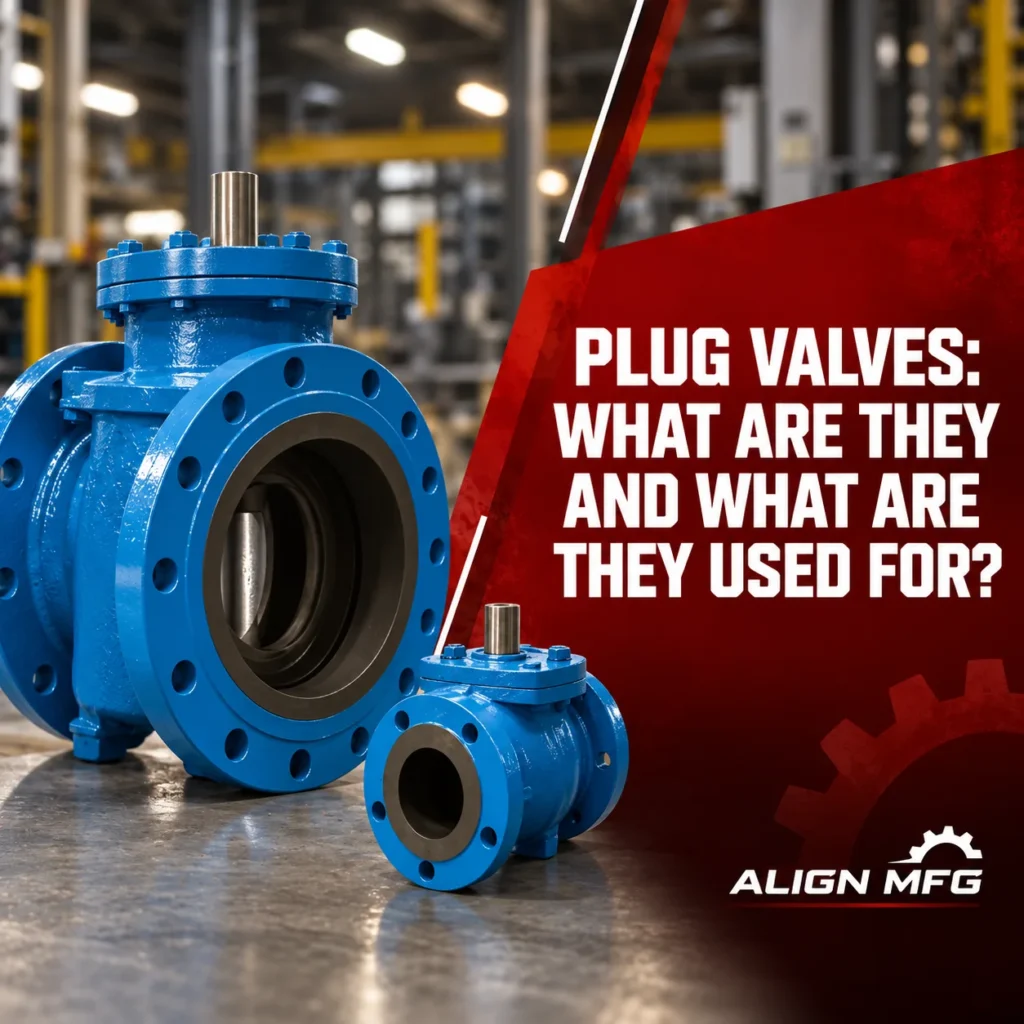
In the world of fluid control, plug valves stand out for their simplicity and reliability. Known for their straightforward design and effectiveness, they play a crucial role in numerous industrial applications where tight shut-off is essential. A deeper understanding of their functionality and versatile usage can demystify these pivotal components of fluid dynamics.
The hallmark of plug valves is their conically tapered plug, which aligns ports to regulate flow efficiently. From lubricated to non-lubricated, multi-port to eccentric, and jacketed types, the varied designs offer an array of solutions tailored to specific needs, from quick shut-off requirements to specialized use cases in diverse industries.
Definition of a Plug Valve
A plug valve is a type of quarter-turn valve used for controlling the flow of fluids through a pipe system. Its primary feature is a cylindrical or conical plug that can be rotated inside the valve body to open or close the passageway, allowing or stopping the flow of fluids. The design ensures a tight shut-off, making them suitable for a wide range of applications, including those requiring minimal leakage.
Basic Design and Operation
Plug valves are integral components in managing the flow of fluids in pipelines. Their simple yet robust design offers a reliable, efficient solution for fluid control, suitable for numerous applications from chemical processing to oil and gas distribution. The valve’s body, crafted from durable materials like stainless steel or carbon steel, supports longevity and performance under diverse operating conditions. Operators favor plug valves for their minimal leakage potential and overall resilience, making them a top choice for ensuring tight shut-offs and consistent system operation.
Conically Tapered Plug
Its conically tapered plug, plays a crucial role in controlling the flow of fluids. This taper is designed to fit snugly within the valve body, ensuring minimal leakage and a reliable seal when closed. The conical shape not only aids in achieving a tight shut-off but also facilitates easy rotation, allowing for swift actuation and precise fluid control. Its design provides low resistance to flow, minimizing energy consumption and pressure drop, which are critical considerations in maintaining an efficient network. The conical plug design is versatile, allowing it to adapt to various fluid types and flow rates, further solidifying its status as an essential component in numerous industrial applications.
Ports Alignment for Flow Control
Ports alignment in plug valves is vital for accurate and efficient fluid flow management. The alignment involves positioning the plug’s openings to match the valve’s ports, ensuring optimal fluid passage. Proper alignment allows for precise control over the flow of fluids between connected pathways, a feature crucial in systems where fluid direction must be regularly adjusted. The ability to direct flow efficiently helps in maintaining desired flow rates and preventing potential bottlenecks in the system. This control mechanism optimizes the operational efficiency by reducing issues such as pressure loss and product contamination, making plug valves an indispensable asset in processes that demand high accuracy and dependability in fluid handling.
Types of Plug Valves
The main valve types include lubricated, non-lubricated, multi-port, eccentric, and jacketed plug valves. Each type is designed with specific features tailored to enhance performance and efficiency, thereby reducing energy consumption and ensuring optimal fluid flow.
Lubricated Plug Valves
Lubricated plug valves incorporate a lubricant film between the plug and valve body, facilitating smoother operation and minimizing friction. This type of plug valve is favorable in handling gases and fluids at varying flow rates, due to its capacity to withstand higher pressure drops with less wear and tear. Lubricated plug valves are commonly used in industries that require durable and reliable sealing for high-temperature applications, making them a popular choice across a wide range of sectors.
Non-Lubricated Plug Valves
Non-lubricated plug valves utilize a different mechanism where the smooth surfaces of the plug and body are polished to achieve a tight seal without the need for lubrication. This type is generally more compact and requires less maintenance, as there is no need to replace or monitor lubricants. The absence of lubrication reduces the risk of contamination, making them ideal in industries like food and pharmaceuticals. Their design, commonly utilizing materials like stainless steel, helps in efficiently managing fluid flow where product purity is critical. Additionally, non-lubricated plug valves are known for their low friction operation and long service life.
Multi-Port Plug Valves
Multiport valves are designed to handle the flow of fluids through multiple pathways with a single valve body. These valves can streamline piping systems by allowing for flow direction changes without the need for multiple valves, effectively reducing energy consumption and pressure drop. They are particularly beneficial in chemical and processing industries, where altering fluid paths quickly and efficiently is crucial. This type of plug valve promotes operational flexibility and minimizes downtime during maintenance.
Eccentric Plug Valves
Eccentric plug valves, such as the DeZURIK Eccentric Plug Valves, are distinct due to their unique plug design that moves off-center, allowing for an unobstructed flow path and reduced resistance. These valves provide excellent tight shut-off capabilities and are known for handling solid or fibrous materials without clogging. Suitable for applications involving abrasive slurries, sewage, and wastewater, these valves are vital in industries where robust performance is required under challenging conditions.
Jacketed Plug Valves
Jacketed plug valves are designed to maintain process fluid temperatures by providing additional insulation around the valve body. This design is crucial for applications dealing with viscous or temperature-sensitive fluids that need consistent thermal control to prevent solidification or degradation. By circulating a heating medium through the jacket, these valves ensure the fluid flow remains unobstructed and efficient. Their construction, often in stainless or carbon steel, supports durability and effective thermal management.
Plug Valve Application
Plug valves are versatile components used widely to control the flow of fluids in various systems. These valves provide excellent performance in a wide range of applications and are available in materials such as carbon steel and stainless steel, enabling them to cater to diverse operational needs. Their ability to offer tight shut-off and control flow between ports makes them suitable for numerous industrial settings.
Quick Shut-Off Requirements
In settings where quick shut-off is critical, plug valves are the valves of choice. They are designed to provide an almost instantaneous stop to fluid flow, minimizing any potential loss or contamination. This feature is vital in preventing pressure drop and reducing energy consumption. This capability makes them an excellent choice for applications requiring frequent and rapid operation settings, ensuring operational efficiency and safety.
Industrial Use Cases
Plug valves are integral to industrial operations, offering robust performance in a range of applications. With sizes varying from 3 – 24 inches, they are adaptable to different systems and specifications. In industries where tight shut-off and precise flow rates are necessary, such as chemical processing, plug valves maintain the integrity of fluid flow while reducing the risk of product contamination. Their durability is enhanced by using materials like carbon steel and stainless steel, ensuring longevity in aggressive environments. Industrial applications also benefit from non-lubricated plug valves, which reduce maintenance requirements and offer enhanced reliability.
Factors to Consider When Choosing a Plug Valve
Plug valves are essential components in various industries, providing reliable flow control for numerous applications. When selecting a plug valve, understanding the specific needs and operational context is vital. Several factors, including the type of plug valve, construction materials, and desired flow rates, play a crucial role in determining the most suitable choice. Considering these aspects ensures optimal performance, minimizes pressure drop, and decreases energy consumption. By evaluating these critical factors, you can secure the right plug valve for your requirements and enhance system efficiency and longevity.
Specific Application Needs
Identifying the specific needs of your application is the first step in choosing the right plug valve. Different plug designs cater to varied requirements, including tight shut-off, high flow rates, or flow-directing possibilities. Typical applications range from chemical processing to oil and gas transportation, each with unique demands. Multi-port plug valves are ideal for systems needing more than one flow path without additional piping. Understanding these distinct needs allows for the selection of a plug valve that efficiently directs the flow of fluids and supports overall system functionality.
Construction Materials
The construction material of a plug valve is a decisive factor impacting its durability and suitability for particular operations. Common materials used in valve bodies include stainless steel and carbon steel. Stainless steel is preferred in environments with harsh chemicals and extreme temperatures. In contrast, carbon steel suits applications where cost-effective, reliable performance is paramount. Choosing the appropriate material ensures the plug valve withstands operational strains and reduces the risk of product contamination and valve damage.
Operating Pressure and Temperature
Operating pressure and temperature significantly influence the type of plug valve needed. Various plug valves are rated for different pressure ranges and temperature conditions, affecting their performance and safety. Ensuring your chosen valve can handle your system’s maximum and minimum pressure and temperature levels is crucial. Eccentric plug valves, such as the DeZURIK models, are well-suited for high-pressure environments, offering reliable performance even under demanding conditions.
Sealing Systems
Sealing systems within plug valves play a pivotal role in ensuring leak-tight performance and preventing fluid loss. Non-lubricated plug valves often utilize elastomeric or PTFE-lined seals to minimize leakage and extend the valve’s operational life. These seals provide effective sealing without the need for continuous lubrication, reducing maintenance efforts. Depending on the application type, choose sealing systems that offer the best balance of tight shut-off capabilities and operational efficiency. Proper sealing ensures minimal pressure drop and protects against undesired fluid flow between ports.
Advantages and Disadvantages of Plug Valves:
Beyond ensuring a tight shut-off, gas plug valves offer numerous benefits:
– Minimal Maintenance: Simple design results in fewer problems and reduced maintenance costs. Without lubrication needs, they are ideal for contamination-sensitive areas like food processing. Made from stainless or carbon steel, they’re durable.
– Wear Risks: Plug valves are efficient but susceptible to wear, especially with abrasive or corrosive fluids, damaging the plug and seating. Regular maintenance is crucial to extend their lifespan and efficiency.
– Versatility – You can use plug valves with large flow rates as well.
However, there are disadvantages of plug valves:
– Inefficiency in Throttling: They are unsuitable for throttling tasks, limiting their versatility in specific applications.
– High Actuation Force: They require more force to operate due to their high-friction, full-contact design, necessitating stronger actuators or increased manual effort, which can be inconvenient in some scenarios.
– Potential Galling: There is a susceptibility to galling, which can impair function over time.
– Reduced Port Size: The tapered plug design often results in a smaller port, which may not be ideal for all flow requirements.
Metal Injection Molding vs. Powder Metallurgy: A Comprehensive Comparison
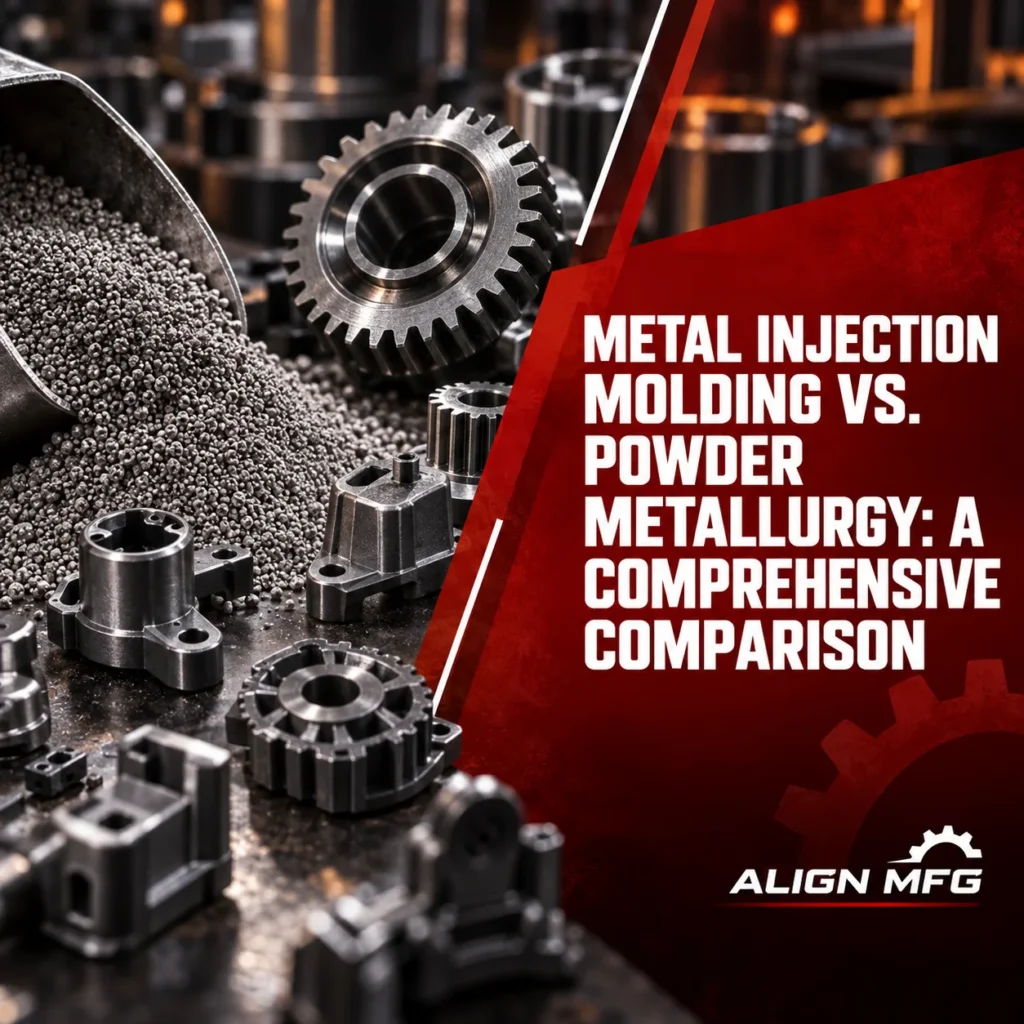
In the realm of metal part manufacturing, Metal Injection Molding (MIM) and Powder Metallurgy (PM) stand out as two prominent techniques. Both processes utilize metal powders to fabricate components, yet they differ significantly in methodology, capabilities, and applications. Understanding these differences is crucial for engineers and manufacturers aiming to select the most suitable process for their specific needs.
Manufacturing Processes

Metal Injection Molding (MIM)
MIM is a hybrid manufacturing process that combines the versatility of plastic injection molding with the strength and integrity of powdered metallurgy. The process involves several key steps:
- Feedstock Preparation: Fine metal powders, typically less than 20 microns in size, are mixed with thermoplastic and wax binders to create a homogeneous feedstock.
- Injection Molding: The feedstock is heated and injected into molds to form “green parts,” which are near-net-shape components.
- Debinding: The binder materials are removed through thermal or solvent processes, resulting in “brown parts” that are porous and fragile.
- Sintering: The brown parts are heated to temperatures just below the melting point of the metal, causing the particles to fuse and densify, achieving final mechanical properties.
MIM is particularly advantageous for producing small, intricate parts in high volumes, offering excellent surface finish and dimensional accuracy.
Powder Metallurgy (PM)
PM is a traditional process that involves the following steps:
- Powder Production: Metal powders are produced through various methods, including atomization, reduction, and electrolysis.
- Blending: Different metal powders and additives are mixed to achieve desired properties.
- Compaction: The powder blend is compressed in a die under high pressure to form a “green compact.”
- Sintering: The green compact is heated in a controlled atmosphere to bond the particles metallurgically, enhancing strength and integrity.
PM is well-suited for producing simple, high-volume parts with consistent properties, often used in automotive and industrial applications.
Material Characteristics
Density and Porosity
- MIM: Achieves high-density parts, typically ranging from 95% to 99% of theoretical density, resulting in superior mechanical properties.
- PM: Generally results in parts with 80% to 90% density, which may be beneficial for applications requiring porosity, such as self-lubricating bearings.
Mechanical Properties
- MIM: Offers excellent mechanical strength, comparable to wrought materials, making it suitable for demanding applications.
- PM: While adequate for many applications, PM parts may exhibit lower strength due to inherent porosity.
Material Utilization
- MIM: Utilizes fine powders and achieves near-net-shape parts, minimizing material waste.
- PM: Also efficient in material usage, especially for simple geometries, but may require additional machining for complex features.
Cost Analysis
When evaluating manufacturing processes, cost considerations play a pivotal role. Both Metal Injection Molding (MIM) and Powder Metallurgy (PM) have distinct cost structures influenced by factors such as material expenses, tooling, production volume, and post-processing requirements.
Material Costs
- MIM: Utilizes fine metal powders combined with polymer binders, resulting in greater material costs. MIM feedstock can cost approximately $10–$12 per pound or higher.
- PM: Employs coarser metal powders without binders, making it more economical. PM materials typically cost around $1–$2 per pound.
Tooling and Equipment
- MIM: Requires specialized injection molding machines, debinding ovens, and sintering furnaces. The complexity of molds for intricate parts leads to higher tooling costs.
- PM: Involves simpler compaction dies and sintering equipment, resulting in lower initial tooling investments.
Production Volume and Economies of Scale
- MIM: Becomes cost-effective at high production volumes due to the amortization of tooling costs over large quantities.
- PM: Suitable for medium to high-volume production, especially for parts with simpler geometries.
Post-Processing Requirements
- MIM: Produces near-net-shape parts with excellent surface finish and dimensional accuracy, often eliminating the need for secondary operations.
- PM: May require additional machining or finishing processes to achieve desired tolerances and surface quality.
Applications and Industry Usage
The choice between MIM and PM often depends on the specific requirements of the application, including part complexity, mechanical properties, and production volume.
Metal Injection Molding (MIM)
Industries and Applications:
- Medical and Dental: Production of surgical instruments, orthodontic brackets, and implant components requiring high precision and biocompatibility.
- Aerospace: Manufacture of complex components like fittings, latches, and spray nozzles that demand high strength-to-weight ratios.
- Automotive: Creation of intricate parts such as fuel injector components, actuators, and locking mechanisms.
- Consumer Electronics: Fabrication of small, complex parts like connectors and housings with tight tolerances.
Powder Metallurgy (PM)
Industries and Applications:
- Automotive: Production of gears, bushings, and structural components where cost-effectiveness and material efficiency are paramount.
- Industrial Machinery: Manufacture of components like bearings and filters that benefit from the inherent porosity of PM parts.
- Aerospace: Creation of structural parts where simplicity and reliability are essential.
- Appliances and Tools: Fabrication of various components where high-volume production and cost savings are critical.
Advantages and Limitations
Understanding the strengths and weaknesses of both Metal Injection Molding (MIM) and Powder Metallurgy (PM) is crucial for selecting the appropriate manufacturing process for specific applications.
Metal Injection Molding (MIM)
Advantages:
- Complex Geometries: MIM excels at producing intricate and complex shapes that would be challenging or impossible with other manufacturing methods. This capability is due to the flexibility of the injection molding process, allowing for detailed features and thin walls.
- High Density and Strength: MIM parts typically achieve densities of 95–99% of theoretical density, resulting in mechanical properties comparable to wrought materials. This high density contributes to superior strength and durability.
- Excellent Surface Finish: The process yields parts with smooth surface finishes, often eliminating the need for secondary machining or finishing operations.
- Material Utilization: MIM generates minimal waste, utilizing nearly all the material in the final product, which is both cost-effective and environmentally friendly.
Limitations:
- High Initial Tooling Costs: The molds required for MIM are often expensive, especially for intricate designs, making the process more suitable for high-volume production to amortize the tooling investment.
- Size Constraints: MIM is generally limited to small to medium-sized parts, typically less than 100 grams, due to equipment limitations and the nature of the process.
- Material Limitations: Not all metals are suitable for MIM. Some materials may not sinter well or may have issues with binder removal, limiting the range of applicable materials.

Powder Metallurgy (PM)
Advantages:
- Cost-Effective for Simple Parts: PM is highly economical for producing simple, high-volume parts, especially when complex geometries are not required.
- Material Efficiency: The process utilizes over 97% of the starting material, minimizing waste and making it an environmentally friendly manufacturing option.
- Controlled Porosity: PM allows for the production of parts with controlled porosity, which is beneficial for applications like self-lubricating bearings and filters.
- Energy Efficiency: PM typically requires lower processing temperatures than other metal forming methods, leading to energy savings during production.
Limitations:
- Design Limitations: PM is generally limited to simpler shapes due to the constraints of the compaction process. Complex geometries may require additional machining or alternative manufacturing methods.
- Lower Density and Strength: PM parts often have lower densities at about 80–90% of theoretical density compared to MIM, which can result in reduced mechanical strength and a possibility that it may not be suitable for high-stress applications.
- Size Limitations: There are practical limits to the size of parts that can be produced using PM, often constrained by the capacity of the pressing equipment.\

Conclusion
Both metal injection molding and powder metallurgy offer unique advantages and are suited to different applications. MIM is ideal for producing small, complex parts with high strength and excellent surface finishes, making it suitable for industries like medical, aerospace, and electronics. However, it comes with higher initial costs and size limitations. Conversely, PM is cost-effective for manufacturing simple, high-volume parts with controlled porosity, commonly used in automotive and industrial applications. The choice between MIM and PM should be based on factors such as part complexity, required mechanical properties, production volume, and cost considerations. By understanding the strengths and limitations of each process, manufacturers can make informed decisions that align with their production goals and operational needs. Check out Align Manufacturing if you are looking for a place that provides high-precision metal injection molding solutions.
Understanding Manifolds: Applications in Oil and Gas Operations
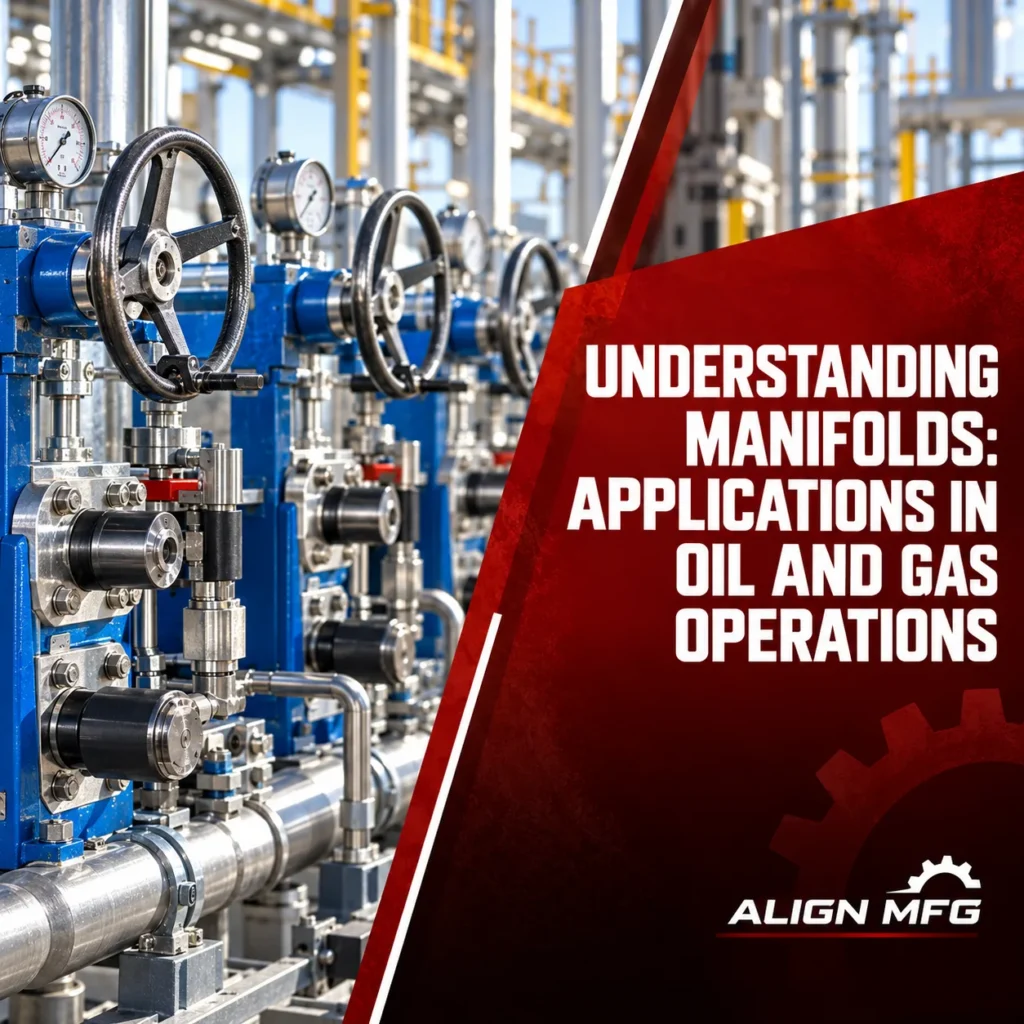
In the oil and gas sector, manifolds are critical assemblies that consist of interconnected valves, pipes, and fittings. Their primary function is to control, distribute, and monitor the flow of fluids, such as oil, gas, and water, during various phases of operations, including exploration, drilling, production, and processing. By efficiently managing fluid flow, manifolds ensure operational safety, flexibility, and efficiency.
Core Functions of Manifolds
Manifolds serve several essential purposes in oil and gas operations:
- Flow Control: Regulating the direction and rate of fluid flow from multiple wells or equipment.
- Distribution: Routing fluids to appropriate processing facilities or storage units.
- Isolation: Allowing sections of the system to be shut off for maintenance or emergency response.
- Monitoring: Facilitating the measurement of pressure, temperature, and flow rates to ensure optimal operation.
Types of Manifolds and Their Applications
Understanding the different types of manifolds is crucial for selecting the appropriate system for specific operational needs:
1. Production Manifolds
Production manifolds collect fluids from multiple wells and direct them to processing facilities. They are designed to handle high-pressure flows and are essential for efficient production management.
2. Choke Manifolds
Choke manifolds regulate wellhead pressure using adjustable or fixed chokes. They are vital for controlling the flow rate from wells, especially during drilling and testing phases, ensuring safety and preventing blowouts.
3. Kill Manifolds
Kill manifolds are used to inject kill fluids into wells to control pressure during emergencies. They play a critical role in well control operations, allowing for the safe shutdown of wells when necessary.
4. Test Manifolds
Test manifolds isolate individual wells for performance testing. They enable operators to assess well productivity and reservoir characteristics without affecting the overall production system.
5. Injection Manifolds
Injection manifolds distribute fluids like water or gas into wells for enhanced oil recovery. They help maintain reservoir pressure and improve hydrocarbon extraction efficiency.
6. Block and Bleed Manifolds
Block and bleed manifolds are designed to isolate sections of piping for maintenance by blocking flow and bleeding off pressure. They ensure safety during equipment servicing and prevent contamination.

Design Considerations and Material Selection
Key Design Considerations for Manifolds
Designing manifolds for oil and gas operations requires meticulous attention to various factors to ensure safety, efficiency, and longevity. The following are critical considerations:
- Pressure Ratings: Manifolds must be designed to withstand the maximum operating pressures they will encounter, including transient pressure surges. Industry benchmarks such as Maximum Allowable Working Pressures (MAWP) reach up to 6000 psig, with operational temperatures ranging from -65°F to 1200°F.
- Material Selection: Choosing appropriate materials is vital to resist corrosion, erosion, and other environmental factors. Materials should be compatible with the fluids handled and the operational environment.
- Temperature Tolerance: Manifolds should be capable of operating effectively within the temperature ranges expected in the system, accounting for both ambient and process temperatures.
- Flow Capacity: The design must accommodate the required flow rates without causing excessive pressure drops or turbulence, ensuring efficient fluid distribution.
- Safety Features: Incorporating safety mechanisms such as pressure relief valves, isolation valves, and emergency shutdown systems is essential to protect personnel and equipment.
- Ease of Maintenance: Designs should allow for straightforward access to components for inspection, maintenance, and replacement, minimizing downtime and operational disruptions.
- Detailed Valve Configurations: Specific valve configurations, like the two, three, and five-valve setups, are crucial for controlling flow parameters and offering system flexibility. These arrangements impact pressure monitoring, calibration, isolation, and bleed functions, enhancing the manifold’s operational precision.
Standards and Certifications
- API 6A / API 16C: Wellhead, choke, and kill manifolds.
- API 600: Bolted bonnet steel gate valves
- API 6D: Pipeline valves
- ANSI/ASME B16.34: Valve design.
- ISO 14313: Ensures product quality and testing protocols.
- NACE MR0175 / ISO 15156: Covers materials for sour environments (when Hydrogen Sulfide, H₂S, is present).
Material Selection for Manifold Construction
Selecting the right materials for manifold construction is crucial for durability and performance:
- Carbon Steel: Commonly used due to its strength and cost-effectiveness, suitable for non-corrosive environments.
- Stainless Steel: Offers excellent corrosion resistance and is suitable for handling corrosive fluids. Grades like 316L are commonly used in harsh environments.
- Duplex Stainless Steel: Combines high strength with superior corrosion resistance, suitable for high-pressure and corrosive applications.
- Aluminum: Lightweight and corrosion-resistant, aluminum is suitable for low-pressure applications and where weight reduction is a priority.
- Ductile Iron: Known for its good machinability and corrosion resistance, making it a viable option for certain applications
- Plastics and Polymers: Suitable for extremely corrosive fluids but limited in high-temperature or high-pressure use.
Skid-Mounted Manifolds
Skid-mounted manifolds are pre-assembled units mounted on a frame or skid, offering several advantages:
- Ease of Installation: Pre-fabricated units can be quickly installed on-site, reducing downtime.
- Mobility: Skid-mounted systems can be relocated as needed, providing flexibility in operations.
- Compact Design: Efficient use of space, especially beneficial in offshore or space-constrained environments.
Below is an image of a skid-mounted production manifold:

Operational Benefits and Strategic Importance of Manifolds
Enhancing Operational Efficiency
Manifolds play a pivotal role in streamlining oil and gas operations by centralizing control over fluid distribution. This centralization reduces the complexity of piping systems, minimizes potential leak points, and facilitates easier monitoring and maintenance. By directing the flow of oil, gas, and water through a unified system, operators can achieve smoother transitions between different operational phases, such as drilling, testing, and production.
Improving Safety Measures
Safety is paramount in oil and gas operations, and manifolds contribute significantly to this aspect. By allowing for the isolation of specific sections of the pipeline, manifolds enable maintenance and emergency interventions without halting the entire system. This capability not only ensures the safety of personnel but also protects the integrity of the equipment and the environment.
Cost-Effectiveness and Resource Optimization
Implementing manifold systems leads to cost savings by reducing the need for extensive piping networks and associated components. The modular nature of manifolds allows for scalable operations, meaning facilities can adjust their systems based on current production needs without significant overhauls. This adaptability ensures optimal use of resources and capital.
Facilitating Advanced Monitoring and Automation
Modern manifolds are often equipped with sensors and automation technologies that provide real-time data on pressure, flow rates, and temperature. This information is crucial for predictive maintenance, allowing operators to address potential issues before they escalate into major problems. Additionally, automated systems can adjust operations dynamically, enhancing efficiency and reducing manual intervention.
Supporting Environmental Compliance
With increasing environmental regulations, manifolds assist in ensuring compliance by providing precise control over fluid handling. Their ability to prevent leaks and spills aligns with environmental protection standards, and their integration with monitoring systems allows for accurate reporting and rapid response to any anomalies.
Conclusion
In conclusion, manifolds are integral to the efficiency, safety, and functionality of oil and gas operations. Understanding their core functions, types, design considerations, and material selection is essential for optimizing their performance in various applications. By leveraging advanced technologies and adhering to safety and environmental standards, the oil and gas industry can enhance operational efficiency while ensuring the safety of personnel and the environment. Check out Align Manufacturing to find out more about manifold components in the oil and gas industry.